Canning Terms and Meanings
This page may contain affiliate links. More Information.
Welcome to the our index of canning terms and meanings for home canners. From basic terms like “jar” and “lid” to more advanced concepts like “headspace” and “venting time,” we’ve got you covered.
The glossary of canning terms below can help ensure safety and clarity when canning.
I’ll start with the term ‘canning’ itself and then an alphabetical list of other terms and meanings as it relates to home canning.

What Does Canning Mean as Related to Home Food Preservation?
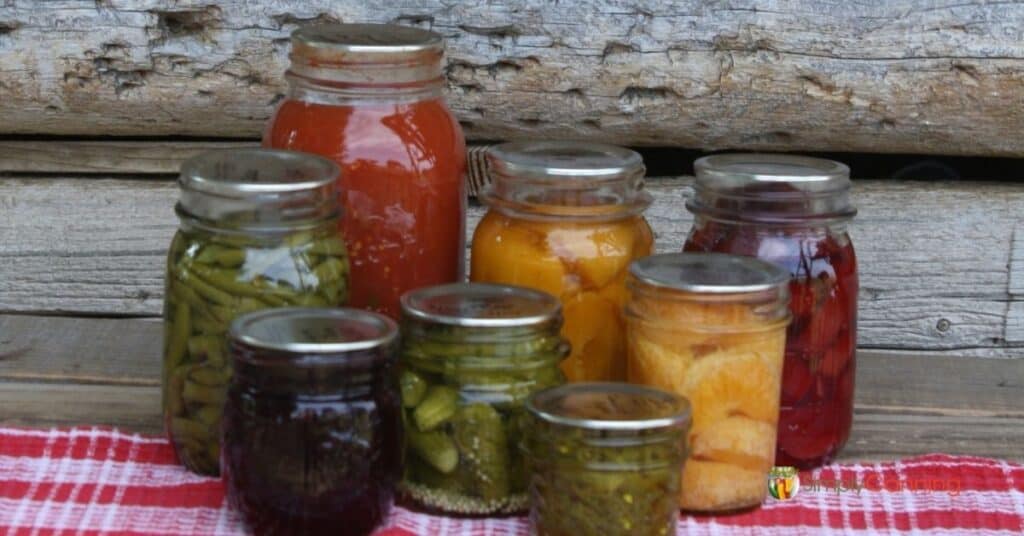
Canning simply means a method of preserving food in which the food is packed into canning jars and then heated to a high temperature to kill any bacteria. After heating the jars cool down and the lid is sucked down to form a seal which prevents any further contamination.
This process helps to prevent spoilage and extends the shelf life of the food. Home canning is a popular way to preserve fresh produce and other foods for later use.
Canning Quick Start is a fast introduction to the basics of canning for beginners.

Index: Canning Terms and Meanings
It is important to understand canning terms and their meaning, as different people may use different terms for the same thing. Word meanings are important!
Acidification: The process of adding acid (usually in the form of vinegar or lemon juice) to low-acid foods before canning to prevent the growth of harmful bacteria.
Altitude adjustment: Altitude adjustments are changes to processing times and pressures required for home canning at high altitudes due to changes in atmospheric pressure. With water bath canning the time of processing will be adjusted. With pressure canning the pounds pressure unit used will be adjusted.
Bacteria: Microorganisms that may produce harmful toxins in our food.
Blanching: A process of briefly boiling or steaming vegetables or fruits before canning to stop enzyme activity and preserve color and texture. Submerge food in boiling water for the amount of time indicated, then remove and plunge in cold ice water to stop cooking.
Boiling Water Bath: Another term for Water Bath. It is a method that involves submerging jars in boiling water for a specified amount of time to kill bacteria and prevent spoilage. It is used for high-acid foods like fruits, tomatoes, and pickles.
Boiling Water Bath Canner: Another term for water bath canner. Specialized pot used for water bath canning. Comes with a rack to hold jars off the bottom of the canner.
Botulism: A type of foodborne illness caused by a toxin produced by the bacteria Clostridium botulinum, which can grow in improperly canned low-acid foods. Pressure canners are the only canning method that will reach the high heat needed to prevent it.
Canning Lid: A flat metal lid with a rubber seal used to seal jars during canning. Canning lids are one-time use for processing but can be reused for dry storage or other purposes. This flat lid is held down by a screw band.
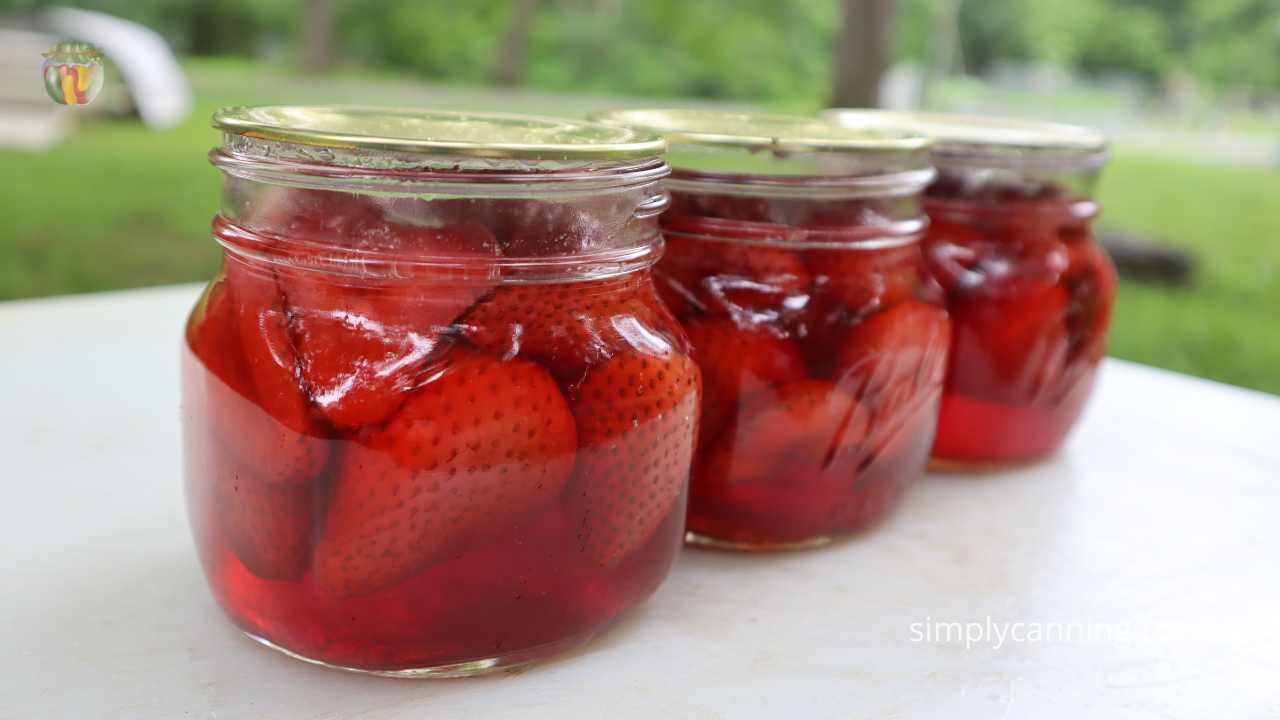
Cold Packed: (Sometimes called raw pack) means the food is raw when it’s packed in jars. Hot liquid is added over the raw food. “Raw packed” is actually a better term. You never want to put cold jars in your hot canner. The jars may break. This is not referring to a processing method. The jars are still processed in either a water bath or pressure canner.
Cool down time: The time required for jars to naturally cool and seal after canning. This time should never be manually shortened by using cool water, fans, or any other method.
Clear Jel: Clear jel is a modified corn starch used as a thickening agent in canned pie fillings. Clear jel is a safe alternative to flour or cornstarch which is no longer recommended for home canning.
Dehydrating: A method of preserving food by removing most of its moisture content.
Dry Pack: A canning method where food is packed into jars without any liquid added. Dry pack canning is a controversial method.
Enzyme: Enzymes start the process of decomposition; enzyme action slows in the freezer. Increases between 85 and 120 degrees and stops above 140 degrees. That is why we blanch foods before freezing…it stops the enzymes.
Fermenting: The process of preserving food by allowing it to sit at room temperature and develop natural bacteria, such as in sauerkraut or pickles. The results are often called ‘pickled’ but this is a different process than pickling.
Flat Sour: An unappealing off-flavor – think a disagreeably sour or bitter taste of your canned goods. While it won’t harm you, flat sour can make your canned food very unappetizing.
Freezing: A method of preserving food by freezing it, which slows down the growth of bacteria and other microorganisms.
Head Space: The space between the top of the food product and the jar lid. This space allows for expansion during processing.
High-Acid Food: Food that has a pH lower than 4.6. such as fruits, tomatoes, and pickles, These may be safely processed in a water bath canner.
Home canning: the process of preserving food by sealing it in jars and then heating it to destroy any remaining bacteria or microorganisms.
Hot Pack: Food is first cooked or partially cooked in a syrup or other liquid. Foods that have been pre-cooked are already hot when they go into the canner,
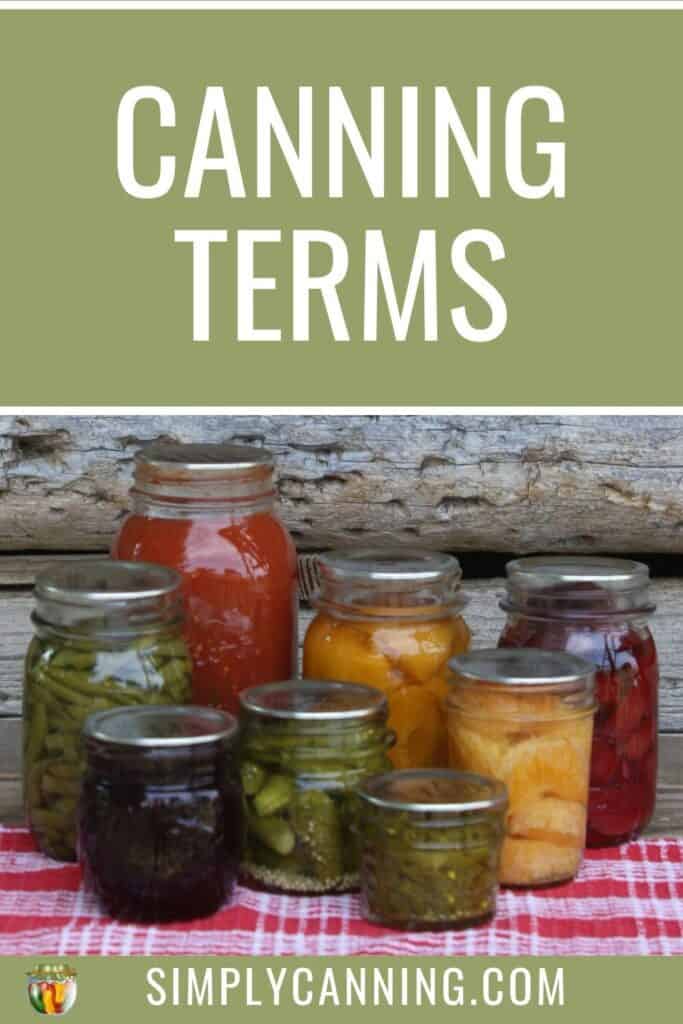
Jar: Canning jar, sometimes called a Mason jar, specially designed to withstand home canning procedures.
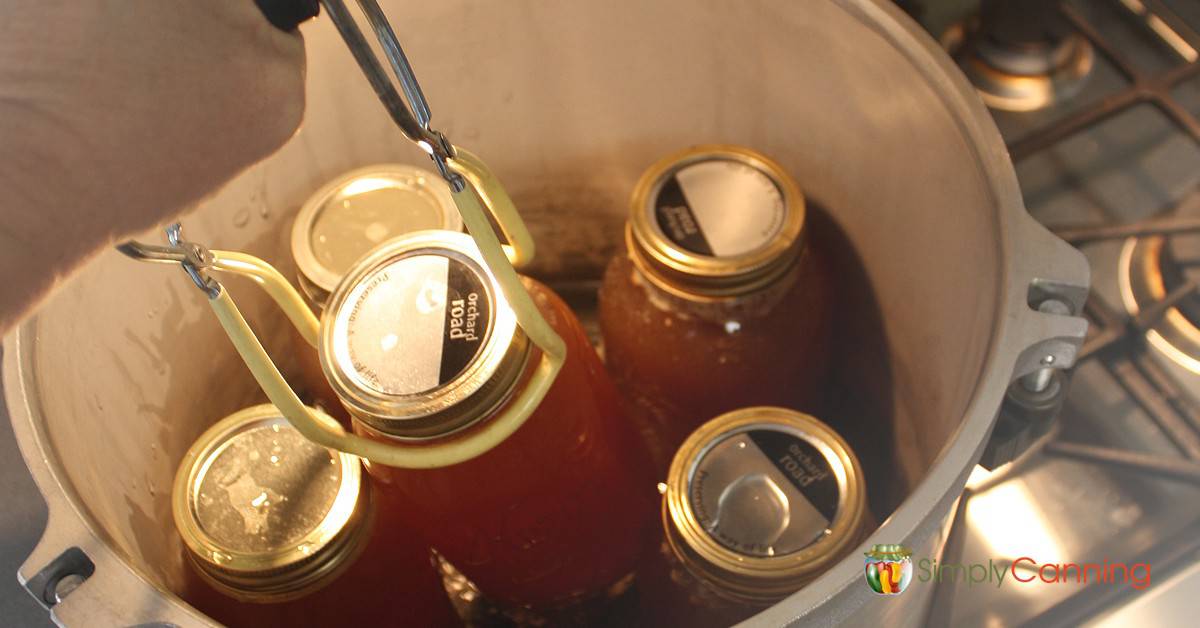
Jar lifter: A tool used to safely lift hot jars out of a canning pot without risking burns or damage to the jar.
Lid: Canning lids come in a 2-part piece. Often when a lid is referred to, it is specifically referring to the flat metal disc.
Low-Acid Food – Food that contains little natural acid and has a pH greater than 4.6. All vegetables and meats fall into the low-acid category. They must be pressure canned to prevent the growth of botulism.
Open Kettle: An old canning method that is no longer recommended. In open kettle canning, the foods are cooked and packed into hot, sterilized jars with no further processing. They are then left to cool and sometimes turned upside down on their lids. Open kettle is not recommended due to the risk of botulism.
Process: Sterilizing jars and the foods packed in them through either a water bath canner or a pressure canner. This destroys molds, bacteria, enzymes, and yeasts.
Processing time: the amount of time required to process the food in the canning jars to ensure any harmful bacteria or microorganisms are destroyed. This time will vary for each food type and canning method.
Pressure Canning: A method of home food preservation that uses high pressure in a specialized pressure canner to safely can low-acid foods like meat, poultry, seafood, and vegetables.
Pressure Canner: Specialized pot used for pressure canning. Pressure canners use steam pressure to safely preserve low-acid foods such as vegetables, and meat. Comes in various sizes and should include a rack to hold jars off the bottom of the canner. There are two types of pressure canners: dial gauge and weighted gauge.
Pectin: A natural substance found in most fruits. This is what causes the jelling of fruits when making jellies or jams. Pectin can also be purchased in both powdered and liquid form.
Pickling: The process of preserving food in a vinegar or brine solution. There are several methods all considered pickling.
Raw Pack: Also called cold pack. A method of filling jars where raw food is packed into jars and then covered with boiling liquid. This is not referring to a processing method. The jars are still processed in either a water bath or pressure canner.
Sealing: The process of sealing the lid onto a canning jar to create an airtight seal and prevent contamination. Processing can be done in a water bath, steam, or pressure canner.
Screw Bands: The metal bands used to hold the lid in place during canning. They should be tightened firmly but not too tight, to allow air to escape during processing. Screw bands are multi-use and can be reused until they bend or rust.
Simmer: To gently cook just below the boiling point.
Steam Canner: A steam canner is a type of canner used for home canning that uses steam to process jars of food. It is a smaller, lighter, and less expensive alternative to a water bath canner. The steam canner is generally used for high-acid foods like fruits, tomatoes, and pickles. It is not recommended for low-acid foods like vegetables and meat.
Sterilization: The process of killing all bacteria, viruses, and other microorganisms on equipment and jars to prevent contamination. Sterilization happens during processing in a canner.
Syrup: A sugar/water combination used for canning fruits. Sweetness levels range from very light to heavy. More sugar = heavier syrup.
Venting: The process of allowing steam to escape from a pressure canner before starting processing time.
Water Bath Canning: Also known as boiling water bath canning, is a method that involves submerging jars in boiling water for a specified amount of time to kill bacteria and prevent spoilage. It is used for high-acid foods like fruits, tomatoes, and pickles.
Water Bath Canner: A specialized pot that uses boiling water to preserve high-acid foods like fruits, tomatoes, and pickles. It is not recommended for low-acid foods like vegetables and meat. Water Bath canners come in various sizes and should include a rack to hold jars up off the bottom of the pot.
Yeast: Microscopic fungi that cause fermentation.
Why is it called Canning and not Jarring?
Great question! It does seem more logical to use the term jarring, doesn’t it. After all, we are putting our food in jars. Many people do use the term jarring or even bottling. But generally (at least here in the US) canning is understood to be preserving food in a mason jar.
I’ve found a variety of answers to this question. The answer that seems most logical to me is this…
When modern methods of food preservation first developed, it was used sealed tin cans boiled in water. This was first developed during war times when getting food to soldiers was a big issue. The thin glass jars available at the time were impractical, metal cans much more durable. (I’ve also read that this actually started way back in Napoleon’s time.)
The equipment needed to seal metal cans was not practical for everyday home use. It wasn’t until sturdy mason jars and sealing lids became available for this canning process that it became easier for common household use. (mid-1800’s) Food preservation in jars became much more common. But the term ‘canning’ just stuck.
Related Pages
The Simply Canning book is the ultimate guide to home canning without overwhelm or uncertainty! Have confidence with knowledge.
Free Food Preservation Newsletter – Get the free Canning Quick Start Course when you sign up for the newsletter.
Home canning safety? This topic should not be taken lightly. Do you know the best safe practices for processing? Learn all you need and pick up valuable tips and tricks at SimplyCanning.com
Pin This to Find Later!