Dehydrating Potatoes
This page may contain affiliate links. More Information.
Dehydrating potatoes: I’ll show you exactly how to prep, blanch, dry, and rehydrate them so you get good color and texture instead of the gray, unappealing batch I ended up with when I tried to skip a step.
Skip down to the recipe card for the quick version, or keep reading for the details and a few tips I’ve picked up along the way.
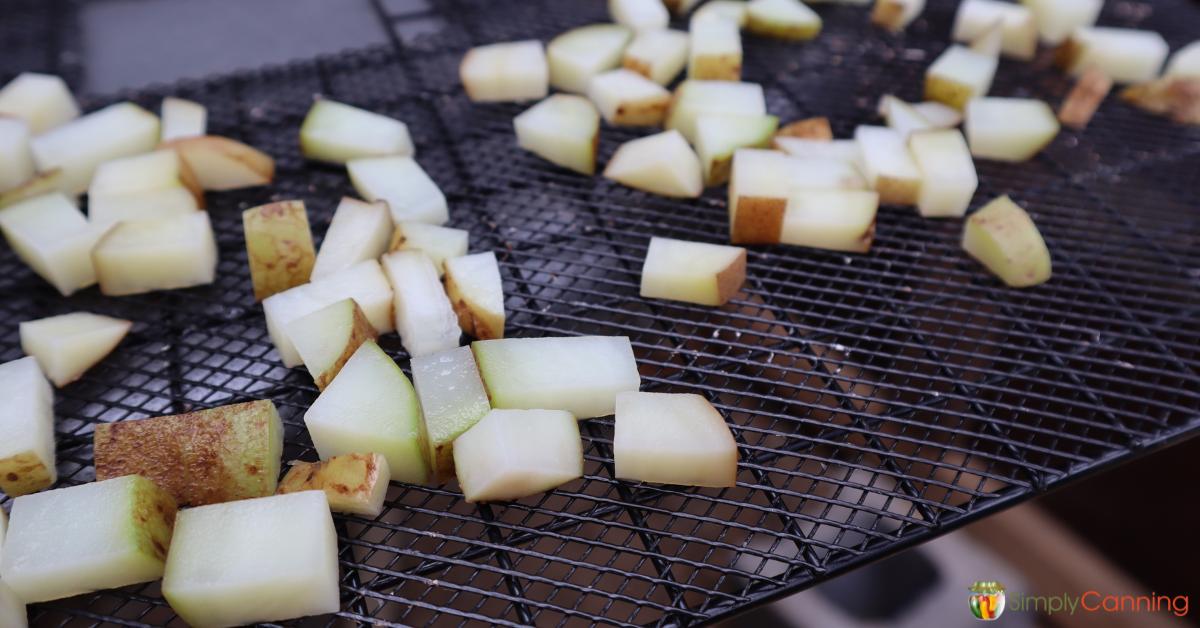
Dehydrating potatoes: I grow potatoes in my garden every year. And every year there is a portion of our harvest that ends up damaged by shovels during digging. These potatoes won’t store well so I will try to use them up right after harvest or preserve them for later.
Dried potatoes are super handy for tossing into a crockpot with other dried veggies, leftover roast, and some beef broth. Get a nice homemade stew by the end of the day.
Quick Reference for Drying Potatoes
- Temperature: 125°F
- Drying Time: 5–12 hours
- Texture When Dry: Hard
- Storage: Condition 7–10 days, then store airtight in jars or Mylar bags
What You’ll Need
Ingredients:
Potatoes (any amount — this process scales to whatever you’ve got)
Equipment:
- Large pot for blanching, or a steamer basket if you prefer steam blanching
- Bowl of ice water
- Dehydrator
- Something to cut your potatoes with — a knife works fine, or see cutting options below
Prepping the Potatoes
Start with clean potatoes, this matters! Potatoes grow right in the dirt, so give them a good wash before you do anything else.
If you’re not peeling, scrub well. I use a small finger brush to work into the eyes and any rough spots and get all the dirt off. You don’t want that grit ending up in your dried potatoes.
Peeling is recommended by most sources for best quality, but technically optional. I didn’t peel mine in the pictures below. Sometimes I do peel.
You’ll get the best results when potatoes are cut uniformly and rinsed well. So however you decide to cut them up, try to get similar sizing and rinse them 2 or 3 times to get some of the starch out.
Choosing How to Cut Them
How you cut your potatoes really just comes down to how you plan to use them later. In the photos here, I cubed mine, which works great for soups and stews.
Chop into 1 inch pieces.
You can also slice them, or cut them into fry shapes if you want something you can crisp up in the oven after rehydrating.
- A knife works just fine. But, if you’re processing a big batch, a knife gets tedious fast.
- I use my Bosch mixer with the french fry blade attachment when I want to chop in a hurry. It makes quick work of a large batch of potatoes.
- Or use a slicing attachment for slices.
- A vegetable chopper like the Fullstar works well too if you want cubes.
Note on dehydrating shredded potatoes. To make shredded potatoes you want to cook your potatoes whole. Then shred the already cooked potato. It would be too difficult to blanch small shreds.
Note on dehydrating mashed potatoes for instant potatoes later. You’ll want to cook the potatoes like you would for mashed potatoes. I would prefer peeled for this. Then mash them up plain. (No butter!) Let cool a bit and spread on a silicone tray to dehydrate until dry. Similar to a fruit leather…. but potatoes. Use the same time and temperature as below.
As you cut, drop the pieces into cold water.
Blanching- Don’t Skip This Step
Blanching before dehydrating is usually a quality issue when dehydrating. I’ll sometimes skip it on other vegetables just to get the job done faster. Potatoes are the exception. I tested it….
See the difference! The ones on the left weren’t blanched, while the ones on the right were blanched. It’s a big difference.
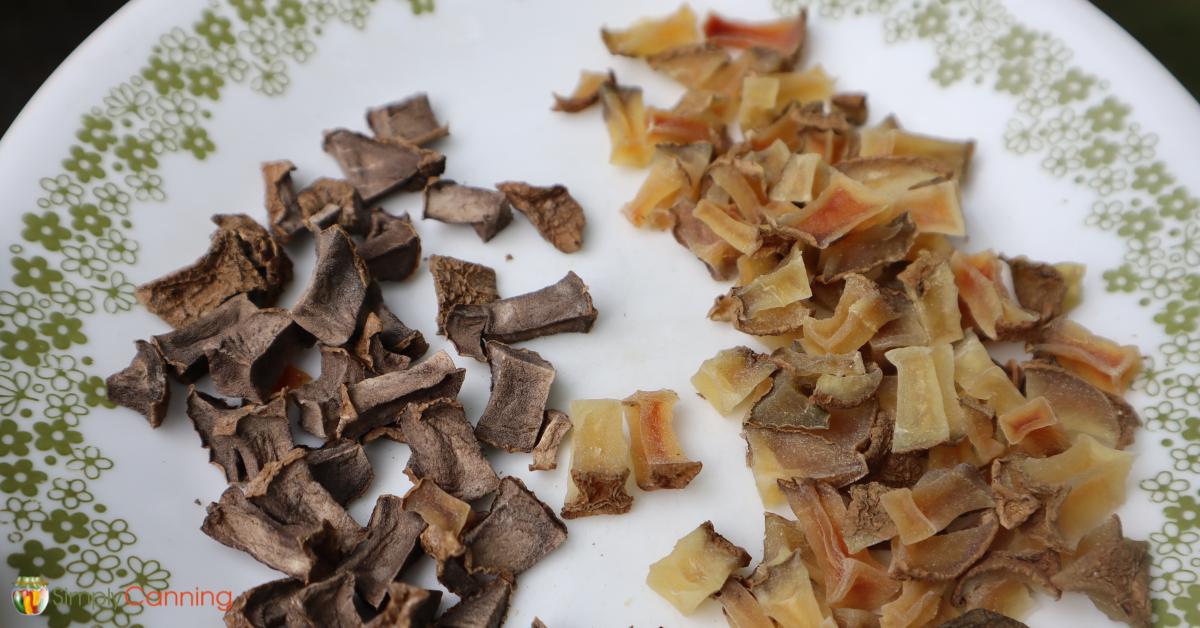
I have come to the conclusion that potatoes absolutely need blanching before dehydrating.
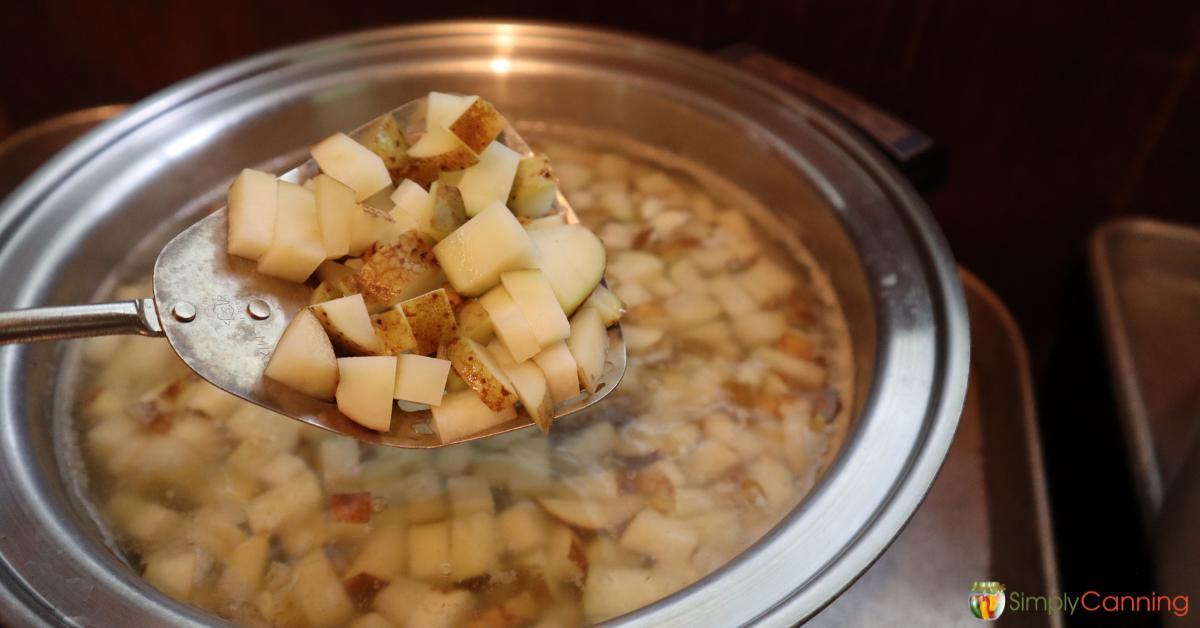
If you’ve never blanched before, I walk through the process in more detail on my blanching page. For potatoes specifically:
- Water blanch: 5–6 minutes
- Steam blanch: 6–8 minutes
Time will vary according to the size of your pieces, you just want them cooked lightly… not cooked ready to mash.
As soon as the time is up, transfer the potatoes straight into your bowl of ice water to stop the cooking. Then rinse them well which removes more starch. Drain thoroughly before you spread them out on trays.
Drying Methods & Time for Potatoes
Dehydrator (Recommended)
- Temperature: 125°F
- Drying Time: 5–12 hours (time varies depending on slice thickness, humidity, and dehydrator model)
Spread the blanched potatoes in a single layer. Rotate trays if your dehydrator tends to dry unevenly. If potatoes start sticking early in the process, give them a stir or turn slices over. This releases them from the tray and they generally won’t stick again. But do check again later!
Oven Drying (Alternative)
If you don’t have a dehydrator, set your oven to the lowest temperature (ideally 170–200°F), prop the door open slightly for airflow, and check frequently. Drying time will be shorter but requires close attention so you don’t burn the potatoes. A dehydrator works much better.
Air Drying
I personally wouldn’t try this for potatoes. If you live in a very dry climate and have a fan blowing over your trays you might have success. Be sure and watch carefully be sure your potatoes are drying.
How to tell when they are Dry
Properly dried potatoes should feel hard and completely dry to the center. No flexibility, no cool spots, no softness.
Rehydrating Tips
Potatoes rehydrate well. I almost always use mine in a soup or stew. It rehydrates right in the dish.
You can also cover with hot water for 15–30 minutes, or simmer for faster results. Drain and use as you would fresh potatoes.
Ideas:
- Rehydrate slices or fries and crisp them in the oven.
- Add dried pieces straight into soups or stews, they’ll rehydrate as they cook.
- Mash rehydrated potatoes for quick, homemade mashed potatoes.
Storing Dried Potatoes
Always condition your dried potatoes before long-term storage.
Conditioning
Place the dried potatoes loosely in a jar for 7–10 days, shaking daily to check for moisture. If condensation appears, return them to the dehydrator.
You can store dried potatoes in Mason jars, Mylar bags with oxygen absorbers, or airtight food-grade containers. Store in a cool, dark place for the longest shelf life.
The NCHFP’s shelf-life guidance for dehydrated vegetables is about 6 months at 60°F, and less at warmer storage temps. They’ll still be safe to eat beyond that window. Quality is what will start to reduce so just make a plan to use them up.
How to Dehydrate Potatoes
Equipment
- Sharp Knife or other cutting tool
Ingredients
- Potatoes any quantity
Instructions
- Wash potatoes well, scrubbing thoroughly if not peeling. Peel if desired (optional).
- Cut into cubes, slices, or fries. Drop pieces into cold water as you work to prevent browning.
- Blanch: water blanch 5–6 minutes, or steam blanch 6–8 minutes.
- Transfer immediately to ice water to stop cooking. Rinse well to remove excess starch. Drain thoroughly.
- Spread in a single layer on dehydrator trays. Dry at 125°F for 5–12 hours, rotating trays as needed, until pieces are hard all the way through and snap rather than bend.
- Condition for 7–10 days in a tightly covered jar, shaking daily to check for moisture.
- Store in an airtight container in a cool, dark place.