How to Dry Peas
This page may contain affiliate links. More Information.
Dehydrating peas is a simple way to preserve fresh peas or extra frozen peas for storage.
Peas are one of the easiest vegetables for beginning dehydrators. Easy to dry, easy to rehydrate and use. Learn how to dry peas at home, including dehydrator, air drying, oven, and drying peas on the vine.
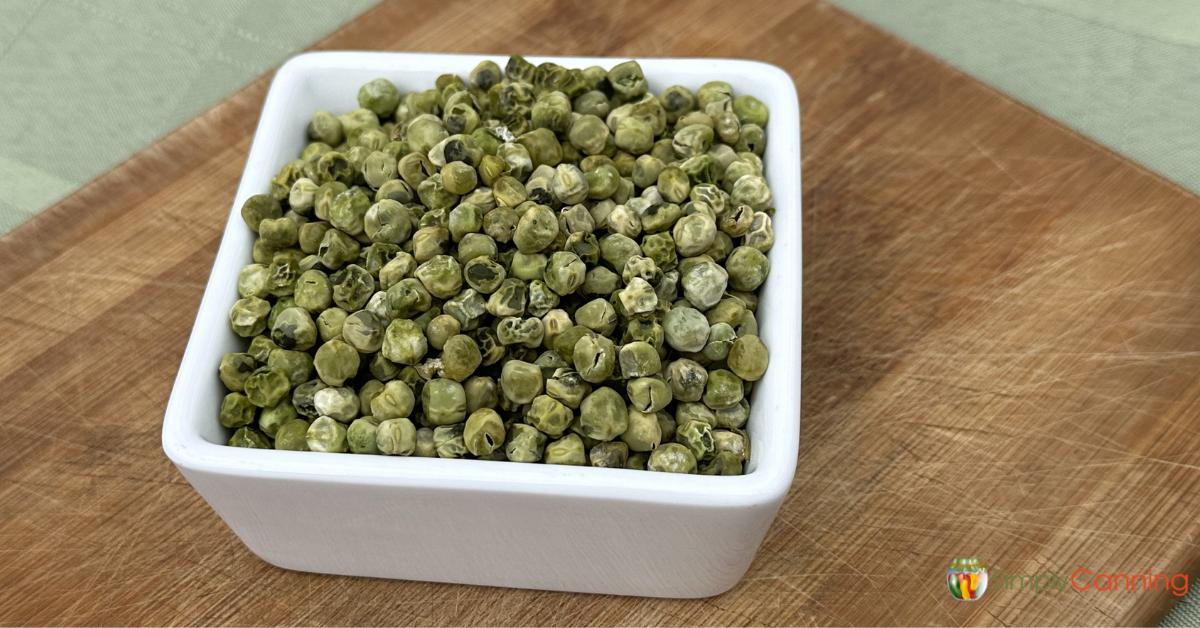
This guide covers blanching, drying temperatures, storage tips, and how to use dried peas later in soups, stews, and meals.
Quick Reference for Drying Peas in dehydrator
- Temperature: 125°F – 135°F
- Drying time: 6–10 hours
- Texture: Brittle
- Storage: Airtight container, conditioned, shelf life up to 12 months
Dehydrating peas whole or in the pod
You can dry peas whole in pods or just the shelled peas. Shelled peas is the better option in my opinion.
- If you’re drying whole peas, it takes very little time to prep, since you don’t need to remove the peas from the pod. However the pods will be tough. I don’t recommend it.
- Dehydrating shelled peas has much better results. They rehydrate very well and make easy prep work.
Save the snow peas for freezing or eating fresh. – How to freeze peas.
Dehydrating Frozen Peas
You can purchase bags of frozen peas for dehydrating. Stock up when they go on sale. You’ll skip the blanching step and just put them in the dehydrator. Just pour them right from the bag onto the trays and into the dehydrator.
Sharon’s Kitchen Tip: If you’re wondering what I do most often, I use frozen peas from the store when they go on sale. They’re already blanched, already shelled, and they dry beautifully. Garden peas are wonderful too, if your goal is building a pantry quickly, frozen peas are often the easiest option.
Preparing Peas for Drying
If you are working from fresh peas from the garden, first shell your peas. This simply means break open the pod and pull out those seeds. Using your thumb to push them out usually works great.
Next rinse your shelled peas thoroughly under cold water. Remove any damaged or discolored peas.
Blanching
Blanching helps preserve color, flavor, and nutrients and reduces drying time. You can water or steam blanch. (I prefer water blanch myself.)
- If water blanching: Plunge peas in boiling water for 2 minutes. A wire basket and stock pot work well for this.
- If steam blanching: Steam peas for 3 minutes. Steam blanchers can help with this or
For either water or steam blanching this 4th burner pot is a very handy tool.
Immediately cool the peas in an ice water bath to stop cooking. Drain thoroughly before drying.
Blanching truly does help with the quality of your final product. However, if you decide not to blanch, nothing drastic happens. The peas just won’t last as long or rehydrate as nicely.
How to Dry Peas
All of these methods are pretty simple. A dehydrator is my preference.
Drying Peas in a dehydrator
Spread peas in a single layer on dehydrator trays and place in a food dehydrator.
You want to dry peas at 125°F for 6–10 hours, depending on pea size and moisture content. Remember don’t fully rely on the time estimate. Check your food.
Drying peas in the oven
If you want to dry peas in the oven instead, set your oven to the lowest possible temperature with the door slightly open. Use a baking sheet lined with parchment and check frequently.
Air drying peas
Air drying isn’t recommended unless in dry, low-humidity conditions, as even shelled peas may mold or spoil. I can’t air dry peas here in humid TN but I could easily do this in the dry climate of Colorado.
Simply spread your peas out on trays or some sort of screen and keep in a warm dry place with lots of air flow. Cover with cheesecloth to protect from insects.
A hanging dehydrator rack like this might work really well.
Pasteurization
If you air dry food outdoors, you should “pasteurize” it after drying to kill any potential insect eggs. (I know gross! But even covered there is that potential if the food is outside.)
Its actually easy. Choose one of two simple ways:
- Freeze method: Place dried food in a freezer bag and freeze it for at least 48 hours.
- Heat method: Preheat your oven to 175°F. Lay food out on a tray in a thin layer and heat vegetables for 10 minutes or fruits for 15 minutes.
Dry peas on the vine
Drying peas on the vine is very easy but I only recommend it for saving seed. You’ll simply leave the pods on the vine. They will naturally dry and you can pick the pods for storage later. there are some pros and cons though. The obvious pro is… very little labor. :). You just wait.
The cons are…
- If you stop picking, the plant stops producing. The plants whole goal is to produce seed. If you pick your pods regularly, it will continue producing and you’ll get a better harvest.
- Risk of the pods molding. This may or may not apply to you. Where I live, drying on the vine is difficult. It is simply too humid and the pods mold. If you live in a dry climate you may not have issues with mold.
I do leave pods on the vine at the end of the season specifically for seed. But for kitchen use, you’ll want to pick the pods.
How to Know When Peas are Dry
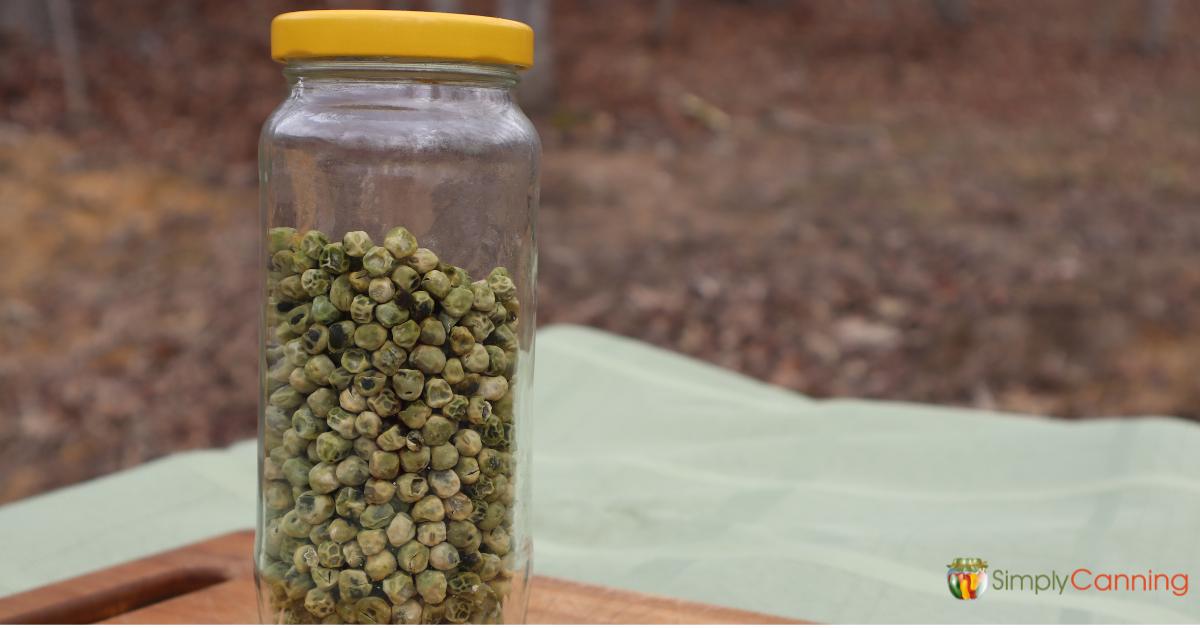
Properly dehydrated peas are brittle and hard. If they feel soft or chewy, they need additional drying time. Over drying is better than under drying.
Conditioning
Before storage, place dried peas in a glass jar with a tight-fitting lid for 7–10 days. Check the jar daily to check for moisture. Turn the jar or shake gently. Watch for clumping or condensation on the glass.
If you notice moisture put them back in the dehydrator for more time. If you notice mold, toss that batch and consider it a learning experience. If you see mold there is likely mold all over.
Storing
Once completely dry, store dried peas in airtight jars, or vacuum-sealed mylar bags. A cool dark place with no direct sunlight is perfect. A kitchen cupboard or pantry is fine.
Properly dried and stored, your peas will last up to 12 months. Many people keep them even longer.
Rehydrating Dry Peas
For a side dish, you can soak dried peas in warm water for 30–60 minutes, then cook as usual. Or just toss the dried peas directly into soups and stews and they will rehydrate during cooking.
Other dehydrating vegetable options.
- Dehydrating Onions (add link when published)
- Dehydrating Green Beans
- Dehydrating Tomatoes
Pease are one of the easiest things to dehydyrate. They make great shelf stable food to use in either cooked dishes or even rehydrated and used like fresh.