How to Dry Okra
This page may contain affiliate links. More Information.
I had an abundant crop of okra this year. After freezing plenty—coated in cornmeal and ready for frying—I realized my freezer was packed full. I needed another way to store the rest, so I decided to try dehydrating it. And you know what? It was so simple!
Drying okra turned out to be one of the easiest preservation methods. In this guide, I’ll show you exactly how to dry okra step-by-step so you can keep enjoying your harvest all year long—without taking up precious freezer space.
How to Dry Okra
Preparing Okra for Drying
Start with fresh, tender okra pods — firm and bright green with no soft spots. Wash thoroughly to remove any dirt or garden residue. Mine come off the plant pretty clean so this was easy.
They do need to be tender. If you wait until they are too big they get fibrous. Just like with cooking okra fresh, the dried will be fibrous too.
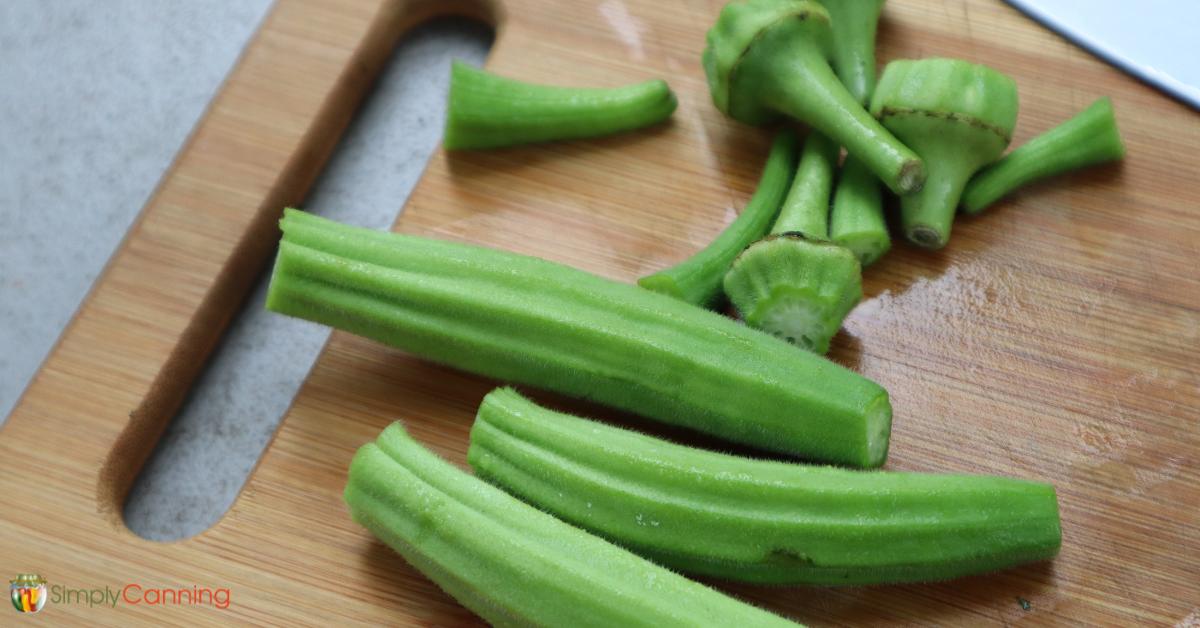
Trim off the stems. and cut the tips if desired.
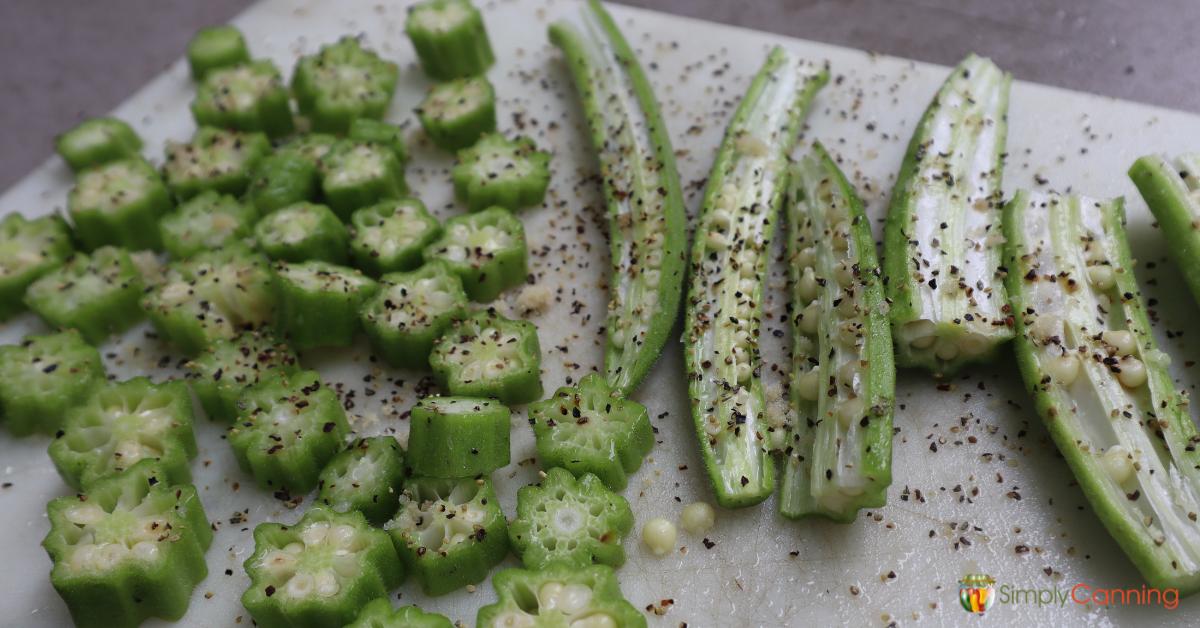
Cut into ½-inch round slices or thinner. I found the real thin pieces dried crunchier and are good for munching on. Slice lengthwise for longer pieces. I did a few this way just to try it. But I prefer the crosswise cut.
That’s it! No peeling or special prep required. And no pretreatment is needed for okra before dehydrating either.
- You can freeze it first if you like. It may dry faster as the freezing process does break down the cell walls in the okra and releases moisture. But I just went from plant, chop, into the dehydrator.
- You can also blanch okra before dehydrating if you like. But no blanching is needed.
You can season with some salt and pepper if desired, but it’s optional.
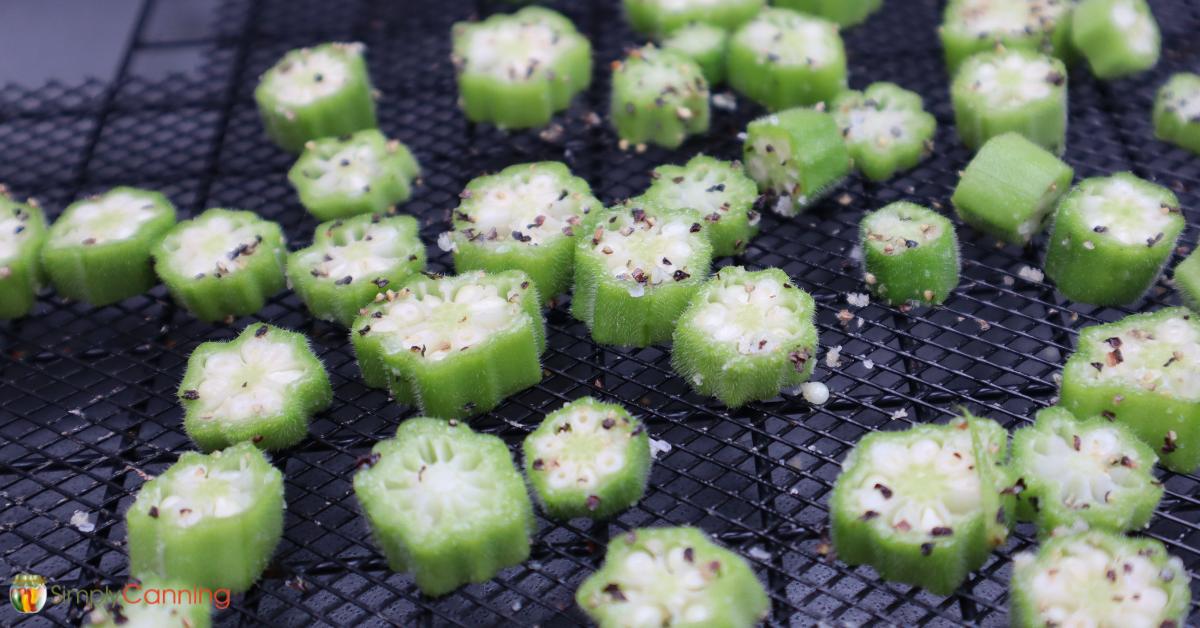
Drying Methods & Times for Okra
Food Dehydrator Method (Recommended):
- Temperature: 125°F (52°C)
- Drying Time: 8–10 hours
Arrange the slices in a single layer on dehydrator trays. The one downside? The slime! You will need to spread them out evenly and pull apart the pieces that might be stuck together before drying.
Quick tip: I like putting my dehydrator trays over the sink, so it will catch any small pieces that fall through the cracks.
Rotate trays halfway through drying for even results if your dehydrator needs it. I know my dehydrator has a sort of hot spot. Back lower left. So I simply rotate partway through.
If your okra tends to stick, use mesh tray liners.
How to Dehydrate Okra without a Dehydrator
If you don’t have a dehydrator, you could use these methods instead. These would not be my first choice but might work in a pinch.
- Oven Drying: Set oven to its lowest temperature (usually around 170°F). Prop the door open slightly for airflow and check every hour or two until okra is fully dry. It would work but might be pretty slow and uneven. It also would heat up your kitchen and use lots of energy.
- Air or Sun Dried: Possible in hot, dry climates, but expect a longer drying time and less consistent results. Here in TN, I would never try air drying okra. If you live in humid area and have good luck with this… let me know your tips!
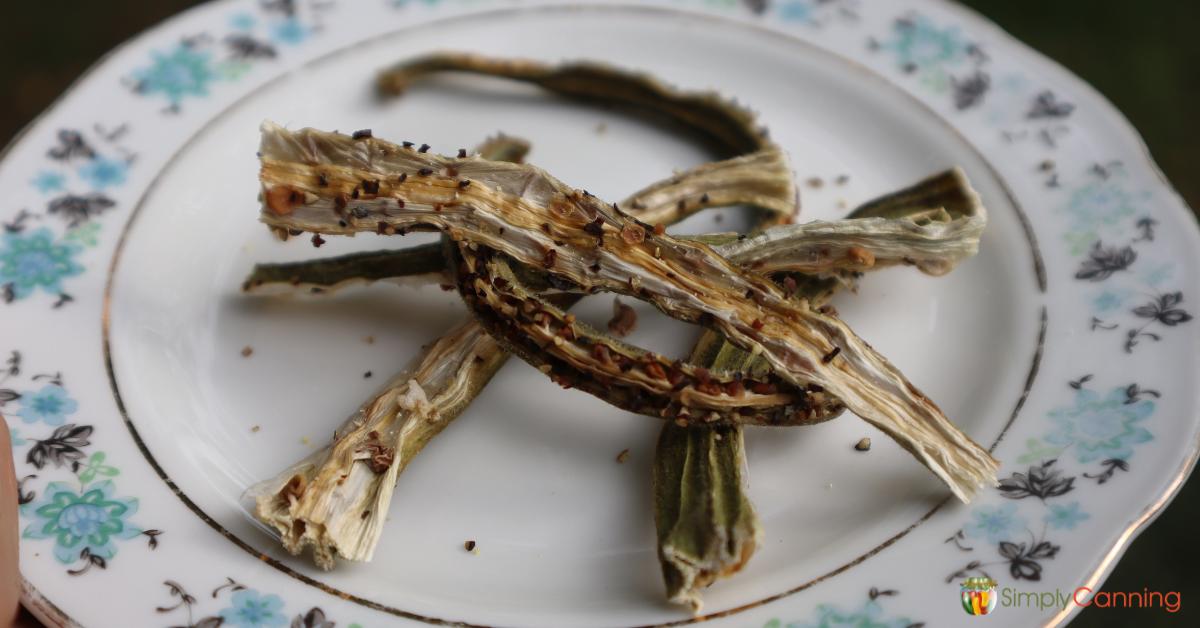
I tried slicing some okra lengthwise. It worked fine. But I think I prefer the crosswise rounds.
How to Know Okra is Dried
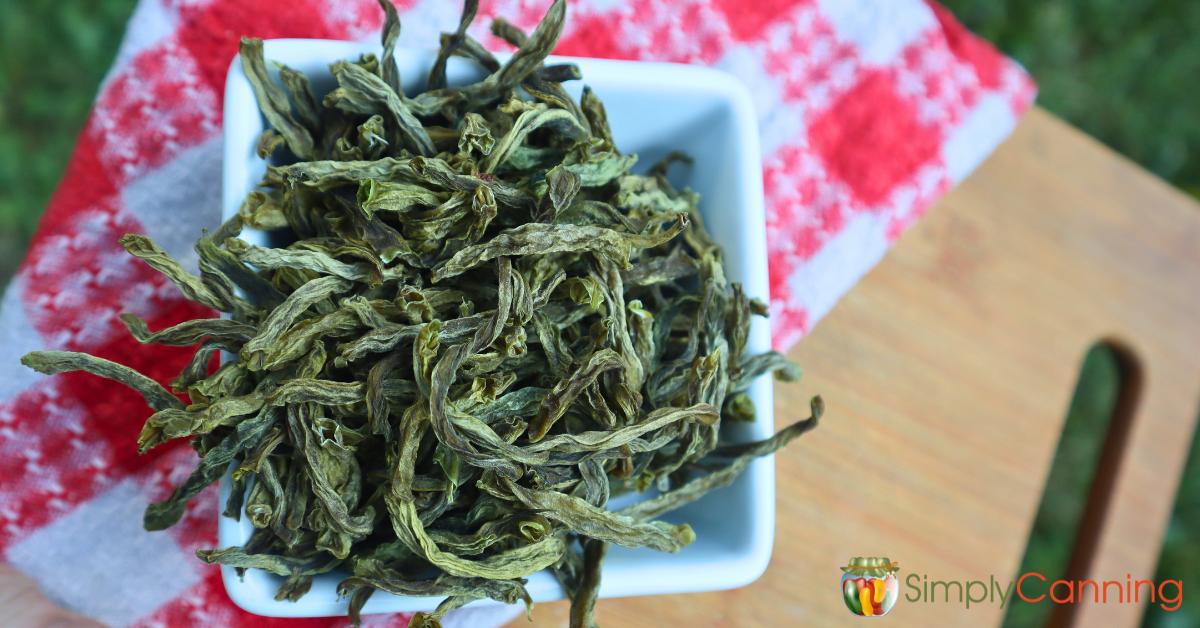
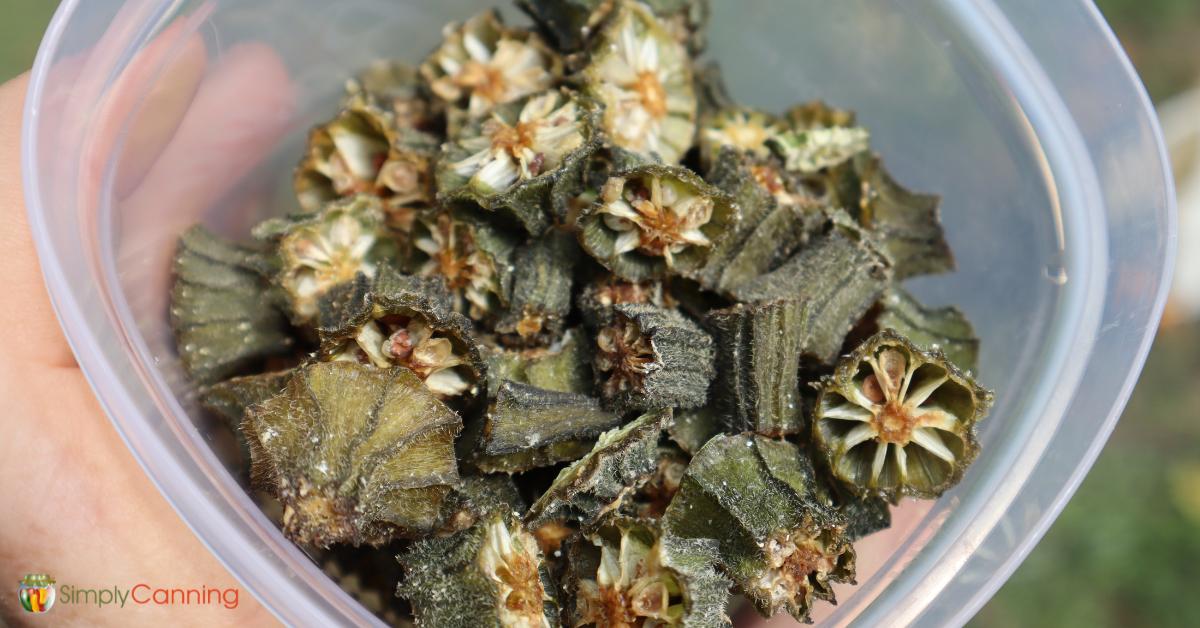
Okra should be hard and brittle when completely dry. No moisture or flexibility should remain in the slices. If you slice lengthwise the strips might be leathery.
Storing Dried Okra
After drying, condition your okra by loosely filling a jar with the dried pieces and cover it securely. You’ll need a tight fitting lid that keeps things air tight. Check the jar daily for about a week. If condensation appears, return the okra to the dehydrator for a couple more hours.
If mold appears first… you’ll need to dispose of it. Check the jar regularly so you notice any moisture as it appears and you can take care of it before it gets to the moldy stage.
Once conditioned, store in airtight containers like glass jars or vacuum-sealed bags in a cool, dark, dry place. Dried okra will keep for up to one year when properly stored.
Rehydrating Tips
Cover dried okra with hot water and let soak for about 20–30 minutes, or until softened. Drain before using. To use in soups or stews, simply toss dried okra directly into the pot — it will rehydrate as it cooks.
The big questions… what happens to the slime?
I rehydrated some okra by simply covering with hot water and allowing it to soak for 15 minutes. It rehydrated well. The texture is not crunchy like fresh but It could be easily fried or added to recipes.
The slime? It’s still there. 🫣. So if the slime bothers you dehydrating won’t help. Dehydrating just dries out the moisture. The ‘mucilage’ is still there and rehydrates as well. Which can be good news or bad news depending on your preference.
How to Use Dried Okra
I’ve only used my okra to snack on so far. A bit of salt, pepper and garlic powder on some crunchy thin sliced okra is pretty tasty! Add a sprinkle of cayenne pepper if you like spicy! You could spritz with a bit of olive oil if you like but I didn’t need it.
I will come back to this and fill in more when I’ve tried it myself but these are some ways I intend to try…
- In gumbo or stews: Adds flavor and bit of thickener.
- Soups or casseroles: Toss in dried for extra texture and nutrients.
- Powdered: Blend dried okra into a fine powder for thickening soups or adding nutrients to sauces.
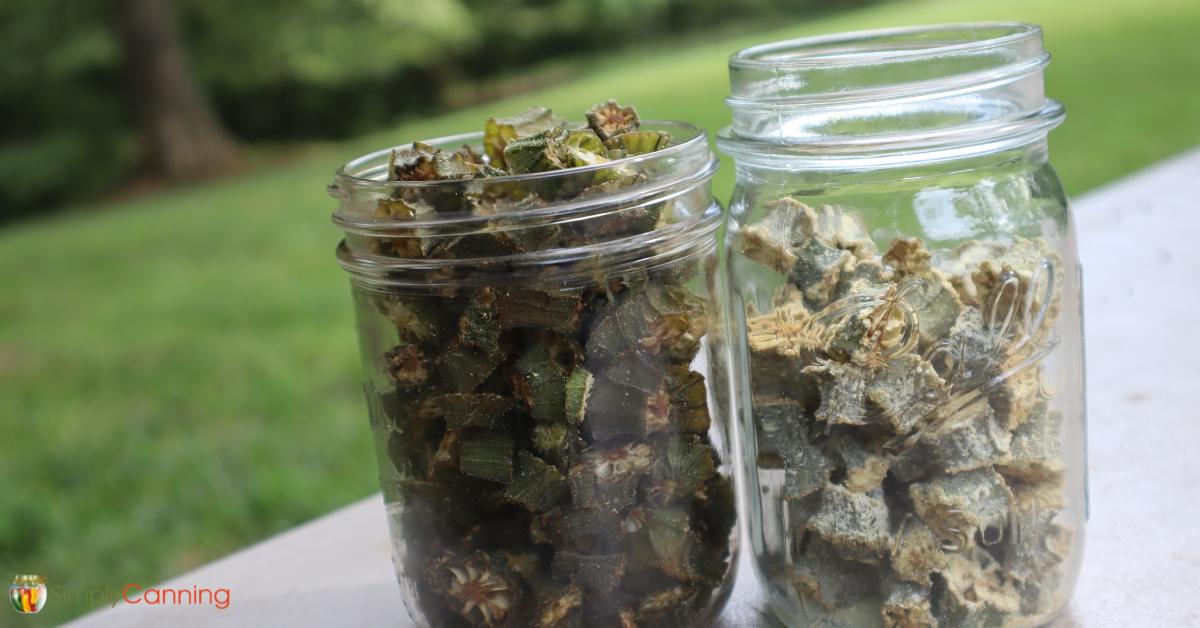
Drying Pre-treated Okra
I’ve also experimented with drying pre-floured okra. When I freeze okra I always do a few bags of okra already coated in a cornmeal mixture. Perfect for pouring right into a pan for fried okra.
I decided to dehydrate some like this as well. It certainly dried fine. But I didn’t think it through and rehydrating it is simply going to wash off all the corn meal. (what was I thinking??). So I probably won’t do this again.
Quick Reference for Drying Okra
- Temperature: 125°F (52°C)
- Drying Time: 8–10 hours
- Texture When Dry: Hard and brittle
- Storage: Condition first, then store airtight in cool, dark place
Want to Try Dehydrating Other Garden Veggies?
- Learn how to dehydrate carrots here!
- I also have a page about dehydrating green beans here.
- And don’t even get me started on how useful dried tomatoes can be once powdered.
FAQ
A dehydrator really is the easiest and most reliable way to go. It keeps the temperature steady and the air moving so your okra dries evenly without cooking. Once it’s nice and crisp, just store it in airtight jars and it’ll keep beautifully for months.
Yes, it really is. When you dehydrate okra, you keep most of the vitamins, minerals, and fiber. There’s no oil or additives—just plain okra—so it makes a great healthy snack or addition to soups and stews.
You can, but it’s a little tricky. Sun drying only works well in low-humidity areas with steady heat and plenty of airflow. In most places (especially here in the South), the air is just too humid and you’ll end up with mold instead of dried okra. A dehydrator gives much more dependable results.
That depends on how thick you slice it and the humidity in your home, but generally it takes about 8 to 12 hours in a dehydrator set around 125°F to 135°F. You’ll know it’s ready when the pieces are crisp and break easily.