
Canning Jam without pectin
This page may contain affiliate links. More Information.
Can you make jam without pectin and still get that thick, spreadable texture? Yes! Some fruits naturally contain enough pectin to create a good gel when combined with sugar and a bit of acid—usually lemon juice. Learning how to make jam this way is a great option for those who prefer a simpler, more traditional method.
This article focuses on how to make jam from fruits that do contain enough natural pectin, walking you through the no-added-pectin process and what to expect.

Quick Look
- Prepare your fruit – wash peel chop and mash.
- Add appropriate amount of sugar (see chart below).
- Cook down until thickened.
- Put in jars and process.
Let’s go into detail on these steps
Preparing your fruit.
Preparation will depend on the type of fruit you are working with. You’ll need to wash, peel, pit, and remove stems. Cut out any bruised portions. Finally chop and crush the fruit up to make a fruit mash.
- Deseeding Berries – Removing the seeds from berries is optional. Some people like seeds… some don’t. I don’t mind some seeds but if our jam has too much… we don’t care for it. Using a food mill is one way to easily remove the seeds from most berries.
- Mashing your Fruit – When you mash your fruit a potato masher or a meat chunker are handy tools. Be very careful if you want to do something like a stick blender. You don’t want to liquify your fruit. Just mash it up. If you blend too much it can affect the pectin in the fruit and you’ll end up with runny jam.
Add Sugar – Before cooking your fruit down you’ll wan to add the appropriate amount of sugar and for some berries acid (lemon juice). No pectin jam depends on the combination of ingredients for getting a good gel. The sugar counts! I’ve got more below on doing this with no sugar. Check the chart below for the amounts of sugar needed.
Cook down to the desired consistency or the mixture gels. this will take different amounts of time dependent on your fruit and how juicy it is. Remember these fruit spreads will have a gel that is similar, but not quite the same, as an added pectin jam. To know when it is done you’ll want to check for the gelling point. There are several ways to do this. I’ve got a section below on how to check for gelling point.
Process in a water bath or steam canner. I’ve got full processing instructions below.
How to check for gelling point
When you are making jam without commercial pectin, there are two ways to determine when your jam or jelly has reached the gelling point: the cold spoon test or the temperature test.
Cold spoon or plate test (refrigerator test)
- First you can use a cold spoon or cold plate to test your jam. When you first start making your jam put a plate or a spoon into the freezer.
- When the jam starts to thicken put a small amount on the plate or scoop some up with the spoon. The cold plate or spoon will cool the jam. Or you can even put it in the refrigerator to speed up the cooling down. Now you can see if it is thick and … jam-like.
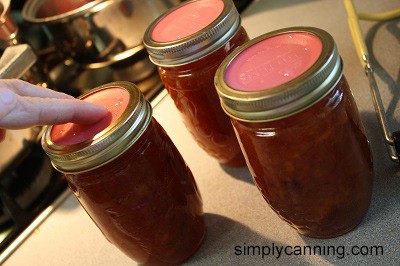
- On the plate; push your finger through the jam. If the jam stays apart and leaves a clean trail where your finger ran it is starting to gel. If it simply runs back together cook it a little longer.
- On the spoon, allow the jam to cool then turn the spoon sideways. If it slides off and looks like jam, it’s ready. If it drips and is runny… continue cooking.
Temperature check
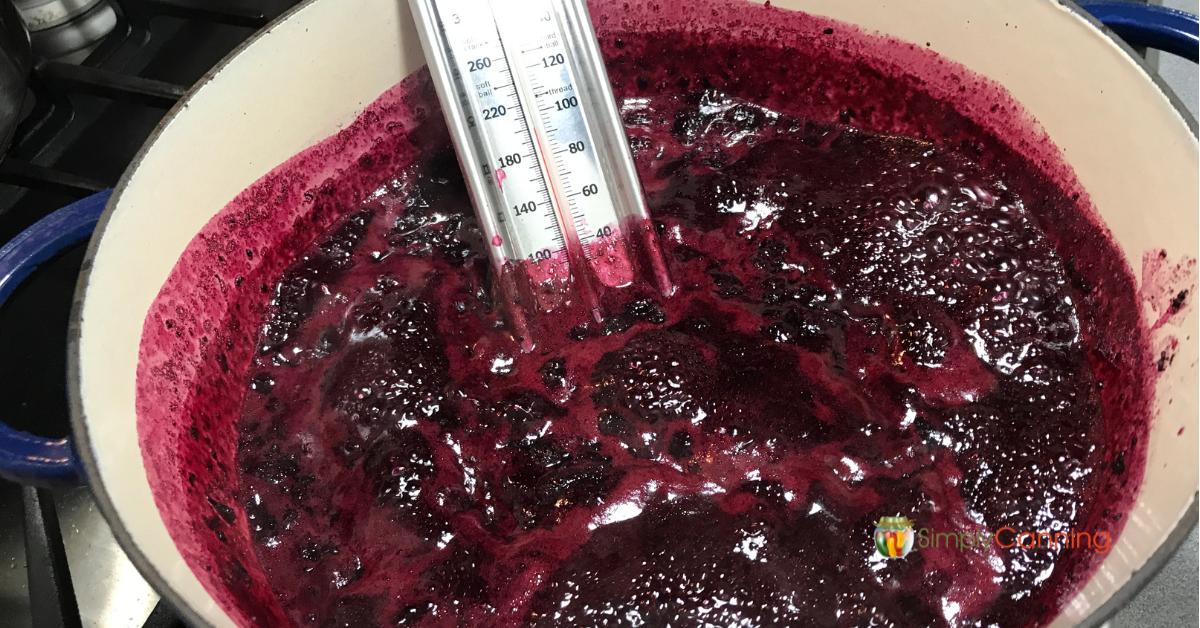
Another way to check for readiness is to use a candy thermometer. Gelling point temperature will depend on your altitude.
First, you’ll need to figure out the gelling point for your elevation. Determine your boiling point of water. Find the temperature by holding a candy thermometer in boiling water and then adding 8 degrees. This is your gelling point.
Or you can just see the chart I have below to check for your gelling point.
Gelling Point
- sea level -220 ° F
- 1,000 ft -218 ° F
- 2,000 ft – 216 ° F
- 3,000 ft – 214 ° F
- 4,000 ft – 212 ° F
- 5,000 ft – 211 ° F
- 6,000 ft – 209 ° F
- 7,000 ft – 207 ° F
- 8,000 ft – 205 ° F
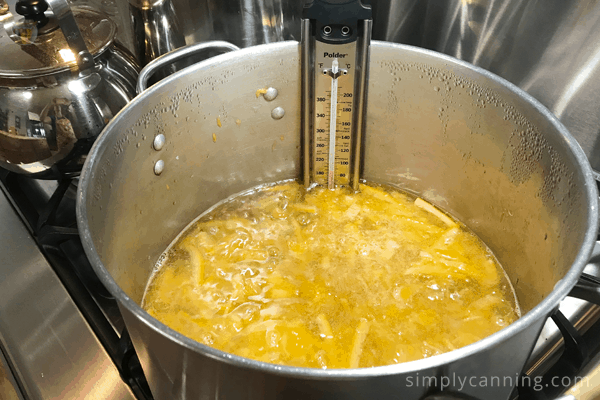
These temperatures are suggested by the National Center for Home Food Preservation. But I’ve found that if I cook my jam to just a little higher than suggested… it seems to work better.
You’ll have to try it on some batches and see what works best for you. Then write it down so you don’t forget what the perfect temp is each and every time.
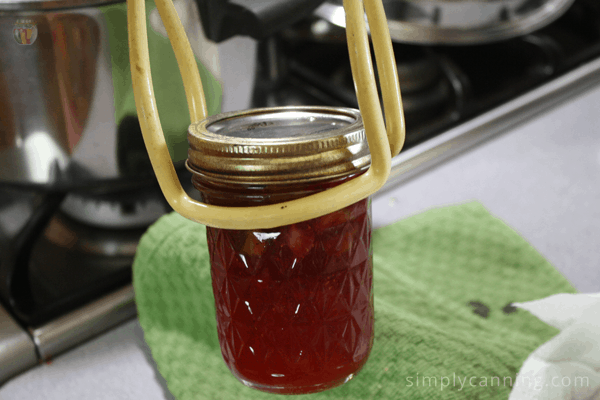
gelling point for jam with added commercial pectin?
If you are using a commercial pectin the cooking time up to your jelling point is unnecessary. In fact you likely will have a mess if you do cook for that long. Generally jams or jellies made with a commercial pectin are boiled for a minute or two after adding the pectin. The commercial product makes sure you get a nice gel each time.
Can you make Low sugar jam with no pectin?
You may notice that most jam and jelly recipes made without adding any extra pectin use a lot of sugar. It is the combination of sugar, natural pectin and, for some fruits, acid (lemon juice) that causes the gel. And the sugar is the main preserving ingredient.
I’ll admit, that IS a lot of sugar. This is the reason I mostly use commercial pectin. I like the ability to reduce that sugar and still have a nice gel. Plus the gel is so reliable without that long cook down time.
Crabapple Jelly is a good example of a fruit with lots of natural pectin. No added pectin is needed.
But that is sooo much sugar! Can it at least be reduced?
You can reduce the sugar—or even skip it entirely—and cook the fruit much longer to thicken it naturally. It won’t set like a full-sugar jam, but it’ll still be delicious and fruity. A fair trade-off, if you ask me!
The problem comes when you want to can it and store it on the shelf.
Extension sources mention that boiling fruit pulp until thick can resemble jam, but they also caution that no-sugar versions may need longer processing or a tested recipe. The trouble is—they don’t provide clear instructions or tested recipes for this.
So I recommend treating it as a freezer jam, or using a pectin that’s specifically made for low- or no-sugar recipes.
What about that low sugar pectin?
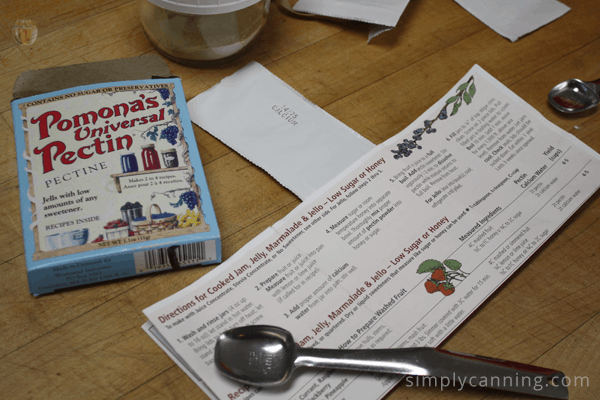
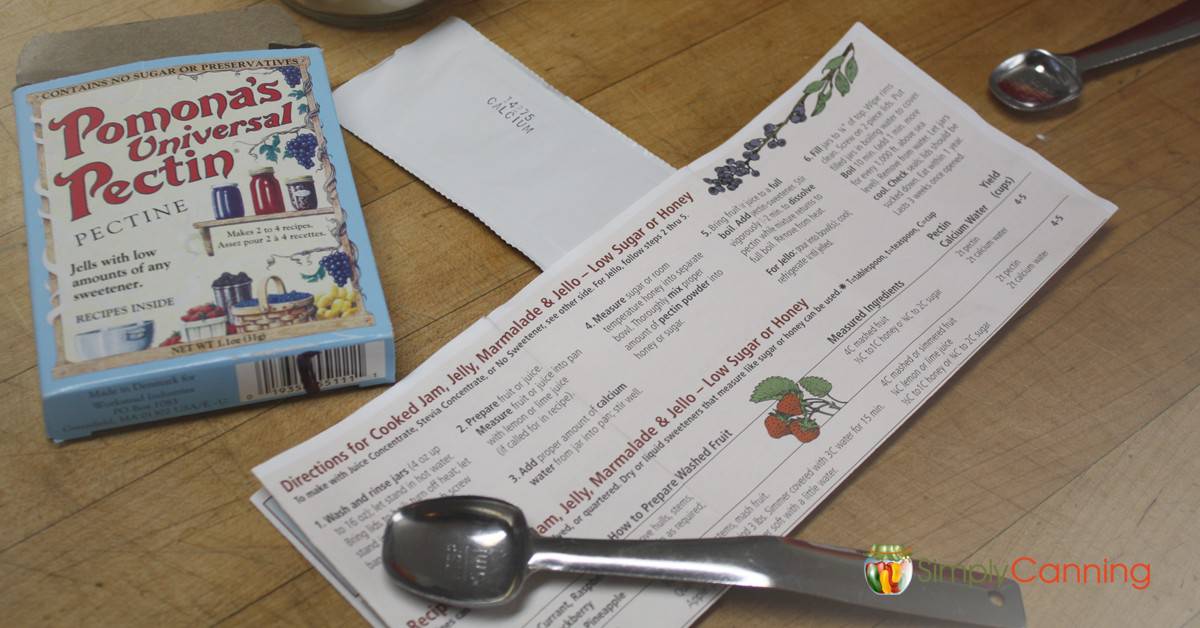
If you want jam with low or no sugar there are pectins designed just for this purpose.
- Pomonas Pectin is what I recommend but there are other brands out there too.
- Ball low sugar pectin also works well but there is dextrose in the ingredients list so it is not truly NO sugar. Just not much.
Just follow the manufacturer’s instructions in the package. Easy peasy.
One pitfall of low sugar jam…
Did you know that the shelf life of low or no sugar jam is shorter? That includes either storage on the shelf, or when you open the jar to use it. Learn more about my experience wiht low sugar jam and the shelf life here…
How to make jam recipes without pectin
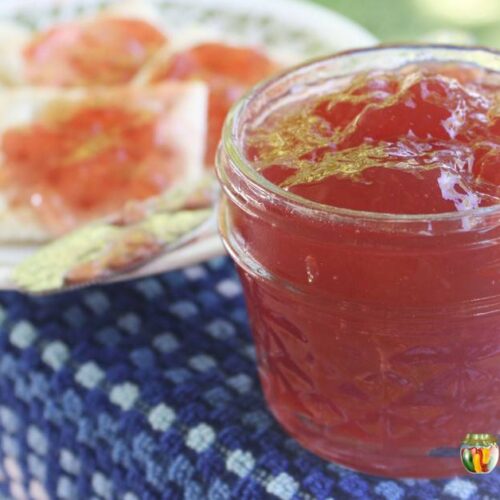
Equipment
- Water Bath Canner or steam canner
Ingredients
- Fruit
- Sugar
- Lemon Juice
Instructions
- Start by preparing jars and getting water in the canner heating. You want the canner hot, but not boiling, when the jars are ready to be processed.See full water bath canning instructions here.
- Wash, peel, pit, remove stems, remove bruised portions, deseed berries if needed.
- Chop and crush fruit to make a fruit mash.
- Measure your fruit mash and add the appropriate amount of sugar and acid. (See chart below)
- Bring to a boil stirring constantly.
- Keep the mixture at a rapid boil until you notice a bit of thickening. That is the point to check your gel to see if it is ready to be put into jars. (see how to check for gel below)
- Remove the jam from heat and skim the foam if needed.
- Fill hot jars with hot jam. Leave a 1/4 inch headspace.
- Wipe rims clean. Sticky jam on the rims may interfere with the seal.
- Add lids and screw bands and place the jars in the canner.
- Process according to your altitude.
Notes
- Sources
- https://nchfp.uga.edu/how/can_07/jam_without_pectin.html
- https://nchfp.uga.edu/tips/summer/Lowsugar_JamsJelliesST.html
- https://www.canr.msu.edu/news/preserve_low_and_no-sugar_jams_and_jellies
Related Pages
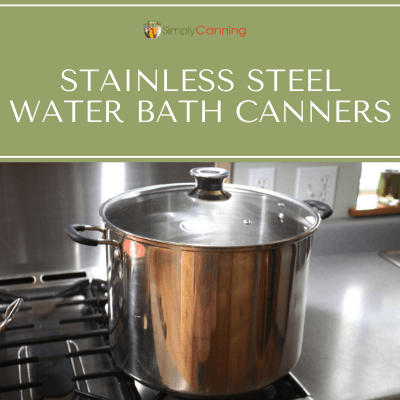
Stainless Steel Water Bath Canners
Stainless Steel Water Bath Canners are beautiful, long-lasting and best of all double as a Steam Canner and a large stock pot. One pot, three uses!
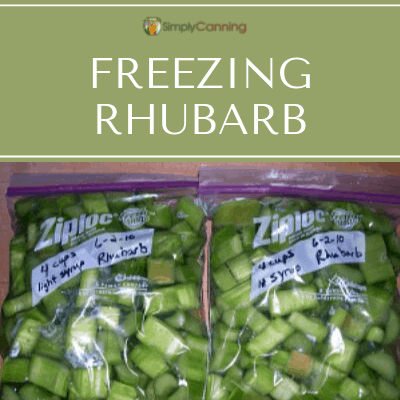
Freezing rhubarb is a smart way to keep it fresh to make pies, sauce, and other delicious dishes all year long! Methods included: Dry pack, sugar pack, and in syrup.
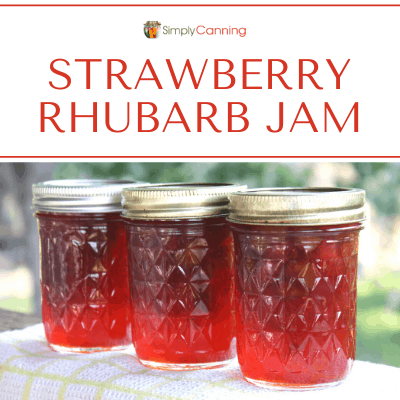
Enjoy an easy strawberry-rhubarb jam recipe. This homemade jam is made with pectin for an easy boil method.
I’m trying to find a jam chart that includes green (unripe) tomatoes. Have you any idea if a jam can be made with them without pectin?
BTW, thanks for a great site!!
Good question… I’m not sure. I don’t see any tested recipes for this and I haven’t tried it so.. sorry but I’m not much help on this one.