
Botulism in Canning? Why I’m not afraid.
This page may contain affiliate links. More Information.
Botulism is a serious form of food poisoning that can happen from improperly canned foods. Don’t worry—if you follow tested home canning methods and recipes it’s very avoidable. This article will explain what it is, how it happens, how to prevent it, and what to do if something goes wrong.
This page may be scary to some people. I truly don’t want to scare you! The good news is botulism in home canning is rare. It is easy to avoid.
If you do things right (and right doesn’t mean hard), you can enjoy your home-canned foods and grow and harvest for your own pantry.
So why am I not afraid?
- First I’m going to write about the scary part… ‘what is botulism?’ But don’t quit reading!
- Then I’m going to tell you the easy steps to prevention in home canned food.
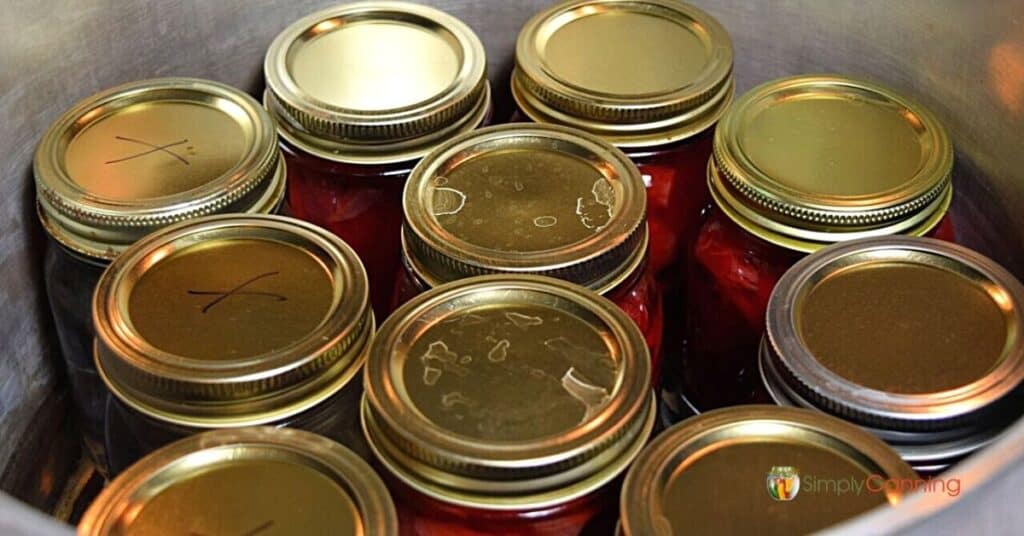
Botulism in Canning at Home – Respect, not fear
Botulism is caused by a toxin produced by the bacteria Clostridium botulinum. The bacteria is naturally present in soil and on foods like your fruits, vegetables, beans, or meat. Those bacteria don’t make you sick. They are harmless. The danger comes when they’re sealed in a jar of low-acid food without oxygen.
In that airtight, low-acid, room-temperature environment, the spores, grow, and start to die off and produce botulism toxins. It is this toxin that causes serious food poisoning known as botulism.
Emphasis: “We’re not here to be fearful, but to be informed and confident in safe practices.” (Respect it the key word here… not fear.)
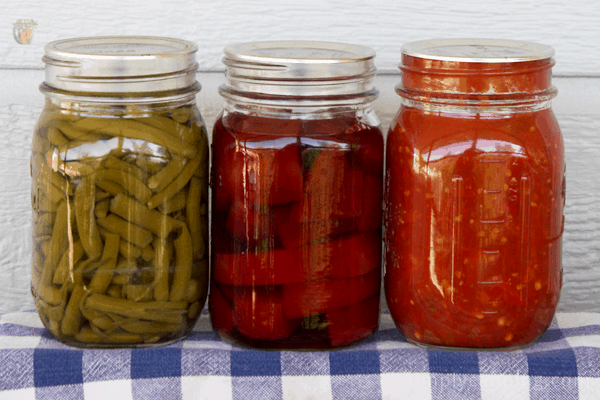
What Does Botulism Look Like?
This question can be interpreted 2 ways.
- What does botulism look like if you get sick? What are the signs and symptoms of botulism?
- What does botulism look like in the jar? Can I see botulism in the jar? Can I smell it? Can I taste it?
What does botulism look like? Symptoms?
Symptoms of botulism can consist of
- Nausea, vomiting, vision problems, muscle weakness, and fatigue.
- Drooping eyelids, vision may be blurred.
- Swallowing becomes difficult.
- Breathing may be difficult.
Basically, botulism is attacking and causing paralysis in the muscles that control these things.
Important: Botulism is an emergency. If you see any of these signs or symptoms, go to the emergency room immediately!
What does botulism look like in the jars?
Botulism is not detectable in your jars. I often see people say “just smell it” or “if it tastes ok it probably is”. But… and this is an important thing to know.
- Botulism can’t be tasted.
- There will be no bad smell.
- You can’t see it. No bubbling, no mold no visual indications.
- No bulging lids.
As far as I know there is no reliable test available to the home canner that will test for foodborne botulism. Your best bet is to know that you processed correctly (which is not hard) and trust that process.
A lot of food spoilage has signs. You’ll know it is there because it smells funny, tastes funny, or looks funny. Some things to look for are: bulging lids, food that spurts out of the jar when you open it (it is under pressure), leaking jars, or even mold on top of the food in the jar.
With botulism, you won’t have these signs.
How prevalent is botulism in home canned food anyway?
This type of question is quite common. We wonder if we are making a big deal out of nothing. And it’s true the statistics are low. But they are there. I’ve got more on that in this article about canning safety and “Are we on overkill?”
My point of view on this is….
- Don’t make a big deal out of the fear of botulism.
- Do take the needed steps to do things in the safest way possible.
That’s it, no problem, no big deal.
The Good News: Stopping Botulism in Canned Goods
If you have home canned foods and processed properly you should not worry. And remember (I keep repeating this because I don’t want to scare anyone)… proper processing doesn’t mean hard. It really doesn’t.
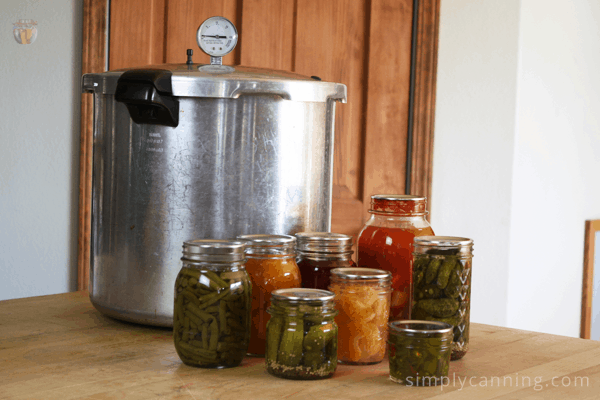
How to get rid of Botulism in Canning
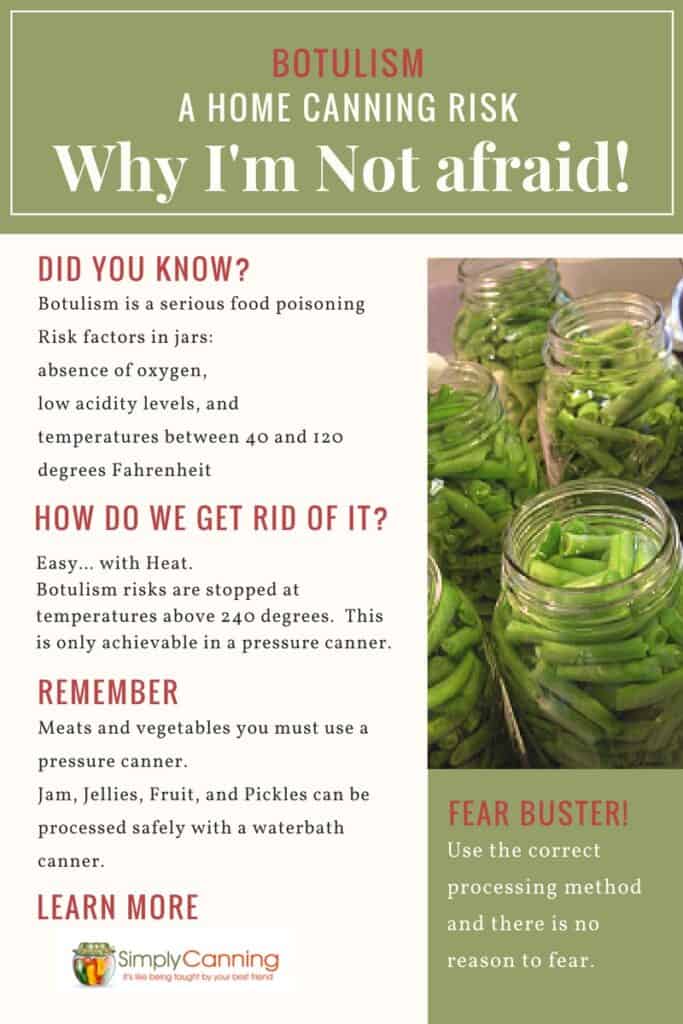
There are 2 ways to get rid of botulism in home canned goods: Heat and acidity. It all has to do with the ph of your food.
High-Acid Foods
Foods that are naturally high in acidity can be processed in a water bath canner. The natural acidity of the food reduces the risk of botulism so pressure is not needed.
Foods like fruits, jams, jellies, pickles, and any food with added vinegar:
- Use a boiling water bath canner
- Follow proper packing and processing times
- The acidity prevents the bacteria from producing toxin
Low-acid foods
Foods that are naturally LOW in acidity are at risk for botulism and should be processed in the high heat of a pressure canner. That high heat stops botulism in its tracks. Foods like meat and vegetables.
Foods like meat, poultry, fish, and most vegetables:
- Use a pressure canner
- Pressure reaches temperatures above 240°F, which stops botulism spores
- Boiling water alone is not enough. Even if you boil for hours and hours.
Special Case – Tomatoes can often be canned with either method….read more here.
Guidelines
Safe canning isn’t about guesswork. And it’s more than just temperature. The USDA and National Center for Home Food Preservation (NCHFP) have tested methods that include:
- Recommended headspace
- How to pack your jars
- Processing times
- Adjusting for altitudes
- Raw vs hot pack
As a home canner, If you follow the recommended guidelines and process your foods with the correct canning methods, you should have no problems.
How to Clean Up Botulism
If you suspect there is botulism in your jars, your food should not be “cleaned up.” It Can not be cleaned up. Questionable food should be disposed of. If your jar is still sealed, the best thing is to just dispose of the entire jar.
- Do not taste the food.
- If the jar is sealed dispose of it safely.
- If the jar is opened or leaking
- Keep pets away from contaminated food. Pets can get botulism poisoning too.
Don’t Be Afraid
I’ve been accused of fear mongering and holding people back from preserving food at home. That is simply not true. I have an entire site about home canning. Why would I want you stop canning!?!
My goal is to give you information, because I believe information conquers fear. The fact is, botulinum toxin is avoidable. Just follow tested instructions.
Get started with a Pressure Canner Today!
If you know you want to use a pressure canner to can meats and vegetables, but you are afraid of the canner itself and the process of pressure canning, you are not alone!
There are so many people with this fear, that I created this video training to help you get that canner out and running: Pressure Canning Confidence Video Series.
New Canner with Botulism Fears – Can you Relate?
Paige asks:
Okay, I finally attempted to can my meat sauce following all directions and using a pressure canner. They sealed beautifully. I polished the jars and set them in my pantry with pride. Now, I just look at them. As a Biology major I just wonder if they contain delicious sauce or eminent death from Botulism! I am scared to consume them! Is there any way to test food product for Botulism to ensure your methods are solid?
Sharon’s Answer:
Paige, I don’t know of a method to test for botulism in your jars. However, I’m so glad to encourage you that as long as you are sure you followed the tested methods, your meat should be fine. Enjoy it.
It is nice to encourage someone who is cautious!
More Canning Safety Questions
Liquid loss in home canning – what causes it? answers common questions about liquid loss and safety.
Should you boil your home canned food before serving? Boiling low-acid foods prior to eating them – not during the processing. Let’s clear a few things up.
“Help! I made a canning mistake. What do I do?” Here’s how to know if you should reprocess or just throw it away.
Frequently Asked Questions:
Does Botulism Have a Taste?
No, it does not. It won’t taste sour, it won’t taste bad, it’ll just taste like your food. Do not taste test any jars you are unsure of.
No, you can’t. It won’t smell sour, it won’t smell bad, it’ll just smell like your food. If your food is spoiled in other ways it may smell bad but…. smelling a jar does absolutely nothing when it comes to botulism.
Nothing! You cannot see botulism. It doesn’t bubble. It doesn’t get cloudy. It doesn’t do anything. You won’t know it is there until you get sick.
The most reliable way to know if your food is safe is by your canning methods. Be confident in the directions you follow. Pay attention to details. The recommended guidelines are filled with an abundance of caution. If you follow those directions you’ll be fine. :).
Any food that is improperly preserved, whether that is home canned or even commercially canned foods.
For home canners, this will often be something that should have been processed in a pressure canner. Potatoes, corn, green beans. All vegetables and meats need that high heat and pressure, and tomatoes need the added acidity.
Of course! With quick treatment you will likely survive. Fewer than 5 of every 100 people with botulism die. But they get very very sick! And yes, there have been some that died. Why take that risk? There are often very long term health problems for someone who goes through this
Pin this to Find Later
Resources
https://www.cdc.gov/foodsafety/communication/home-canning-and-botulism.html
https://www.cdc.gov/botulism/
https://www.cdc.gov/botulism/consumer.html#throwaway
https://nchfp.uga.edu/publications/publications_usda.html
https://www.cdc.gov/botulism/testing-treatment.html
Thank you for putting really good information up like this. I have tried canning myself and some successful and most not. Things like this really does help thank you.
I found a jar in my mom’s canning pantry that has something growing on the top of the contents. Very scary looking. The lid is on it. I’m not sure how to discard this thing. It doesn’t seem right to just throw it in the trash. Then it ends up at a local garbage place and then a landfill …either place the jar gets broken…and then what happens to people and animals nearby? how do i “discard” it in the safest way?
Here is a link to how the National Center for Home Food Preservation suggests we dispose of food. Personally, I’ve never gone to this extreme. If I suspected botulism, I might… but I never have had to. I don’t think what you’ve got is botulism if it is moldy. Remember botulism isn’t seen or smelled so if you see mold it might not be. But you are correct, animals can get sick too. What I’ve done with moldy yucky food is either A- flush the contents and lid then clean and sterilize the jar. B- Bury the contents, throw away… Read more »
Hi, Sharon. I love it when I open my mailbox and there is an email from you. I read every word.
Would you please advise me on the use of olive oil in canning meat sauces such as spaghetti sauce. I’m aware this would need to be pressure canned, but what amount would be safe to use?
Thanks,
Karen, a nice one since my name now means bad things
You would not want to use olive oil unless it is a specific tested recipe that includes it. Generally there is no oil in home canning. Occasionally one will use a very small amount. And goodness!… all of you named Karen have to deal with a crummy deal huh?? You are probably a very nice Karen. :).
I am trying to understand – if I make stock that is boiled/simmered for 3-6 hours to get all the nutrition and flavour from the bones, strain the stock, bring the strained stock back to a boil for 20 minutes or so, pour boiling hot stock into hot sterilized jars how could this stock then contain botulism? The stock is safe to eat at the point I put it in the jars, why is it suddenly unsafe once in jars? Why the need to use a pressure cooker? The jars will seal without pressure cooker, so sealing the jars isn’t… Read more »
The benefit of processing is that the food in the jar is sterilized while in the jar with the lid and is protected from any outside contaminates. Even though so brief, there is potential for bacteria to be introduced to the jars while filling. You are right in that the jars will seal just because of the temperature difference. But sealed doesn’t mean correctly processed. And yes, botulism is very rare… but it does happen. I’ve got some more articles you might like to read with more of my thoughts. Canning Overkill?? How to Can & Know that Your Home… Read more »
I only can fruit from my garden. Is fruit at risk to forming botulism?