How to Dry Beets
This page may contain affiliate links. More Information.
Want to know how to dry beets at home? I’ll show you how. This guide walks you step by step through washing, peeling, slicing, drying, and storing, with tips to keep your beets flavorful and long-lasting.
Dehydrating beets is a wonderful way to preserve their deep color and earthy sweetness while freeing up space compared to canning beets.
How to Dry Beets
Preparing Beets for Dehydrating
Beets do take a little more prep than some vegetables, but it’s not difficult—and the results are worth it.
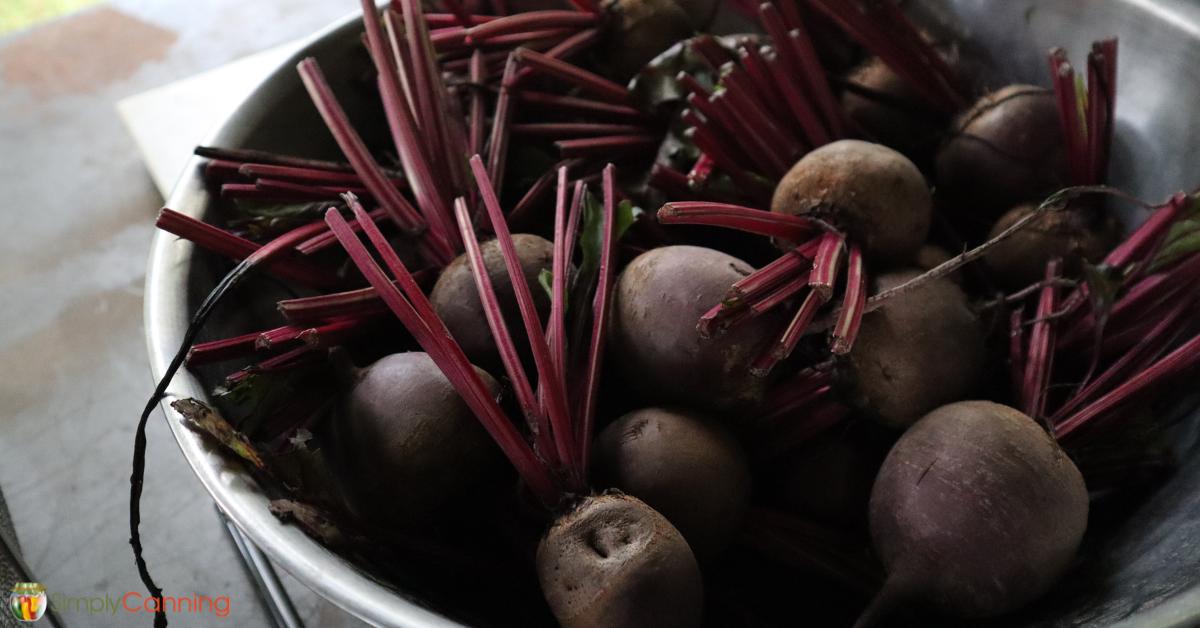
Start by washing the beets thoroughly to remove any dirt. Trim off the greens, leaving about 2–3 inches of stem. This helps reduce color bleeding while they cook.
Next comes peeling and blanching—but you can do both at the same time.
How to peel beets for dehydrating
Place whole beets in a pot of water and boil until they’re tender. You’ll know they’re ready when a fork slides in easily.
If your beets are different sizes, it helps to sort them a bit. Smaller beets will cook faster, so either cook them separately or just pull them out early with a slotted spoon.
Once they’re tender, let them cool just enough to handle. Then use your hands to slip off the tops and skins—they should come off easily without much effort or knife work. Cut off the root end if needed.
Slicing
Now you’re ready to cut them up. How you prep them from here depends on how you plan to use them later. A key thing to remember is to make your pieces as similar in size as you can. This makes for more even drying.
- Slices – Great for general use and easy to dry evenly
- Cubes or sticks – Good for soups and mixed dishes (I found that a french fry cutter works great.)
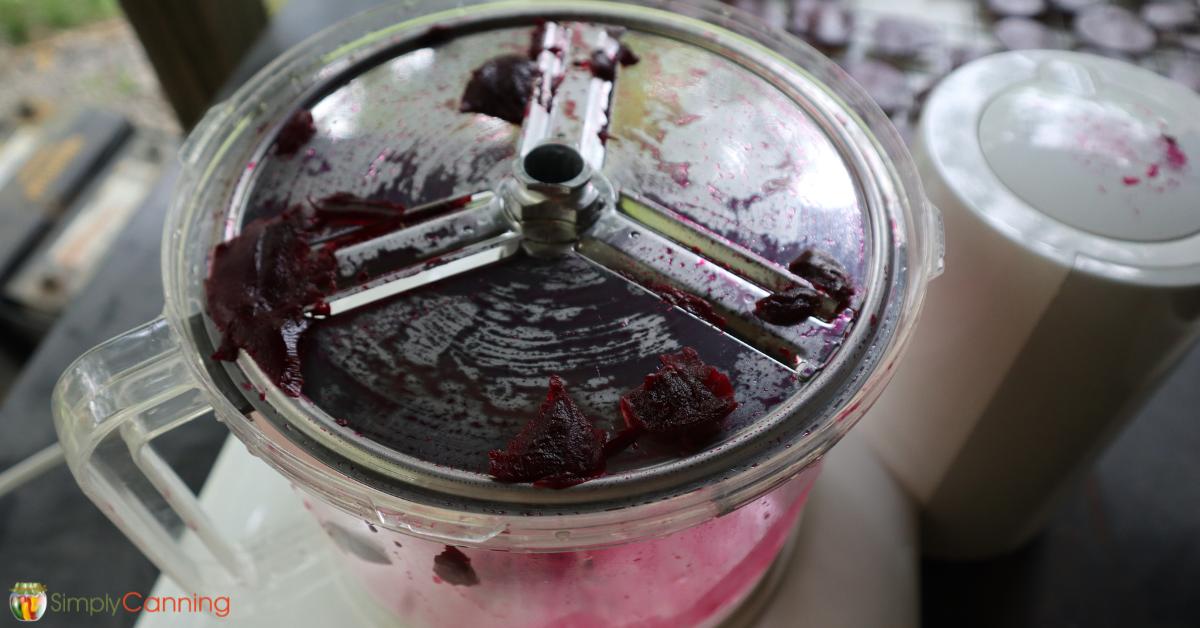
- Shredded – Dries faster and works well for making beet powder
If you’re shredding, spread the pieces on parchment paper on your trays if needed so they don’t fall through. Remember they’ll shrink as they dry.
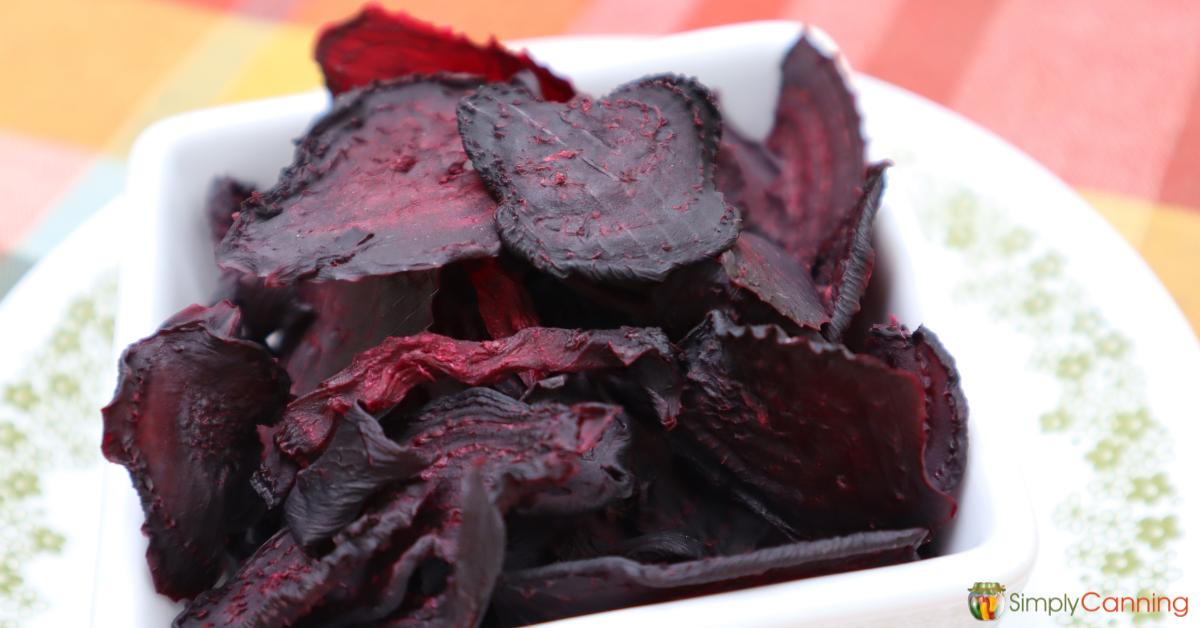
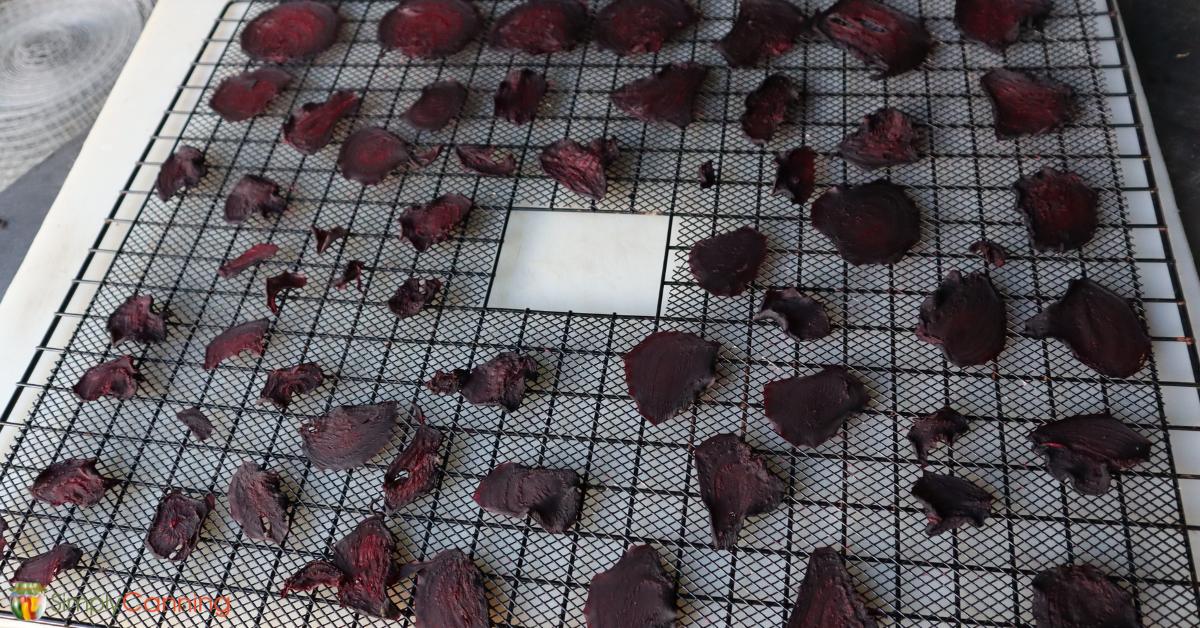
A quick note on slices: thin works best. Some people make beet chips, but they can turn out more chewy than crisp. (We ended up calling ours “beet jerky”!)
Drying Methods & How Long It Takes to dry
Dehydrator (Recommended)
- Temperature: 125°F
- Drying Time: 10–12 hours
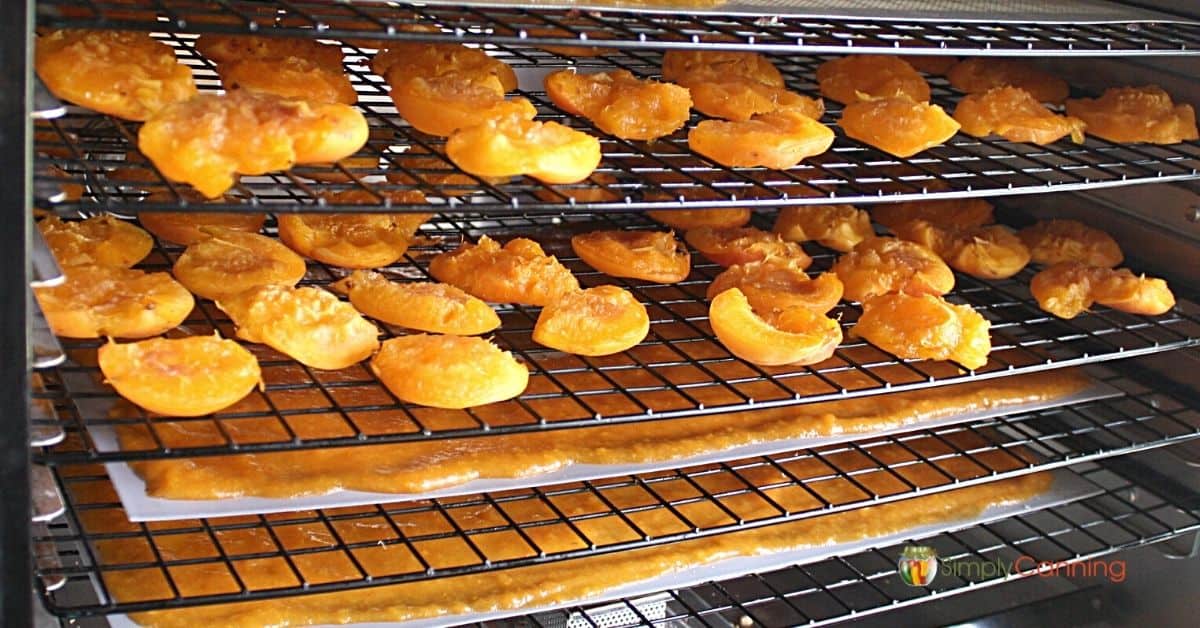
Spread the prepared beet pieces in a single layer on trays.
I haven’t had much trouble with sticking, but it still helps to turn the pieces partway through drying. Obviously shreds won’t turn easily but just give them a little stir around. (Remember shreds will be on parchment if needed!)
Oven Drying (Alternative)
Use the lowest temperature setting your oven allows. Place beets on parchment-lined trays and monitor closely. Expect faster drying and a bit more color change if you use this method.
Air Drying
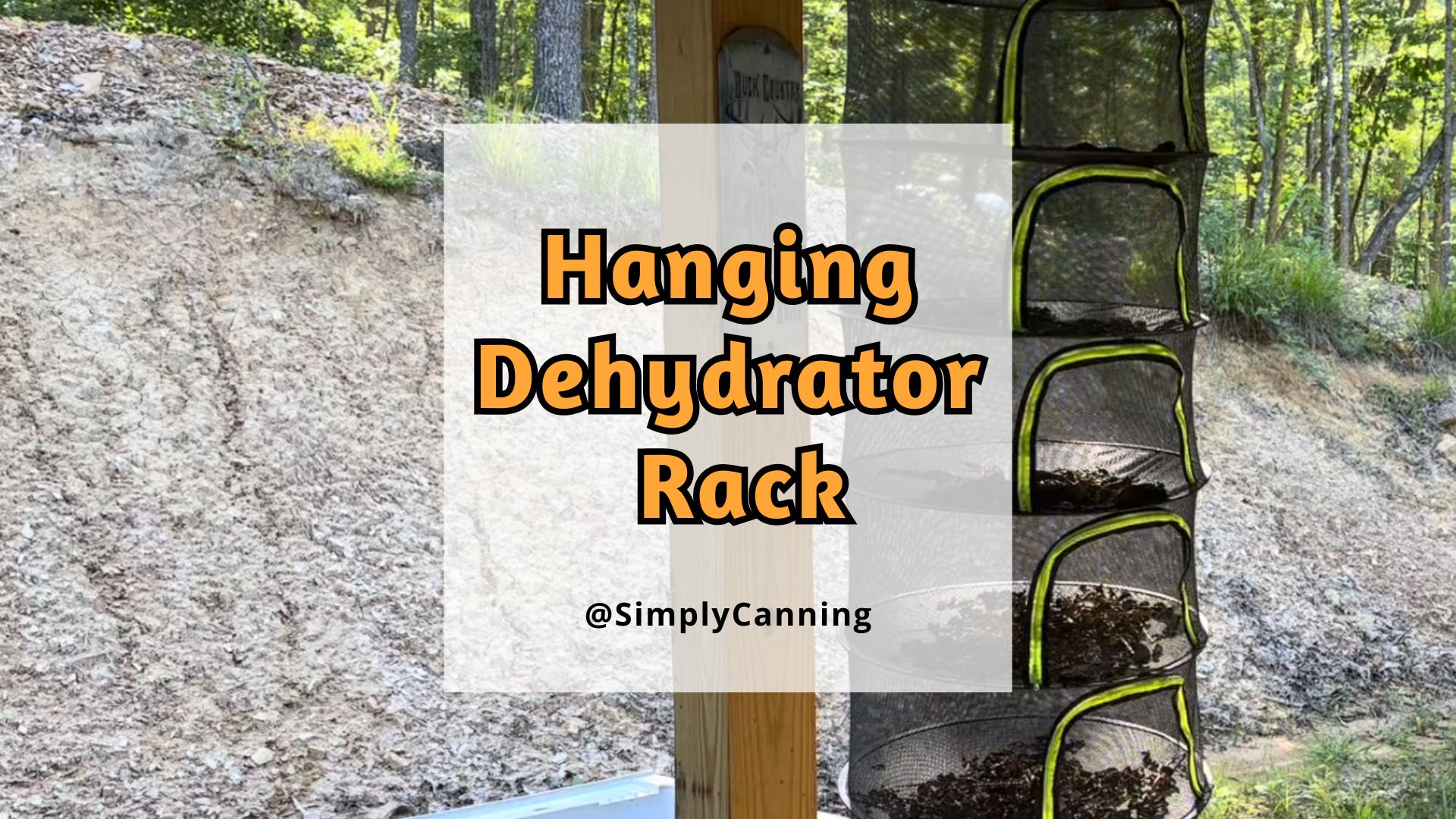
Air drying isn’t recommended due to the natural moisture and sugar content of beets. But if you live in an especially dry climate and can count on a gentle breeze, give it a try. Spread beets out on trays, cover to protect from insects.
Texture When Dry
Beets should be fully dry before storing—no softness or cool spots in the center. The goal is hard.
Beet Chips
I’ve read about making beet chip and it sounded like a great idea. But…. when we did our beet slices they never did get super crunchy like chips. They were very hard… but ended up ‘bendy’ like a very well done jerky. We actually liked it and chewed on it dried and hard.
How to make beet powder
For beet powder, you can simply grind dried shredded beets into powder and add to smoothies, dressings, or homemade pasta for a vibrant boost. Make sure the shreds are fully dry or you’ll end up with clumping.
Rehydrating Tips
To rehydrate, cover with warm or hot water for 20–30 minutes depending on the size of your pieces. Drain and use in soups, roasted dishes, or just serve as a side. (Shredded dried beets can be stirred directly into soups without pre-soaking.)
Storage & Conditioning
Conditioning is a simple step to make sure your beets are fully dry before storing.
Place dried beets in a jar with an air tight lid for 7–10 days, shake and check daily. If condensation appears, return them to the dehydrator to finish drying.
Storage
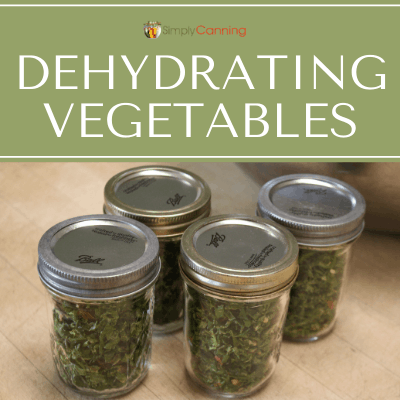
Like all dehydrated food, make sure to store dried beets in an airtight container like a canning jar, Mylar bag with oxygen absorber, or other storage container in a cool, dark place. I use canning jars a lot since that’s what I have on hand!
My Tips & Favorite Uses for Dried Beets
Shredded beets make the best beet powder, perfect for natural coloring or sneaking nutrients into baked goods.
Simply rehydrate and serve as a side vegetable.
If you grow beets, dehydrate the greens separately—they’re great too. Don’t waste a bit of that nutrition you worked so hard to grow!
Quick Reference
- Temperature: 125°F
- Drying Time: 10–12 hours
- Texture: Leathery or brittle
- Storage: Condition 7–10 days; store airtight