The Best Way to Freeze Eggs; 4 Methods Compared
This page may contain affiliate links. More Information.
Wondering what’s the best way to freeze eggs? Every summer, my hens go into overdrive. I’ll walk out to the coop and come back with a basket full of eggs. But when winter rolls around, those same hens decide to take a break. Suddenly, no eggs.
That’s what got me thinking about freezing chicken eggs. I decided to experiment and find out which method works best.
Here is a link to the silicone muffin pan that I used for freezing both beaten and unbeaten eggs.
Silicone Muffin Pan
Can you Freeze Eggs?
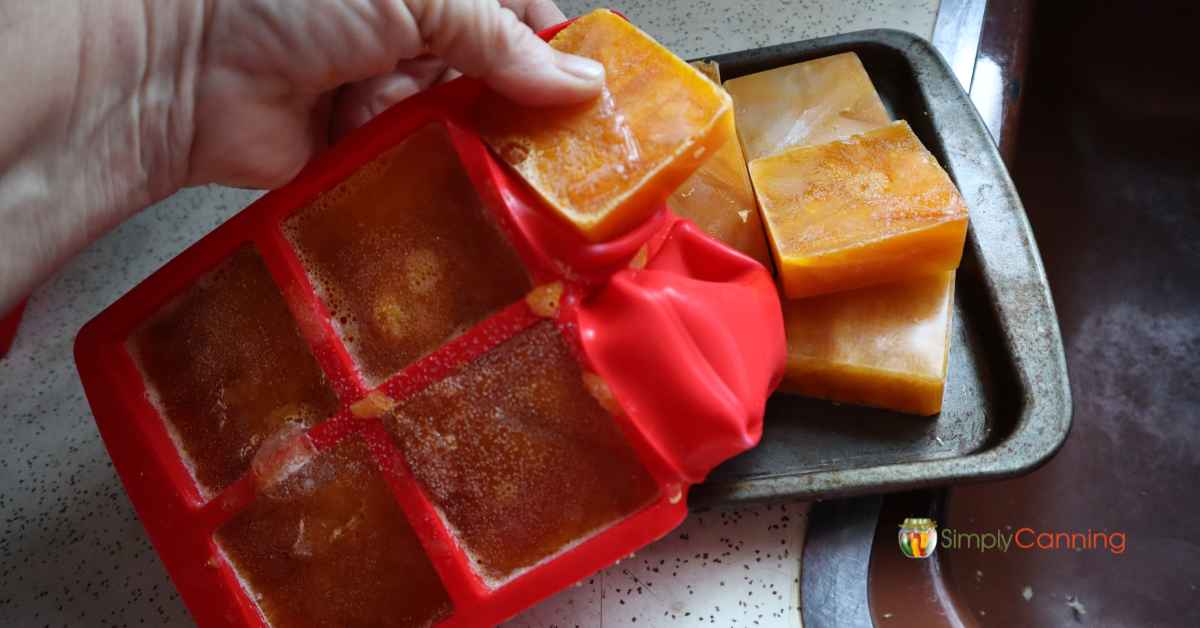
Can you freeze chicken eggs? Absolutely. I’ve listed 4 methods here and shared my best and worst options. (in my opinion) This works for more than chicken eggs too.
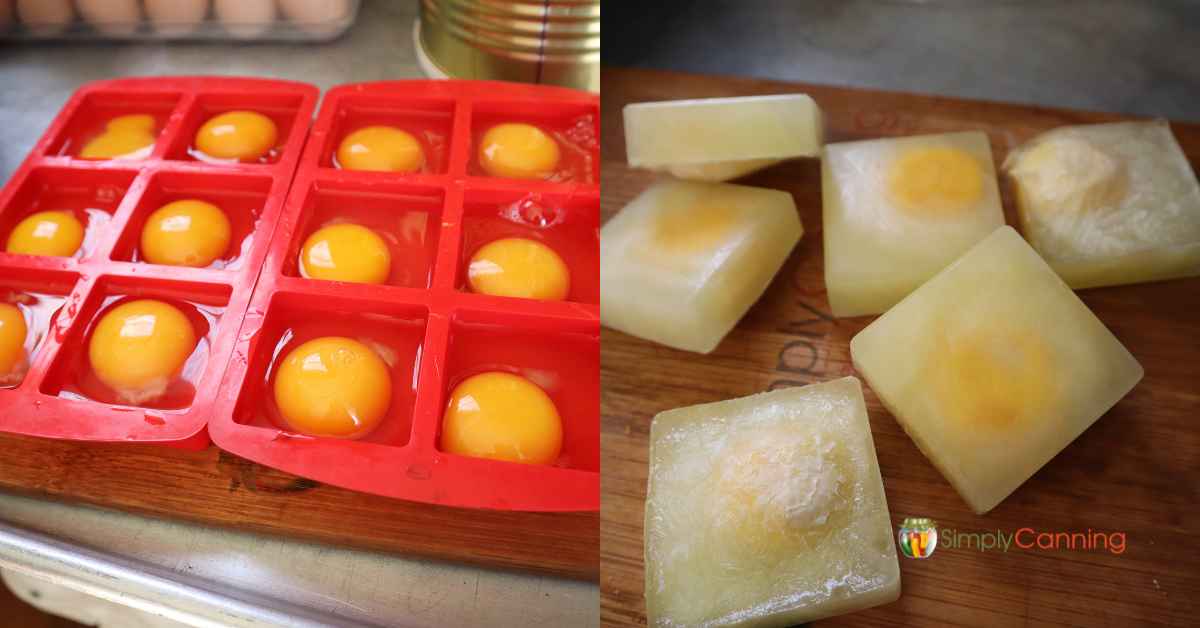
Method 1: Freezing Whole Eggs in a Silicone Muffin Pan
This method didn’t work well for me. The egg whites thawed just fine, but the yolks became thick and gummy. I used flexible silicone molds — the kind made for muffins or cubes.
What I did:
- Crack whole eggs directly into silicone molds or muffin cups without beating them.
- Once frozen, pop them out and store them in freezer bags.
Pros/Cons:
- Pros:
*Simple and straightforward.
*You’ll get one egg per cup so it’s easy measurements later. - Cons:
*Texture changes; Whites get runny and yolks are thick.
*Whites and yolks do not easily blend back together. A blender is needed.
Method 2: Freezing Beaten Eggs in a Silicone Muffin Pan
I use flexible silicone molds — the kind made for muffins or cubes. You can find them in all shapes and sizes, but I like the ones that hold about one egg per cup. Standard ice cube trays might work, but it will be more difficult to get the eggs out after freezing.
Here’s what I do:
- Crack and lightly beat the eggs in a bowl just like you’re making scrambled eggs.
- Pour the mixture into the silicone molds.
- Freeze until solid.
- Pop the “egg pucks” out and store them in a freezer bag.
Pros/Cons:
- Pros:
*You’ll get one egg per cup so it’s easy measurements later.
*Egg and yolks are already mixed
*Cooks up well. - Cons:
*The texture is odd, but it does cook up fine.
This is definitely my favorite method for freezing fresh eggs because it’s portioned, easy to use.
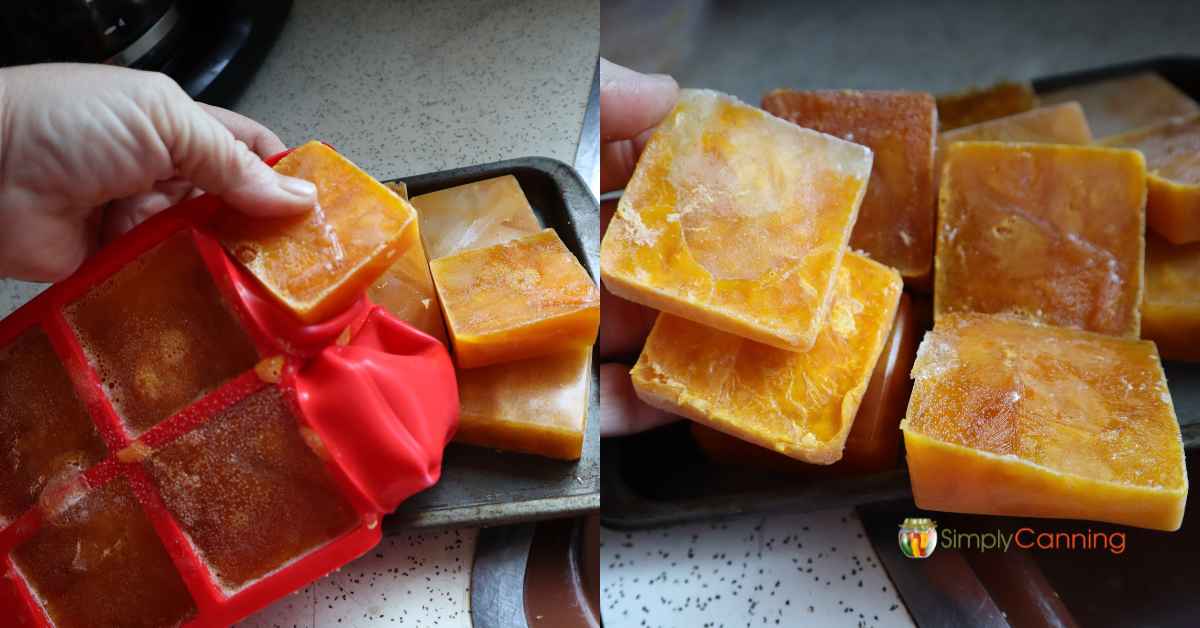
Method 3: Freezing Beaten Eggs in a Freezer Bag
This is a solid option — and my second favorite way to freeze eggs. Mix your eggs first and freeze them in freezer bags instead of the silicone molds. Don’t over whisk the eggs. Just mix them up with a fork.
Here’s how I do it:
- Crack and beat the eggs.
- Pour them into quart-size freezer bags — I like to freeze six eggs per bag, but you can choose whatever quantity fits your family’s needs.
- Lay the bags flat to freeze, then stack them neatly in your freezer
Pros/Cons:
- Pros:
*Space-saving and good for larger recipes.
*Even with a texture change they cooked fine and the flavor was great. - Cons:
*Requires thawing the entire batch, less flexible for small uses.
*Can be messy. I’ve had some bags leak.
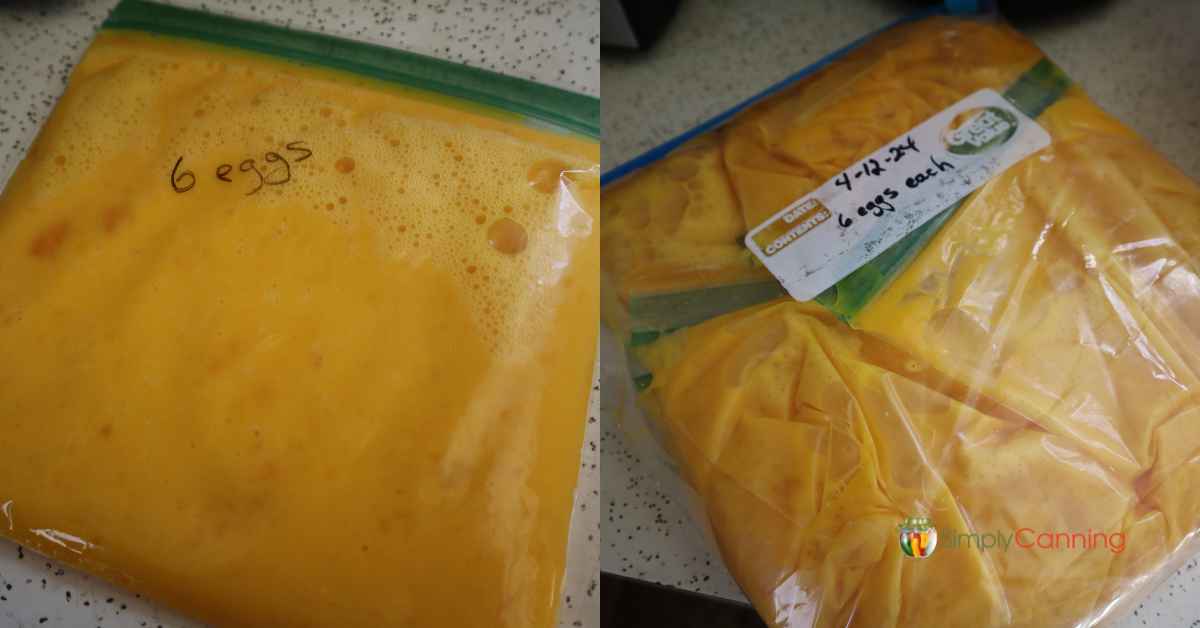
Then package those small bags in gallon size freezer bags for extra protection.
Method 4: Freezing pre-cooked Scrambled Eggs
Lastly, I tried cooking them. I scrambled the eggs before freezing them — cooking them first and then freezing the cooked eggs in bags.
What I did: Lightly beat six eggs (add salt and pepper if desired) place into a freezer bag, remove air, and freeze flat.
Pros/Cons:
- Pros:
*Space-saving and good for larger recipes. - Cons:
* Requires thawing the entire batch, less flexible for small uses.
* Reheated eggs are just overcooked and unappealing.
* Eggs turned out overcooked and unappealing.
Note – Freezing scrambled eggs like this is my least favorite method! Best use would be for breakfast burritos where you add salsa or some sort of egg dish with a sauce to cover the texture of the egg.
Freezing eggs; A few Questions I didn’t cover in the video above.
Can You Freeze Eggs In the Shell
Freezing eggs in the shell (raw) does not work. What happens is as the egg freezes it expands and your shells will break.
Can You Freeze Hard-Boiled Eggs
I’ve never tried to freeze hard boiled eggs but my initial thought is… I don’t think so. It will mess with the texture. So I looked it up and I was right! Apparently when the whites freeze it forms ice crystals and as it thaws the texture becomes very rubbery. Not a good thing.
But you can freeze egg yolks just fine. So what I would do is separate your eggs, freeze the yolks, and use the leftover egg whites up soon. What about a lemon meringue pie? Egg whites is the main ingredient in the fluffy white top. :).
Tips for best results
Pick a method, or try all three, You might like something different than I do. You will be glad when the snow is flying and the eggs are scarce.
- Don’t whip your eggs hard enough to incorporate air. Just mix them up well.
- Label bags or containers with the date and quantity.
- Use freezer-safe materials to package and prevent freezer burn.
- Plan ahead for thawing time. Let eggs thaw overnight in the refrigerator. Don’t rush the process in the microwave — it can partially cook them and ruin the texture.
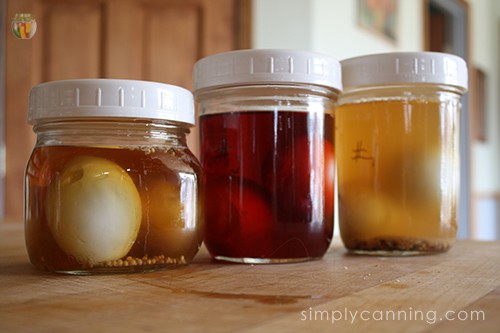
Pickled eggs is another great way to use up excess eggs in the summer months. It is not a long term storage. Keep these in the fridge. But when you are a bit tired of scrambled eggs, egg salad, pickling can give you a nice change of pace.
If your hens are taking a break from laying, don’t stress! You can easily freeze eggs during the busy laying season and use them all year long.
After trying all four methods, my top pick is beating the eggs first and freezing them in silicone molds. It’s tidy, convenient, and they cook up beautifully later. Once you learn how to freeze eggs properly, you’ll never let another fresh egg go to waste.