Easy Refrigerator Pickles (No Canning Required)
This page may contain affiliate links. More Information.
I had cucumbers overflowing in my fridge, so I made a quick batch of refrigerator pickles. Learn 2 recipes for sweet and spicy refrigerator pickles
No pressure canner, no water bath, no waiting weeks for fermentation — just a fast way to use up extra cucumbers and have pickles in a matter of hours.
Other Recipes and Links Mentioned in the Video
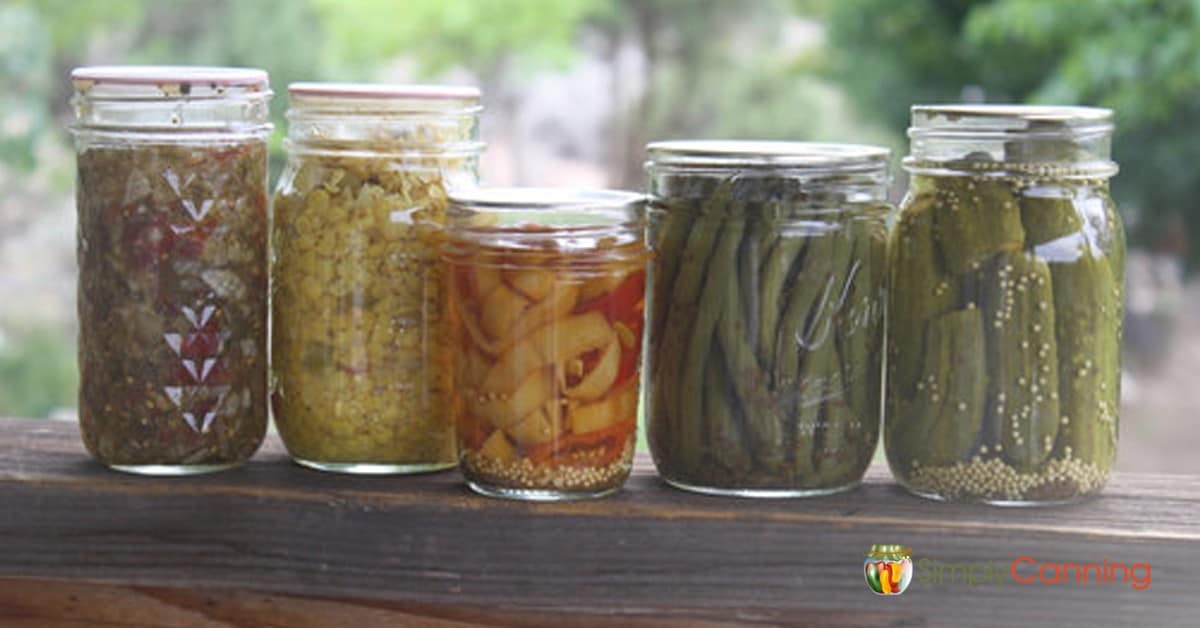
These recipes were made alongside some regular canned pickles and a jar of fermented pickles I’ve got fermenting in my cupboard right now. Three totally different methods, three totally different timelines — so let’s clear that up before we go further.
What is a refrigerator pickle? That means:
- No canning. No pressure canner, no water bath, no jars sealing shut.
- No fermenting. No sitting on the counter for weeks developing that tangy fermented flavor.
- Just a hot brine poured over cucumbers, popped in the fridge, and ready to eat in a day or two.
Because these are not canned or fermented, they are not shelf-stable and must stay refrigerated the whole time. The pickles are simply meant to be eaten within a couple of weeks rather than stored long-term.
Basic Fridge pickle Method
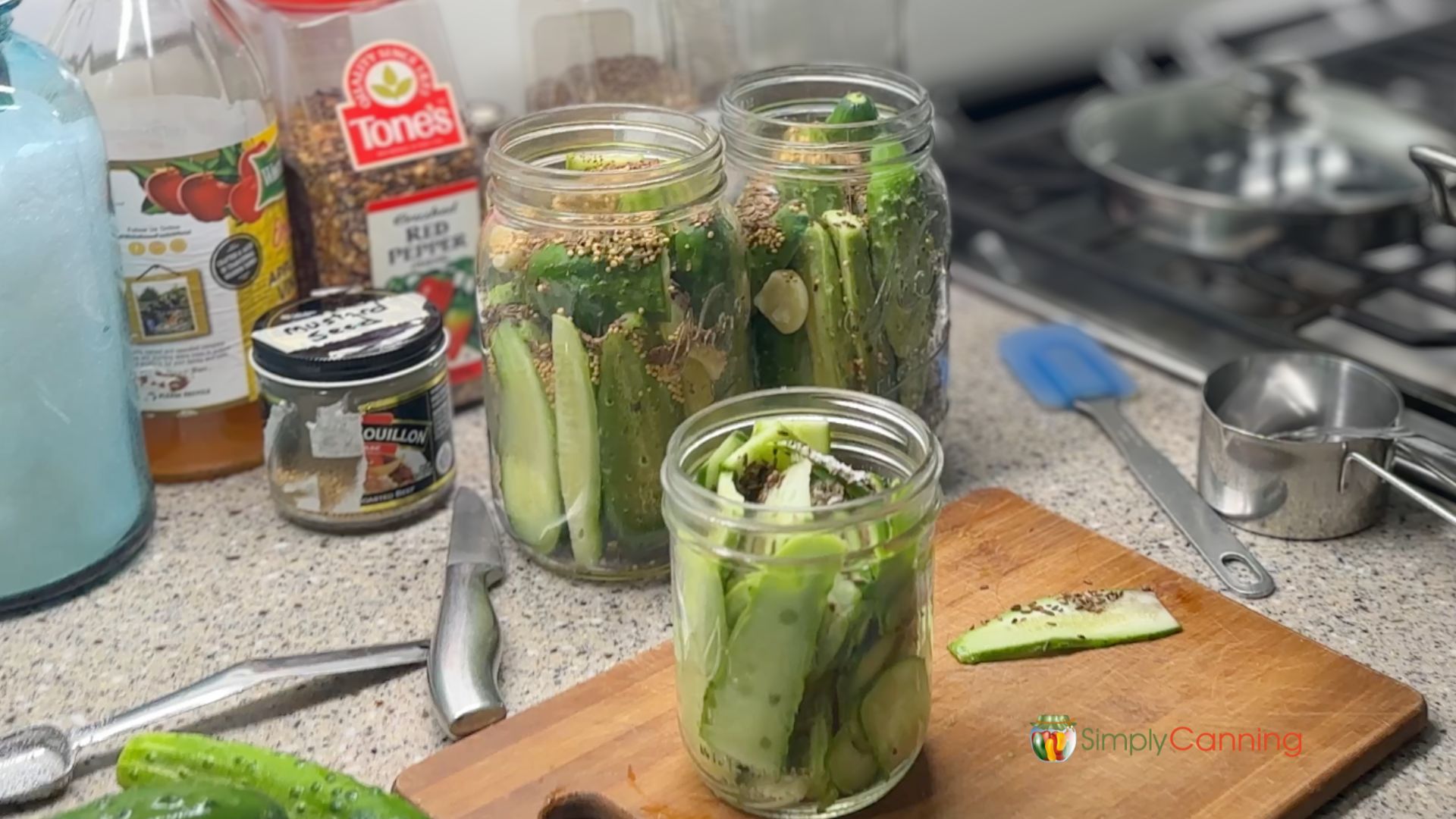
Add cleaned, prepared cucumbers to your jar, whole or sliced. This just means wash and slice your cucumbers as you like. I prefer to use small whole cucumbers, but you can make spears or slices too. I sliced some thin and lengthwise. Just like the “Stackers” you can buy at the store.
Peeling is not required but If you’ve got some bigger overgrown cucumbers, peeling is actually a good idea as the peel can get tough. And I’d slice them so the brine can penetrate and fully flavor your cucumbers.
Add your choice of seasonings to the jar, up to 2 tablespoons per jar. Garlic, bay leaves, dill, celery seed, and pickling spice all work well. My preference is to add some of the seasonings to the bottom and some on top of the cucumbers. It seems like it’ll spread out the flavors… honestly I don’t know that it really matters so if you forget, no big deal.
Then you’ll add your brine over the top.
- Make your brine (2 recipes included below), bring it to a boil, and let it boil for 2 minutes.
- Pour the hot brine over the jars, covering the pickles completely.
- Put the lids on and place the jars in the fridge. (They will spoil if you leave them out on the counter. They do not have the proper brine for fermenting.)
Wait 24 hours to eat for best flavor
Now, you can actually eat these right away if you like. But that brine needs a little time to get through and turn your cucumber into pickles. Let them sit 1-2 days to absorb the flavor before eating. I”d say 12 hours minimum… but 24 hours is best for flavor.
What Kind of Cucumbers to Use
You can actually use any type of cucumber. But in my opinion, pickling cucumbers are your best bet. They are developed with pickling in mind. If you’re growing your own, this is likely what’s overflowing in your garden right now anyway.
If you’re buying cucumbers instead of growing them, watch out for wax. Commercial slicing cucumbers are often coated in a food-grade wax to extend shelf life and make them look pretty. That wax will keep your brine from penetrating the cucumber properly. And it is just not appealing.
Look for pickling cucumbers specifically, or check with your grocer or farmers market about whether the cucumbers have been waxed. If wax is a concern, a quick scrub or peel can help, but starting with unwaxed cucumbers is the simpler fix.
Why These Must Stay Refrigerated
This is the one thing I want to be really clear about: these pickles have to stay in the fridge the whole time, not just to develop flavor, but because nothing about this recipe makes them safe to store at room temperature.
Here’s why that matters, compared to the other two pickle methods:
- Canning uses heat processing (a boiling water bath, in the case of pickles) to destroy spoilage organisms and create a vacuum seal. That’s what makes canned pickles shelf-stable at room temperature.
- Fermenting relies on a specific salt-to-water ratio in the brine that allows beneficial bacteria to grow and produce lactic acid, which is what preserves the pickles and gives fermented pickles their tang.
- Refrigerator pickles do neither of those things. There’s no heat processing to seal the jar, and the salt ratio in this brine isn’t calibrated to support fermentation the way a true ferment brine is.
If you left a jar of these on the counter expecting it to ferment like my jars in the cupboard, it wouldn’t ferment, it would just spoil. The refrigerator is doing the preservation work here, by slowing down that spoilage, not stopping it. That’s also why these only keep about 2 weeks instead of months.
Two Brine Options
You can make either a sour or a sweet brine, depending on what you like. Both recipes make enough for up to 4 jars.
- Sour brine: 3 cups white vinegar (or apple cider vinegar), 3 cups water, 3 tablespoons canning or pickling salt, 2 tablespoons sugar.
- Sweet brine: 3 cups white vinegar (or apple cider vinegar), 3 cups water, 2 tablespoons canning or pickling salt, 1½ cups sugar.
We tend to like ours more on the sour side, but if you prefer sweeter pickles, the sweet brine version is the one to reach for.
Substituting Apple Cider Vinegar or White Vinegar works. They will just have a slightly different taste. I use Apple Cider Vinegar most of the time.
Then you can add spices as you like.
Two Flavor Variations I Tried
Recipe #2, the “everything, and a bit of spice” jar: 1 tablespoon mustard seed, garlic, 1 teaspoon celery seed, a pinch of red pepper flakes, 1 tablespoon dill seed.
Recipe #3, the “keep it simple” jar: 1 clove garlic, 1½ teaspoons dill, and 1 teaspoon sugar for a touch of added sweetness. (I used the sour brine, but added the extra sugar to the jar.)
Both are simple enough to throw together with whatever spices you like. If you want to experiment, this is a forgiving recipe to play around with.
I highly suggest writing down what you did… and keeping track of it. Then you’ll know what recipes to keep and try again. Mark the jar in some way. I used numbers. (In case you are wondering why my recipes are 2 and 3. (where did #1 go?) Recipe#1 was a fermented recipe. You can find it here.)
How Long Do Refrigerator Pickles Last?
According to NCSU Extension, these will keep about 2 weeks in the fridge. Just remember, since there’s no canning or fermenting involved, they need to stay refrigerated the entire time.
Why I Like This Method
When the garden gives you more cucumbers than you can possibly process or eat, refrigerator pickles are the fastest way to use them up. No canner, no fermenting crock, no waiting weeks. Just cucumbers, brine, and a couple of days in the fridge.
Source recipe for the brine: NCSU Extension, foodsafety.ces.ncsu.edu