Stainless Steel Canning Rings: No more Rust
This page may contain affiliate links. More Information.
I moved from Colorado to Tennessee a while back, and one of the things I didn’t expect to change was how fast my canning rings started rusting. The humidity here is so different from what I was used to, and it turns out that makes a real difference. I was going through rings faster than ever, some getting so rusted they’d stick to the lid and I’d have to throw the whole thing away.
If this is happening to you too, here’s what’s going on, and what I did about it.
Why canning Rings Rust in the First Place
Regular tin-plated rings have grooves that help them grip the jar, and those same grooves are perfect little pockets for moisture to sit in. If a ring isn’t completely dry before you put it away, or if you’re storing it somewhere humid, that trapped moisture is what causes the rust.
Once they are rusty, they won’t screw down on jars straight and they get twisted on the jar.
I didn’t think much about this until I moved somewhere more humid myself. Same jars, same rings, same habits, but suddenly rust everywhere. I rarely had to throw away rings in Colorado. Here quite often. The climate really does matter more than people expect.
Remove Your Rings Before Storing Jars
This is one I remind people of often: once your jar has sealed, take the ring off before you put it on the shelf.
The ring isn’t holding your seal, the vacuum is. Leaving it on just traps moisture against the jar and the ring, and over time that’s often exactly what causes lids and rings to rust together. Even if you dry them, some moisture stays down in those grooves. My recommendation, take the rings off.
Why I Switched to Stainless Steel Rings
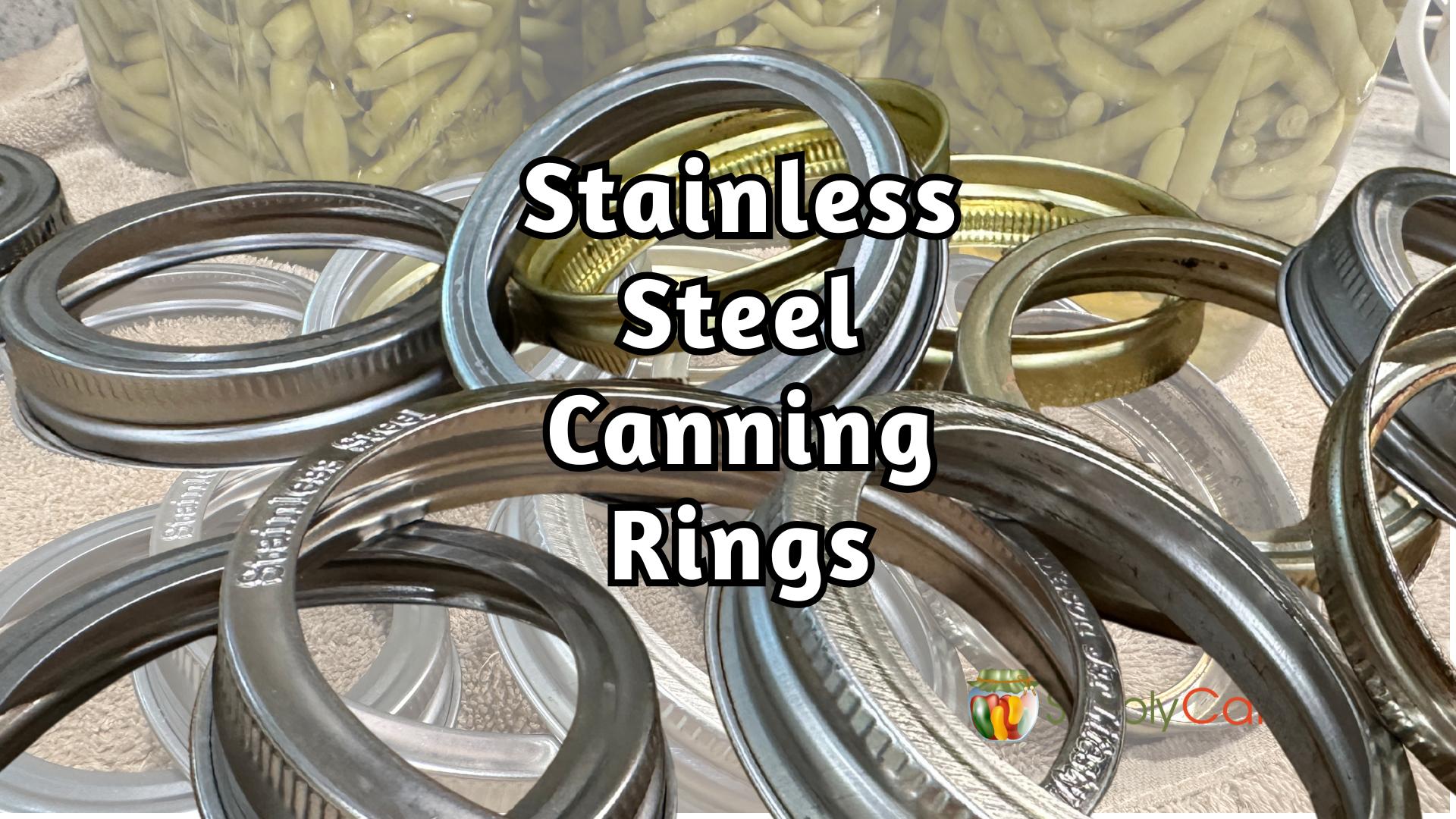
After replacing one too many rusted rings, I decided to just invest in stainless steel ones instead. Yes they are more expensive but I decided it would be worth it.
I bought two different kinds so I could try them both out, and honestly, they’ve both worked well for me.
The first is a no-name brand,
(I’m assuming it’s made in China, though I can’t say for sure). It’s inexpensive and has held up well. I mark mine with a Sharpie, “SS,” so I don’t mix them up with my regular rings.
I got both regular and wide mouth and actually ended up with 2 different brands. (I’m betting that they both came from the same factory.)
Links to the rings I purchase below:
By the way… I forgot to mention this in the video above but these rings come with flat lids too…. I don’t recommend those for canning. Just storage. There are too many failures.
The labeled rings are from Mason Jar Lifestyle.
I like these because they’re actually labeled “stainless steel” right on the ring, and they’re noticeably heavier and thicker than the others.
Mason Jar Lifestyle rings (fermenting/storage, not rated for canning): – – (I am not an affiliate of these guys. I just tried the rings. If you get some… tell them I sent you. 🙂)
- That said, I want to be upfront about something. When I went to link the mason jar lifestyle rings for you, I noticed that the manufacturer states they are not recommended for canning. I hadn’t seen that before I purchased them. Apparently some people had issues with the ring not fitting properly and coming loose in the canner.
- I’ll also say this: I personally haven’t had any problems with them, and I still think they’re a great option. I’m including the link because I think they’re a nice product, but I want you to have the full picture so you can make your own decision.
The Bottom Line
Rust usually comes down to moisture getting trapped, either in the grooves of the ring or against a jar in storage. Taking rings off before you store sealed jars solves most of it right away. And if you’re dealing with a humid climate like I am, switching to stainless steel rings has genuinely been worth the extra cost for me.