Freeze drying gives you lightweight food that keeps for years and still tastes like the real thing. I’ll show you how it works, the basic steps, what it costs, and which foods I’d freeze dry versus can or dehydrate.
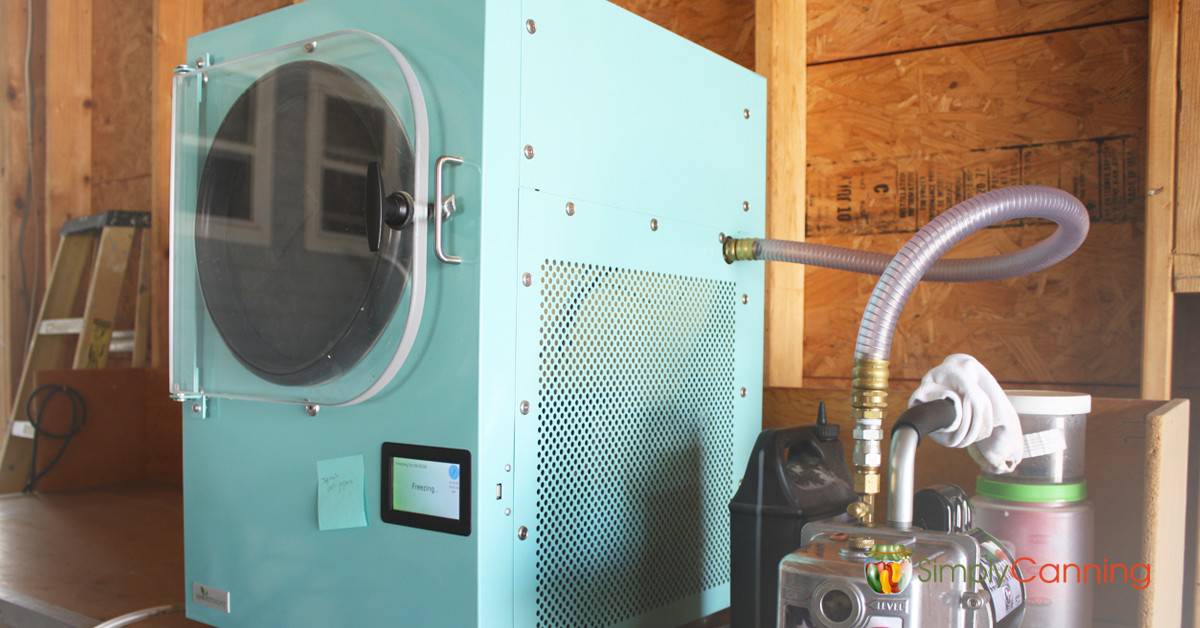
A quick note before we start. Harvest Right sent me my freeze dryer for free around 2016, when home freeze dryers were still pretty new. It’s one of their early models, and the newer ones have changed. I’ll point out the differences as we go.
Can You Freeze Dry Food at Home?
Yes, you can, but you need a home freeze dryer to do it. That’s the one thing that stops most people.
A regular freezer can’t do it. Freeze drying needs a vacuum to pull the ice out of the food.
A dehydrator can’t do it either. It dries with warm air, and that’s a different process with a different result.
A freeze dryer is a good fit if you preserve a lot of food, want long storage, or pack your own meals for travel.
It’s probably not a fit if you’d only use it now and then. It’s a big purchase that needs regular use to pay off.
Some of the benefits of freeze drying…. there are many! Here are my top 3.
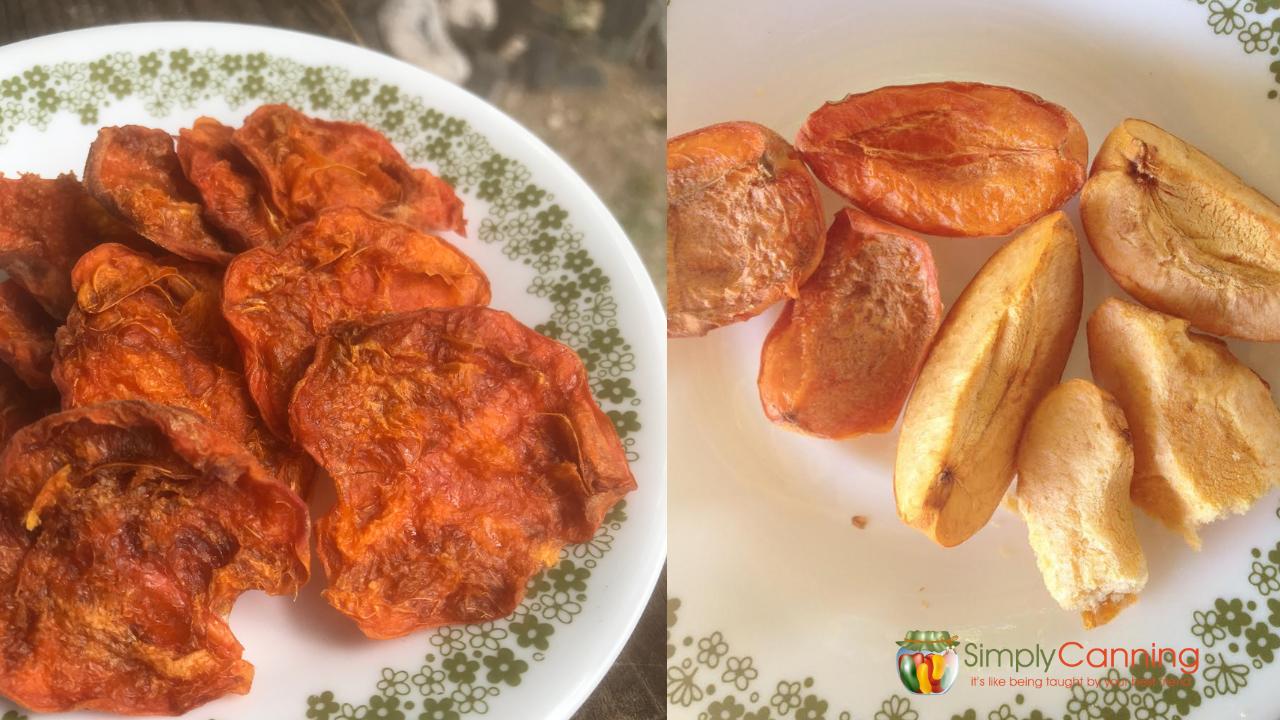
Delicious Results: Freeze-dried food is fantastic. Apricots, peaches, and corn are my favorites!
Long Storage Time: Freeze-dried foods last much longer than canned or dehydrated ones.
Knowing Your Food: This is a big one for me. With at home freeze drying, I know exactly where the food came from and what’s in it.
How Freeze Drying Works
The machine freezes your food very cold. Then a vacuum pump pulls the air out of the chamber.
Under that vacuum, the ice in the food turns straight into vapor without melting first. What’s left is dry, light food that keeps its shape, color, and most of its flavor.
These steps follow the manufacturer’s directions and university extension guidance. Always go by the manual for your own machine.
Prep the food. Wash produce and cut it into even pieces so everything dries at the same rate. One thing to know here: freeze drying does not kill bacteria. Raw meat and raw eggs are still raw when they come out, and they need to be cooked after you rehydrate them.
Blanch or pretreat if needed. Most vegetables do better blanched first. Fruits that brown, like apples, can get a quick dip in an ascorbic acid solution.
Pre-freeze if you like. I didn’t always, but I did when I had a lot to freeze dry. It lets you prep the food ahead of time. Very convenient.
Load the trays and start the machine. Spread the food in a single layer. The machine handles the freezing and drying on its own.
Check for dryness. Take a piece from each tray and break it in half. If the center feels cold or looks dark and moist, put the trays back in for more drying time.
Package it right away. Freeze dried food pulls moisture out of the air fast. Use airtight, moisture-proof containers with an oxygen absorber. I used Mylar bags or canning jars. Label each one with the food, the date, and whether it’s raw or cooked.
Eat it dry or add water. Fruit is great as a crunchy snack. Meals and vegetables get water added back.
Does it really keep? I recently opened a package of onions I freeze dried in this machine about 10 years ago. They looked and tasted just like they’d been freeze dried last week. They had that freeze dried texture, and a nice onion smell.
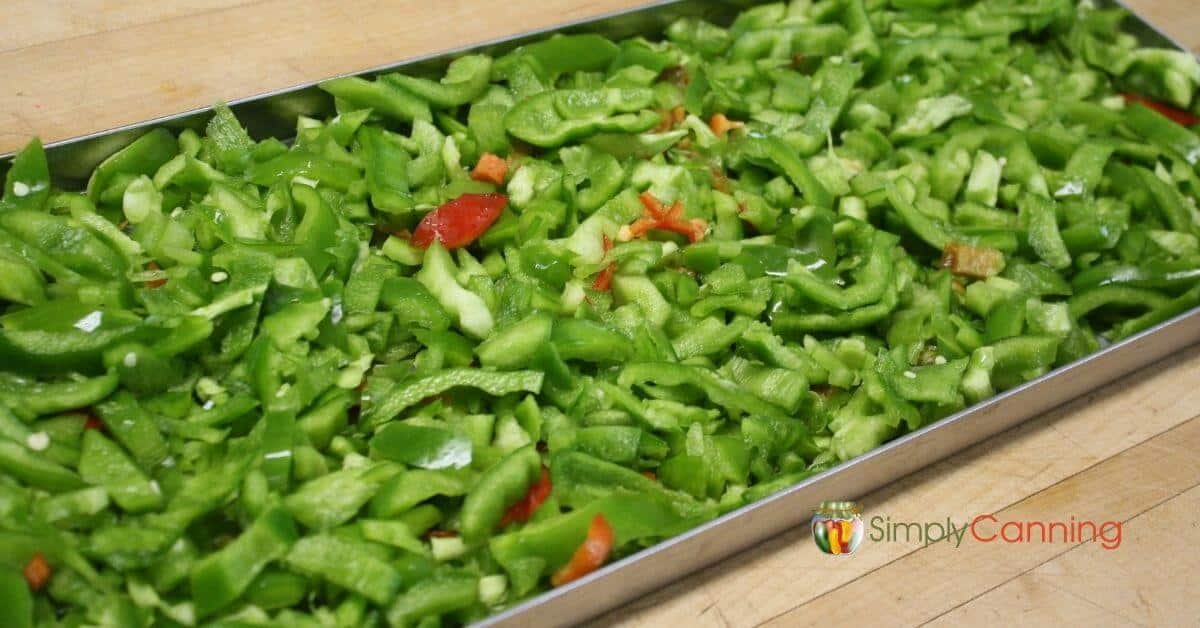
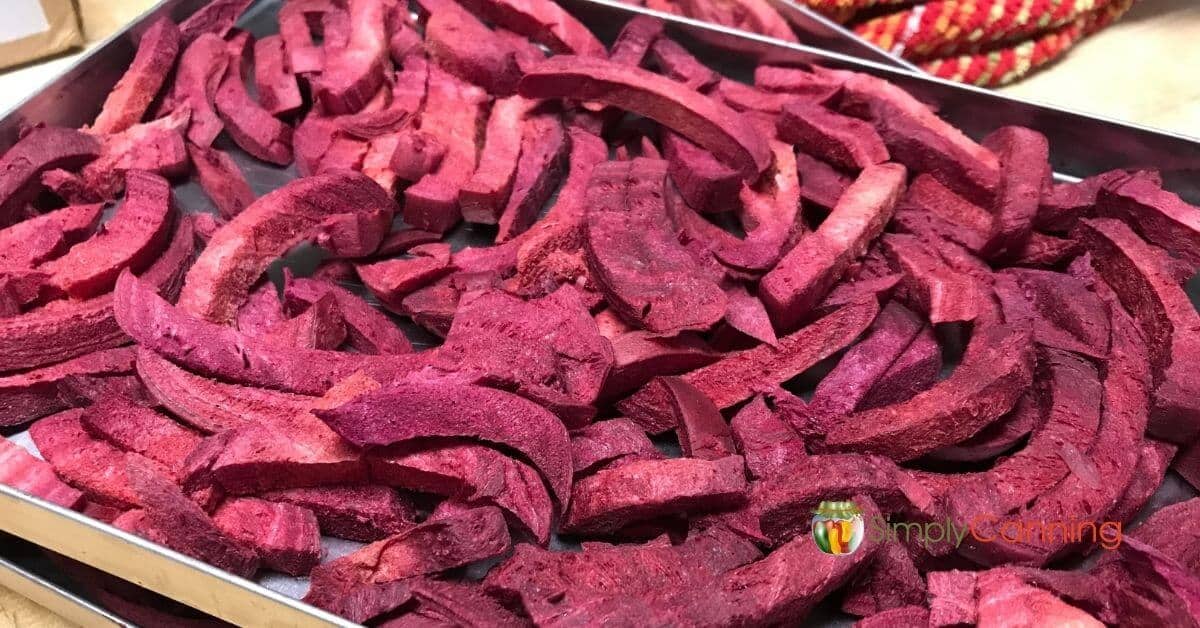
These were some of the first things I tried.
Aren’t they beautiful?!
What Foods Freeze Dry Well (and What I Still Can or Dehydrate)
Here’s what I freeze dried in my machine. Some have their own page with more details.
Onions. One of the most convenient things to have on hand.
Carrots.
Potato chunks, raw eggs, and soups.
I didn’t switch everything over, though. I decided I like the chewy texture of dehydrated bananas and apricots better than the crunch of freeze dried. And home canned green beans simply can’t be beat. So those are things that can be freeze dried, I just choose other ways to save them.
A few foods don’t freeze dry well. Very fatty or oily foods, like butter and peanut butter, are the main ones. Syrupy foods like honey, jam, and syrup don’t do well either.
Then there are supplies like Mylar bags, oxygen absorbers, and pump oil, plus the electricity to run it.
The food itself still costs much less than buying commercially packaged freeze dried food. It will save you money. It won’t save you time.
Space, Noise, and Power
This is not a small appliance. Mine took two of us to lift onto the table.
My husband offered to set it up for me but I said I’d like to do it myself so I can report how it went. So after lifting the freeze dryer onto the table (I really did need help with that part), off he went and left me alone with my instructions in hand. I had no problem setting it up.
The pump is loud. At least mine is. I put mine outside in our carport. Having it out of the house was a good decision. If you do the same, check your manual for the temperature range the machine needs to operate.
For power, mine needed a dedicated 20-amp circuit. Harvest Right lists a dedicated circuit for every size, so check the manual for your model before you pick a spot.
Time per Batch
Plan on a full day or more. Harvest Right says most foods take anywhere from 13 to 35 hours. Mine older model usually ran on the long end. I did a lot of fruit and liquid items like raw eggs and stew, and foods with lots of sugar or lots of liquid take longer.
Pump Upkeep
My pump needed an oil change every five batches and a “power flush” every ten. It’s not hard, but it can be messy. It’s my least favorite part of running this machine.
Good news for you! This is one of the biggest improvements on newer machines. The pump that comes with them now goes about 20 to 30 batches between oil changes. There’s also an oil-free pump you can upgrade to. That is pretty tempting to me!
Pump that came with my freeze dryer. Older model
Is a Freeze Dryer Worth It?
That totally depends on your situation and how much you’ll use it.
If you’d run it regularly, it would be worth it. Have a young family, a big garden, or a lot of mouths to feed? It could be just the thing for you. If it would end up sitting most of the time, it’s not worth it.
I’ll be upfront. When we moved, my freeze dryer went into storage, and it’s still there. I don’t have the dedicated 20-amp circuit it needs at this house yet. Someday I’ll still get it out.
Working through all this, it occurred to me how blessed I am. I have enough food to have issues deciding just how to preserve it! How many people are worried about having enough food for the week or the day? Stop and think about that one.
Now I fully realize that this is not for everyone. If you are happy with canning and/or dehydrating. That is a good plan too.
No. True freeze drying needs a vacuum to pull the ice out of frozen food as vapor. A home freezer or a dehydrator can’t create that vacuum, so neither one can freeze dry food.
Is a freeze dryer the same as a dehydrator?
No. A dehydrator dries food with warm moving air. A freeze dryer freezes the food and removes the ice under vacuum. Freeze dried food is lighter, crunchier, and stores longer than dehydrated food.
How long does home freeze dried food last?
There isn’t much research yet on the shelf life of home freeze dried food. Commercially freeze dried food can last up to 25 years. How long home freeze dried food lasts depends on how dry it is and how well it’s sealed away from moisture and oxygen.
Is freeze dried raw meat or raw egg safe to eat?
Not until it’s cooked. Freeze drying does not kill bacteria. Freeze dried raw meat, seafood, and eggs need to be rehydrated and then cooked to a safe temperature before eating.
How long does it take to freeze dry food?
Most foods take 13 to 35 hours in a current home freeze dryer, according to Harvest Right. Foods high in sugar or with a lot of liquid, like fruit and soups, take longer.
Oh my goodness 😍 where did you get a aqua blue freezer drier?!?! 💙 I have never seen one that color! I only thought they made them in black, white and stainless? I just bought a white one and now I’m drooling over the blue that I didn’t know existed!!! 🤤
Ah that totally depends on your situation and how much you’ll use it. If you are comparing to buying commercially packaged freeze dried foods, I think this will save money… but not time. If you’ve are freeze drying a lot, it might be worth it. But if you would end up not using it regularly… it’s not worth it.
So…. it depends!
Robbin K
4 years ago
I invested in my Harvest Right the first year of the pandemic when we weren’t spending money on anything else. I love, love, love it! Green beans and corn are staples that I never canned because I don’t have a pressure canner. Cherry tomatoes sliced in half and freeze dried make great “croutons” or snacks or wrap additions. I don’t can tomato sauce any more either, just chop, freeze dry, and powder tomatoes and then I can make paste, sauce, or just a little flavoring depending on the amount of powder and water.




Oh my goodness 😍 where did you get a aqua blue freezer drier?!?! 💙 I have never seen one that color! I only thought they made them in black, white and stainless? I just bought a white one and now I’m drooling over the blue that I didn’t know existed!!! 🤤
This is one of their very early models. I got it years ago. It could be they don’t make the blue any more.
Is a freeze dryer worth the expense please. I’m on the fence and really leaning to no…
Ah that totally depends on your situation and how much you’ll use it. If you are comparing to buying commercially packaged freeze dried foods, I think this will save money… but not time. If you’ve are freeze drying a lot, it might be worth it. But if you would end up not using it regularly… it’s not worth it.
So…. it depends!
I invested in my Harvest Right the first year of the pandemic when we weren’t spending money on anything else. I love, love, love it! Green beans and corn are staples that I never canned because I don’t have a pressure canner. Cherry tomatoes sliced in half and freeze dried make great “croutons” or snacks or wrap additions. I don’t can tomato sauce any more either, just chop, freeze dry, and powder tomatoes and then I can make paste, sauce, or just a little flavoring depending on the amount of powder and water.