
Is Oven Canning Safe?
This page may contain affiliate links. More Information.
Is Oven Canning Safe? Why It Doesn’t Work (And What To Do Instead)
I get a version of this question often, in all kinds of variations. The short answer is no, oven canning isn’t safe. I’ve got 3 specific reasons I don’t recommend it and what-to-do-instead.
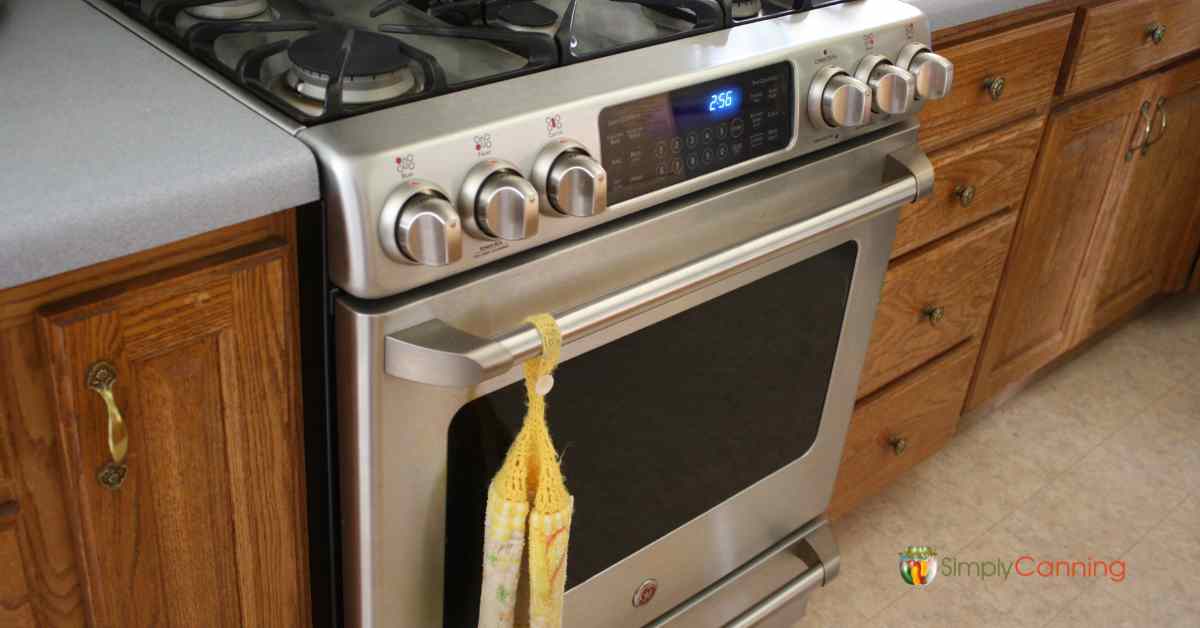
The Short Answer
The oven canning method isn’t a safe way to process any food, whether it’s high acid or low acid, meat or fruit, and there’s more than one reason why.
- A seal isn’t proof of safety. A jar can come out of the oven looking perfectly sealed and still not be safe, because a seal doesn’t tell you whether the food inside got hot enough, for long enough, to actually be safe.
- Ovens can’t hold the steady, reliable temperature that a water bath or pressure canner can, and dry heat doesn’t penetrate into a jar the way moist heat does.
- Canning Jars are not ‘oven safe’. Every major canning jar manufacturer’s own canning instructions say not to do it either.
Let’s go into a few details on each of these. And address some common objections.
Why Oven Canning Doesn’t Work
1- A Seal Isn’t Proof of Safety
A jar can come out of the oven looking perfectly sealed, lid sucked down tight, and still not be safe to eat. A jar can come out of the oven looking perfectly sealed, lid sucked down tight, and still not be safe to eat. A seal doesn’t mean the food inside is safe. You could have sealed bacteria right in the jar. That would be a problem, right?
- For low acid foods, like vegetables and meat, the danger is botulism. A pressure canner reaches a temperature dry oven heat doesn’t get to, which is the only thing that reliably makes low acid foods safe. I go into more detail on how that works on my botulism page, if you want the fuller picture.
- For high acid foods like jams, jellies, and pickles, botulism isn’t the concern it is with low acid foods, but the same seal-isn’t-proof problem still applies. The oven still can’t deliver reliable heat into the jar, so yeasts, molds, or other spoilage organisms can survive even though the lid sealed. Water bath canning already handles this safely and simply, so there’s no reason to risk an oven instead.
2- Ovens Can’t Deliver Reliable, Penetrating Heat
Oven temperatures aren’t as steady or accurate as most people assume. Dry heat surrounds the jar but doesn’t penetrate into the food the way moist heat does.
Oven temperatures may vary. The dry heat produced in ovens does not penetrate the jars as quickly. Heat circulation is not the same in an oven. Ever have a cake turn out lopsided? It’s the uneven heat in your oven. Even if your oven seems to work great, oven temperatures vary. It’s just the way it is.
3- Canning Jars are not oven safe.
There is another reason that has nothing to do with what’s inside the jar. The glass jars themselves are not oven safe. Every major canning jar manufacturer’s own canning instructions say not to put jars in the oven. Ball’s official jar handling instructions state plainly: Ball jars “should not be used in the microwave or oven.” The companies that make them are telling you not to put the jars through that kind of stress.
Not the Same Thing as “Dry Canning”
You may have also seen the term dry canning or oven canning, usually used for dry goods like flour, dry beans, or rice heated in the oven before storage. This is not the type of canning we are talking about here, so don’t get them mixed up.
Common Objections
“My grandma (or great aunt) always oven canned and nobody got sick.”
I hear this a lot, and I believe it’s true. For years, nothing went wrong. But, the risk isn’t about whether something has gone wrong before; it’s about whether the conditions for it exist in that particular jar, that batch, that time.
Many jars processed unsafely never make anyone sick. But some do, and it’s the ones that do that are the reason this isn’t a method I can recommend, even if you’ve got family history behind it.
“I’ve done it myself for years and nothing’s ever happened.”
I’m glad to hear it, truly. But “it’s worked so far” isn’t the same as “it’s safe,” and botulism is the kind of risk where the cost of being wrong once is too high to weigh against years of it going fine. I’d rather help you find a process that takes the risk off the table.
“I found a blog or video showing it done safely.”
A lot of canning content online doesn’t reflect tested, current science, in writing or on video. If a method isn’t correct, the format it’s presented in doesn’t change the risk.
Oven Canning by Food Type
The method fails the same way no matter what’s in the jar, but here’s some specifics that I’ve been asked about.
Tomato and Pasta Sauce (With Meat or Vegetables)
I’m asked about Spaghetti sauce (with or without meat), and it’s usually the same situation: a big pot of sauce is already made, no pressure canner on hand, and jars sitting in a warm oven hoping for the best. Please don’t do this!
If you want the correct full process, I walk through it step by step on my spaghetti sauce canning page.
Broths, Soups, and Meat
Broth, soup, and any kind of meat fall into the same low acid category as meaty sauce, for the same reasons. The oven can’t get hot enough or hold steady enough to make these safe, so a pressure canner is required here. Learn about canning meat and soup here…
Jams, Jellies, and Other High-Acid Foods
Jams, jellies, preserves and most fruit, are high enough in acid that water bath canning is usually the right method, no pressure canner needed. But that doesn’t make the oven a substitute for the water bath, though. Water bath canning is quick and simple enough on its own that there’s no reason to reach for the oven instead. Or try steam canning for a great alternative.
What To Do Instead
If you’ve already made the food and don’t have a canner yet, here’s what I’d actually do:
- No pressure canner yet: Pour the food into freezer containers or freezer bags and freeze it. It’s a perfectly good way to save what you’ve made with no risk involved.
- High acid and recipe appropriate: Did you know you can use any deep pot to do a water bath? This post about types of water bath canners also gives tips for canning without a canner.
- Invest in equipment: A pressure canner opens up a much wider range of foods, safely. My pressure canning guide is a good starting point if you’re ready to take that step.
Related Questions
Will my food still be safe if the jars sealed in the oven?
No. A seal doesn’t mean the food inside is safe. It’s just sealed. Treat that batch as unprocessed: refrigerate it for a few days, freeze it.
What about recipes where you bake a cake or bread right in a canning jar?
That’s a different kind of oven canning, baking a recipe inside a jar rather than processing already-canned food. Those jars aren’t shelf stable either, even if the lid seals from the heat of baking. Treat anything baked in a jar like any other baked good: fridge or freezer, not the pantry shelf.
Can I warm my empty jars in the oven before I start canning?
Some canners like to warm empty jars so a hot jar isn’t shocked by a sudden change in temperature, but oven warming isn’t the standard method, and jar manufacturers don’t recommend ovens for jars at all. Warm jars in hot water from your canner setup instead, so they’re ready right when you need them.
Related Reading
If you want to go deeper on any of this, here’s where to look next: