
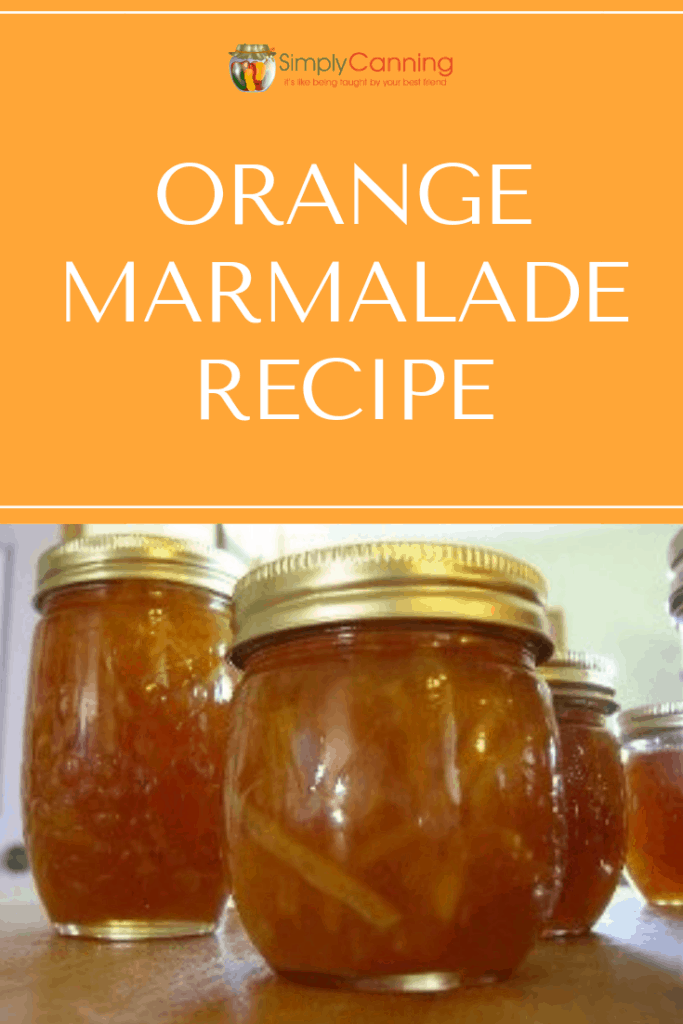
Orange Marmalade Recipe
This page may contain affiliate links. More Information.
This orange marmalade recipe is started the day before you’ll actually be canning it. The chopped oranges need to soak for 12–18 hours, so I usually start this in the evening, then finish it late the next morning or after lunch the following day.
You can read through the tips and details below, or jump straight to the recipe card if you already know the process. There’s also a step-by-step video tutorial further down the page.
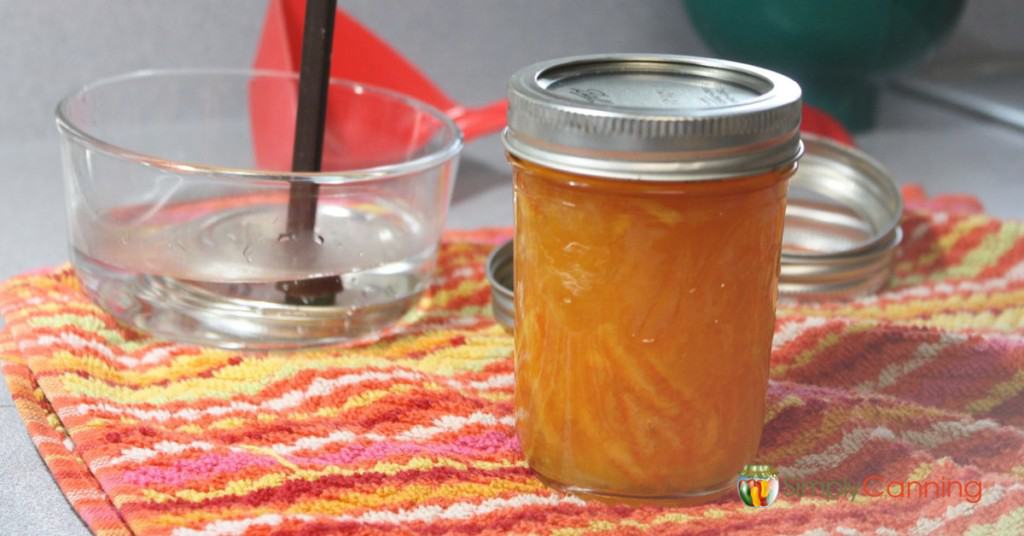
How Orange Marmalade Is Made
Orange marmalade is a sweet spread made with citrus. Often oranges, lemons and grapefruit are mixed for various marmalade flavors. It is a little different from most jams because it uses the flesh of the orange as well as the peel. The combination gives a wonderful tartness to the final spread.
Day one – Preparing your citrus.
How to Prepare the Oranges
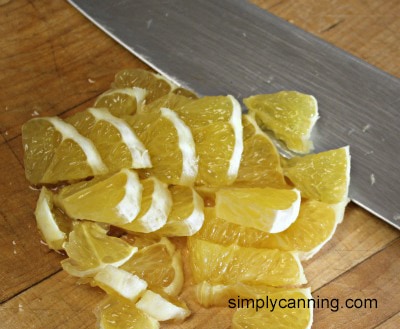
You’ll need about 1 quart of chopped oranges.
The easiest way to do this is to:
- Thinly slice the oranges
- Cross-cut those slices into small pieces
You want them fairly small, not chunky.
Important note about the pith: As you peel the oranges, don’t remove all the white pith underneath the peel. That’s where the natural pectin lives. I’ll pull off any especially thick or chunky sections, but I don’t remove it completely. In the photos on this page, you’ll notice these oranges didn’t have much pith to begin with.
Preparing the Orange Peel
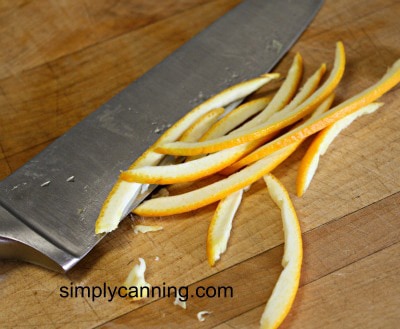
Thinly slice the orange peels. You’ll need about 2 cups, more or less depending on your taste.
A Note About the Lemons
When I made this batch, my lemons weren’t great — not very juicy, and the flesh was thick and tough. I knew that would make the marmalade chunky, which I didn’t want.
Instead, I squeezed the lemons and used only the juice (with a bit of pulp) so I’d still get the lemon flavor. (It really enhances the orange.) I left out most of the meat of the lemons. If you’ve got nice lemons, cut them up the same as the oranges, but do NOT use the peels.
Overnight Soak (why it matters)
Combine:
• Chopped oranges
• Orange peel
• Chopped lemon (or lemon juice)
• Water
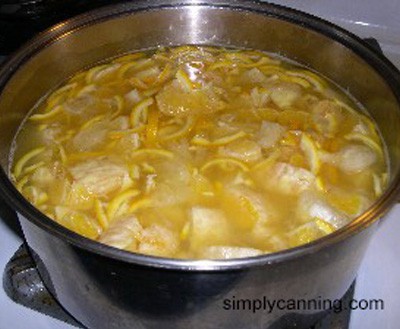
Bring it to a boil, simmer for 5 minutes, then cover and let it stand in a cool place for 12–18 hours.
This soak is essential — don’t skip it. It allows the flesh and peels to soften, and absorbs moisture.
Day 2 – Canning Orange Marmalade Recipe
Day two is when everything starts coming together. You’ll make marmalade out of your soaked citrus and then can it in a water bath or steam canner.
Start by preparing jars, and get water in your canner heating.
(see Water Bath Canning for full directions)
Cooking the Marmalade
Measure your orange mixture. You will need an equal amount of sugar later. For example, If you’ve got 4 cups orange mixture, measure out 4 cups sugar. (don’t mix it in yet!)
Place a spoon in the freezer. You’ll use that in a little bit to test for the gel. Alternatively you can use a thermometer. More about that below.
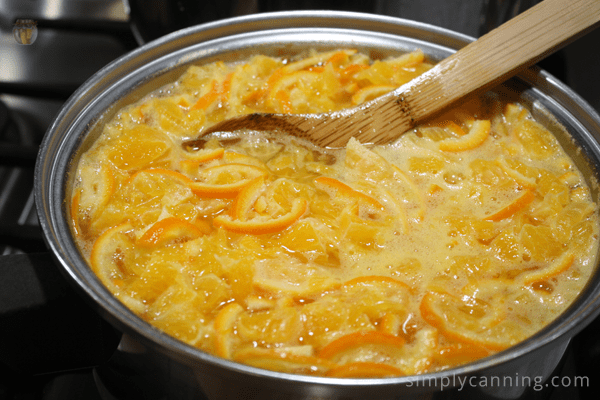
Heat orange mixture to boiling and cook until peel is tender. This takes about 30 minutes. The mixture will boil up! Make sure you have a large enough pot so you don’t end up boiling over. I soaked my citrus in one pot overnight then moved it to a larger one for boiling.
Now is when you add your sugar to the mixture. Bring back to a boil stirring until sugar dissolves and your marmalade reaches your gelling point.
How to Know When Marmalade Has Reached the Gelling Point
There are two ways to determine your jelling point.
Cold Spoon Test
Cold spoon test is one way to check the gel. Take your cold spoon and scoop up a bit of marmalade. It will cool quickly and you can tell if it is starting to gel. If it is still runny simply cook a bit longer. As the mixture thickens you will need to stir more often to keep it from scorching.
Thermometer Test
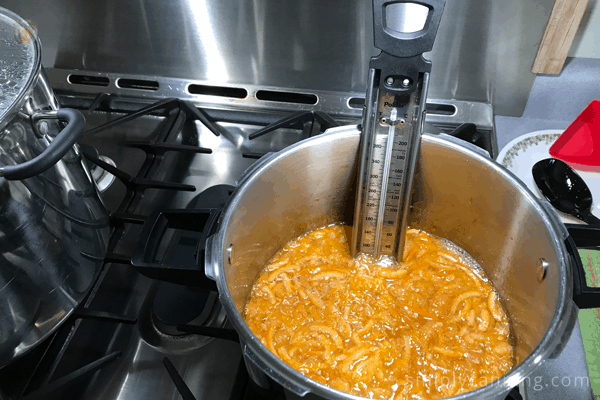
Determine the boiling point temperature by holding a candy thermometer in boiling water. Add 8 degrees. This is your gelling point.
This temperature is the point where the jam should set up nicely! This gelling point is the same for any jam or jelly you make where you don’t add commercial pectin. Write it down in your notes so the next time you’ll remember.
When your marmalade reaches this temperature, remove it from the heat.
Filling the Jars and Processing
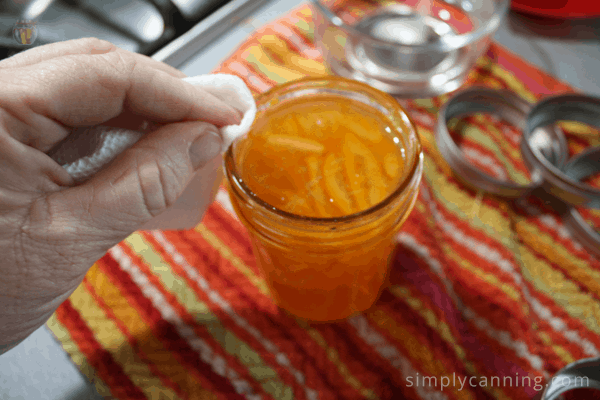
Pour the hot marmalade into hot jars. Leave a 1/4 inch headspace. Wipe the rims of your jars clean. Marmalade can be sugary and sticky. You don’t want that to interfere with the seal of the lid. Next, place the lids on your jars and follow water bath canning directions to process. Details below or at this link.
Processing times by altitude
Processing Times for Water Bath Canner (Hot Pack)
Altitude – Half Pints and Pints are Processed the Same
- 0-6,000 feet – 10 minutes
- above 6,000 feet – 15 minutes
Source: Ball Blue Book of Preserving.
Canning Orange Marmalade – Video tutorial
Supplies and tools Used in the Video
- Canning Supplies
- Thermometer
- Measuring bowl
- Pomonas Pectin
- Pomonas Pectin Book
- Lg Mason Storage Jar
- Steam Canner with domed lid
- Steam Canner with gauge
- Headspace Bubble Tool
Printable Orange Marmalade Recipe. If you skipped to here don’t forget to read the tips and hints included on this page too. Some below the recipe card.
Orange Marmalade
Equipment
Ingredients
- 10-12 Oranges
- 2 Lemons
- 1 ½ quarts Water
- 8 cups Sugar approximately
Instructions
For a Hot Pack
Day 1
- Peel, thinly slice, and chop oranges, saving peels. (You need 1 quart of chopped oranges.)
- Thinly slice the orange peels. (You need 2 cups of sliced peel).
- Peel and thinly slice the lemon.
- Combine oranges, lemon, orange peel, and water in pot.
- Heat to boiling.
- Simmer for 5 minutes.
- Cover and let stand in a cool place for 12–18 hours.
Day 2 (Or After Soaking for Time Above)
- Start by preparing jars and getting water in the canner heating. You want the canner hot, but not boiling, when the jars are ready to be processed.See full water bath canning instructions here.
- Bring orange mixture to a boil and cook fruit until peels are clear and tender.
- Measure your orange mixture and combine with an equal amount of sugar.
- Bring mixture to boil, stirring until sugar dissolves.
- Boil until it’s reached the gelling point.
- Pour hot marmalade into hot jar, leaving 1/4” headspace.
- Remove air bubbles, wipe rim clean, and place seal and ring. Place jar in the warm canner. Proceed to fill all jars. Process according to the chart below.
Notes
Adapted from: The National Center for Home Food Preservation
Orange Marmalade Tips and Frequently asked Questions:
Optional Spices for Marmalade
I don’t include spices in marmalade for my family, but flavors like cinnamon or cloves would make a fantastic addition. Go easy on the cloves. I’ve found they get strong!
How to Prevent Scorching Marmalade
As the mixture thickens and gels, stir more often to keep it from scorching. Towards the end of the cook time, stir constantly! Don’t go through all this work just to scorch it! (Yes, I’ve done it before.)
How do you use marmalade?
Serve on toast or spread on pancakes for a scrumptious breakfast. I like it slathered on saltine crackers! Jars of orange marmalade make a great addition to any gift basket.
Why Orange Marmalade didn’t set up.
A question I received in my email from Lillian. “I have many jars of orange marmalade “syrup”. What did I do wrong?
Possible reasons:
- Gelling temperature wasn’t correct for your elevation
- Not enough sugar
- Too much pith removed (that’s where the pectin is)
Before reprocessing, wait a bit. Marmalade sometimes thickens after it cools and sits.
If it still hasn’t set:
- You can reprocess
- You can add pectin (follow package directions)
Or… just use it as-is. It’s great poured over chicken in the crockpot with a little soy sauce for an easy orange chicken.
Pin this to find later!
Still processing, but a question: I sliced the orange peel as thinly as I could, but it still looked too “big.” I cut them into pieces, and that should be OK, I think. But lemons? I get that lemon juice is needed; but two lemons sliced as thinly as possible doesn’t make a lot of slices. So, it would seem that some jars would have lemon slices, and some wouldn’t. I guess that’s OK, but wonder if there’s another/better way to add the lemon. Thanks!
When you stir the lemons in it all gets distributed. It is mostly for flavor. The quantity of oranges should be much more than lemons. It all cooks together and works fine.
Thank you so much for this! I had never made marmalade before and found many of the safe canning recipes to be very bare bones. The tips and comments on this made it much easier to follow! I used Seville oranges and it turned out absolutely perfect.
So bummed this one did not work out for me. After an hour of boiling it never went over 210’. I am at altitude, so I know it takes longer for temperatures to come up, but in my experience 60 min is overkill. I turned up the heat and ended up burning it. Not sure what else I could have done.
Valerie, I come from Colorado so I know what you mean about trying to get those higher temperatures. Honestly sometimes it never fully reaches it. I’d suggest getting as close as you can without scorching and be satisfied. The worst that will happen is you might have a little runny jam. Often it works just fine.
Made this recipe up just before Christmas. Excellent results and some pf the best orange marmalade I have ever had
Oh yes! This is so good. I’m glad it worked for you too. 🙂
This recipe was spot on. My orange marmalade came out great. I was so pleased with the results. No only does it taste good it looks good in the jars.
have been canning for 40 years and haven’t tried this but I will
The blog version of your recipe specified using 2 quarts of oranges and the printed version specified 1 quart. Which is correct? These are drastically different volumes.
It is one quart… Thank you for pointing it out! I’ll fix the article.
I don’t use ever use sugar when processing fruit. I use sugar alternatives (not sugar alcohols). Eleven cups of sugar seems extremely excessive to me. Is there a way to cut that amount in half and use pectin in place of the remaining half? But, I’d still only use Erythritol or monk fruit or allulose in place of sugar. Thank you.
What you would want to use is Pomona’s Pectin. This will get your marmalade to set up with a lower amount of sugar or alternative sugars. (and yes it is a LOT of sugar!)
Oh thank you Sharon. That happens to be the pectin that I use. I’ll experiment when the time comes. Thanks much.
Do you do same amount of Allulose/Erythritol as sugar to substitute?