How to Can Sweet Potatoes at Home
This page may contain affiliate links. More Information.
Learn how to can sweet potatoes. I’ll walk you through how I prep, peel, and can sweet potatoes (sometimes called yams) step-by-step. I’ll show you two ways to peel them — raw or steamed — and share which method turned out to be the easiest for me. (and why I was surprised!) Then we’ll get those jars packed, processed and ready for your pantry shelf.
(Full Video in the Recipe Card below!)
Why I Can Sweet Potatoes
Sweet potatoes store well in a cool, dark area—but there are two main reasons I like to can them:
- Preserve damaged potatoes – I grow sweet potatoes and when I harvest, I always end up with a few that get nicked by the shovel or possibly damaged in the ground. (Voles are so annoying!) Damaged produce doesn’t store well long-term. Canning keeps them from going to waste.
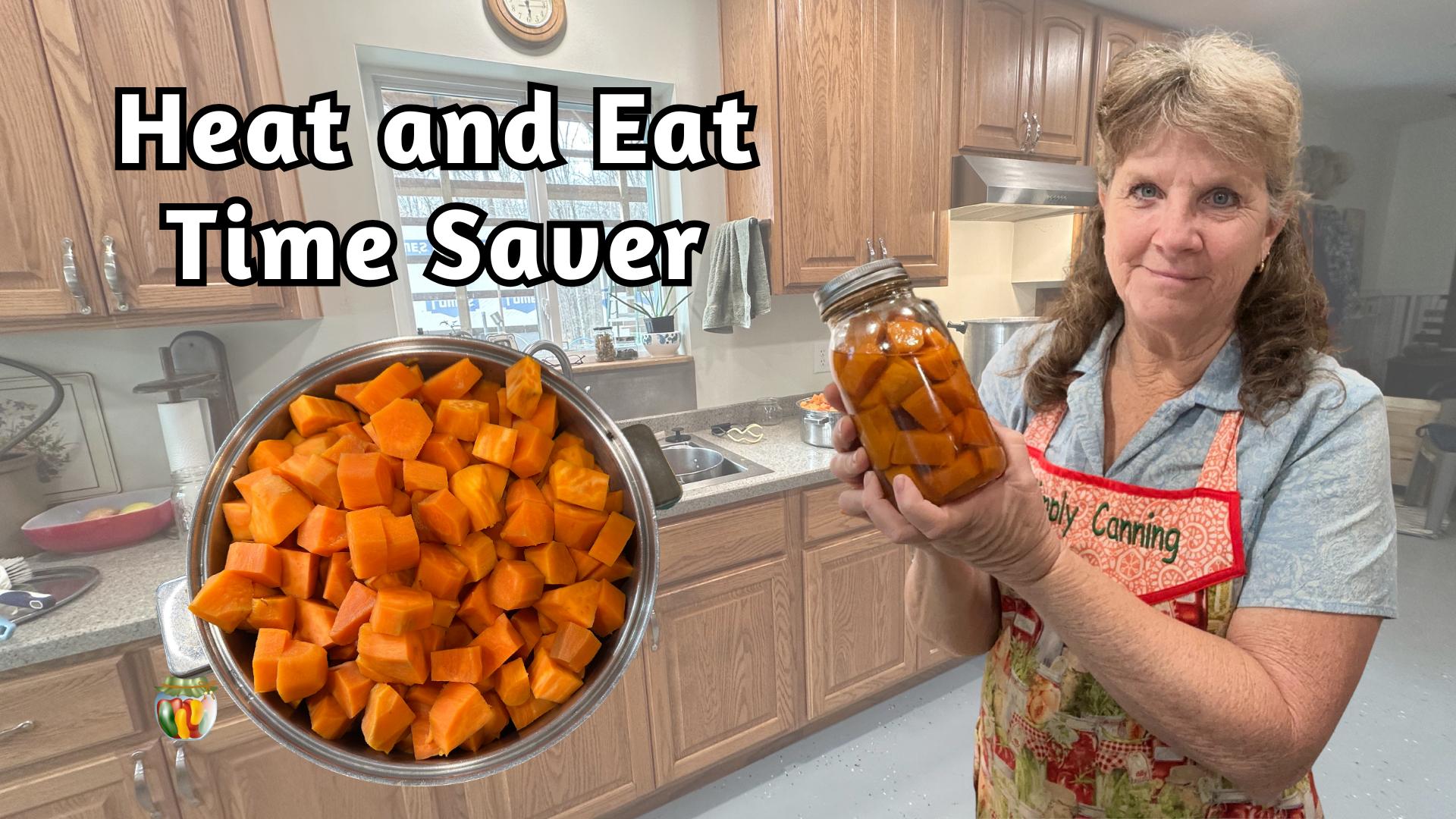
- Convenience – Canned sweet potatoes are ready-to-eat for quick meals, sweet potato casseroles, or side dishes. Just heat, add butter and salt, and serve.
Yum! Home food preservation often gives you healthy convenience foods.
Potato prep and peeling tips
I don’t usually weigh produce. Instead, I prep extra jars and can until I’m done. As a rough quantity guide:
- About 2 pounds of sweet potatoes per quart jar
- About 1 pound of sweet potatoes per pint jar
Even though we will peel them, be sure and scrub your potatoes first.
The goal is cooked, peeled, chunked sweet potatoes when you’re ready to fill jars. There are two ways to get there. I tested out both methods. I really thought peeling first would be easiest… but I was surprised. I ended up steaming to cook first, then peel.
Peeling and Steaming Options
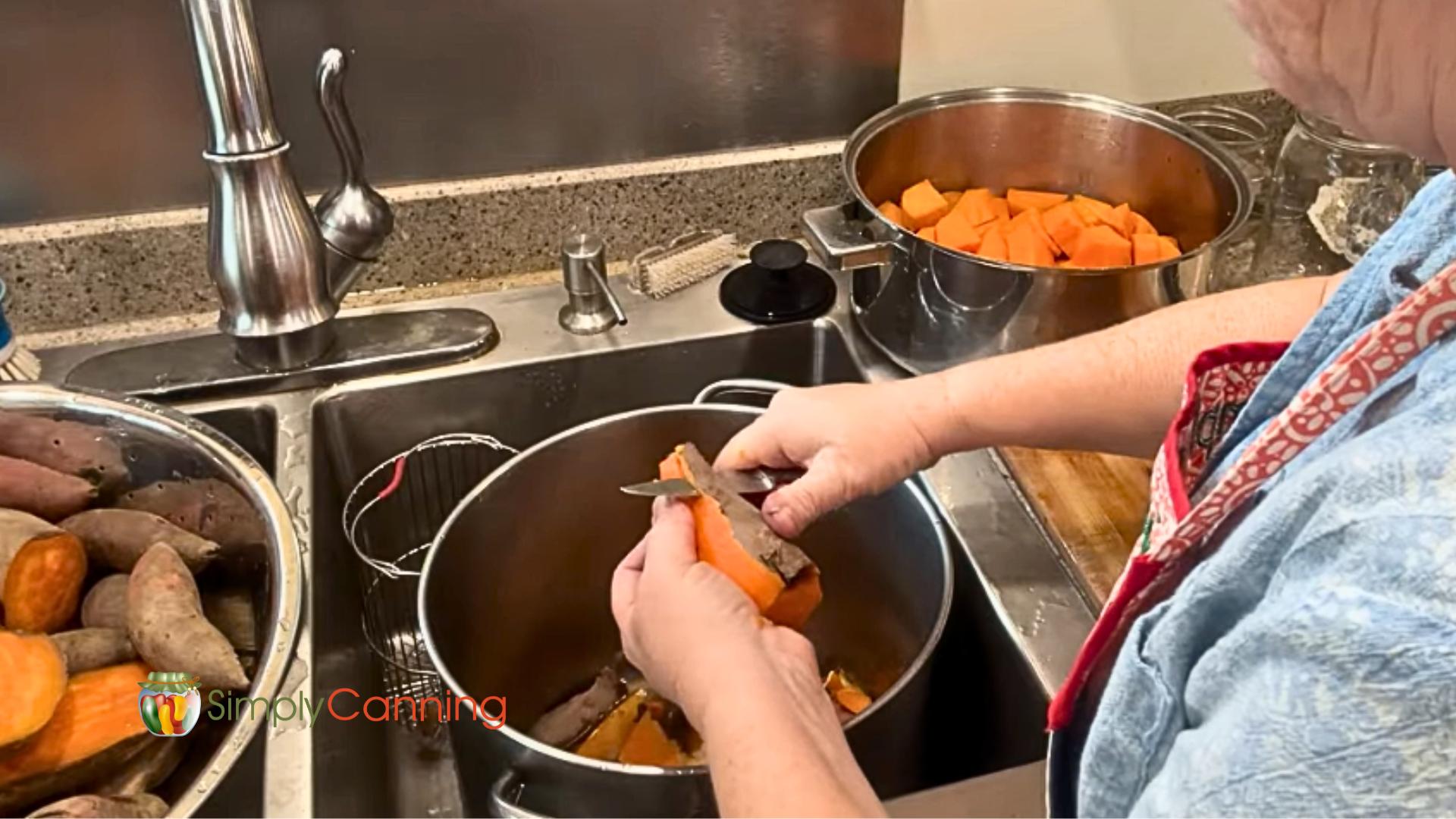
- Steam First (My Preferred Method): Steam whole sweet potatoes 15–20 minutes until soft but not mushy. Let cool slightly, peel, trim damaged spots, and cut into chunks. This method makes it easier to remove blemishes.
- Peel First: Peel raw sweet potatoes, cut out damaged portions. Cut into chunks, then steam until cooked partially soft before filling jars.
After trying both methods, I decided that steaming first makes it easier to remove damaged spots. It’s a little warm to work with, (let those potatoes cool enough to handle!) but less messy than I expected—and faster overall.
- Leave medium potatoes whole
- Cut large ones lengthwise so sizes are similar
How I Steam Them
Because sweet potatoes come in different sizes, I cut some of the larger potatoes in half so they would be about the same size as the smaller ones. This way they cook evenly.
You can use a steamer if you have one. I decided to use my water bath canner so I could do them all at once.
- Add a few inches of water to the bottom of my canner.
- Flip the canning rack upside down so potatoes sit above the water
- Bring to a boil on my stove and steam for 15–20 minutes
You’re aiming for soft – but not mushy.
Once steamed, let them cool just enough so you don’t burn your hands when you peel them.
Prepare Your Canning Setup
While the potatoes are steaming and cooling, get everything else ready. If you are not familiar with using your pressure canner you can find more details at Pressure Canning (how to use your pressure canner). Here are some basics:
- Store all canning tools together so nothing gets misplaced. I use a simple storage box.
- Put jars upside down in the canner to warm.
- Add 3 quarts of water to the pressure canner. check your canner manual
- A splash of vinegar in the water helps reduce mineral residue, especially with hard or iron-rich well water.
Optional Sweet Canning Syrup
Sweet potatoes tend to lose some flavor when they are canned in plain water. A touch of sweetness helps enhance it. A light syrup is usually enough, but you can adjust for a heavier or extra-light syrup if desired.
You can use plain white sugar for this but… brown sugar would add a nice gentle flavor. (I use brown sugar with our carrots sometimes. I haven’t tried it with sweet potatoes yet.) And I think maple syrup would be lovely!
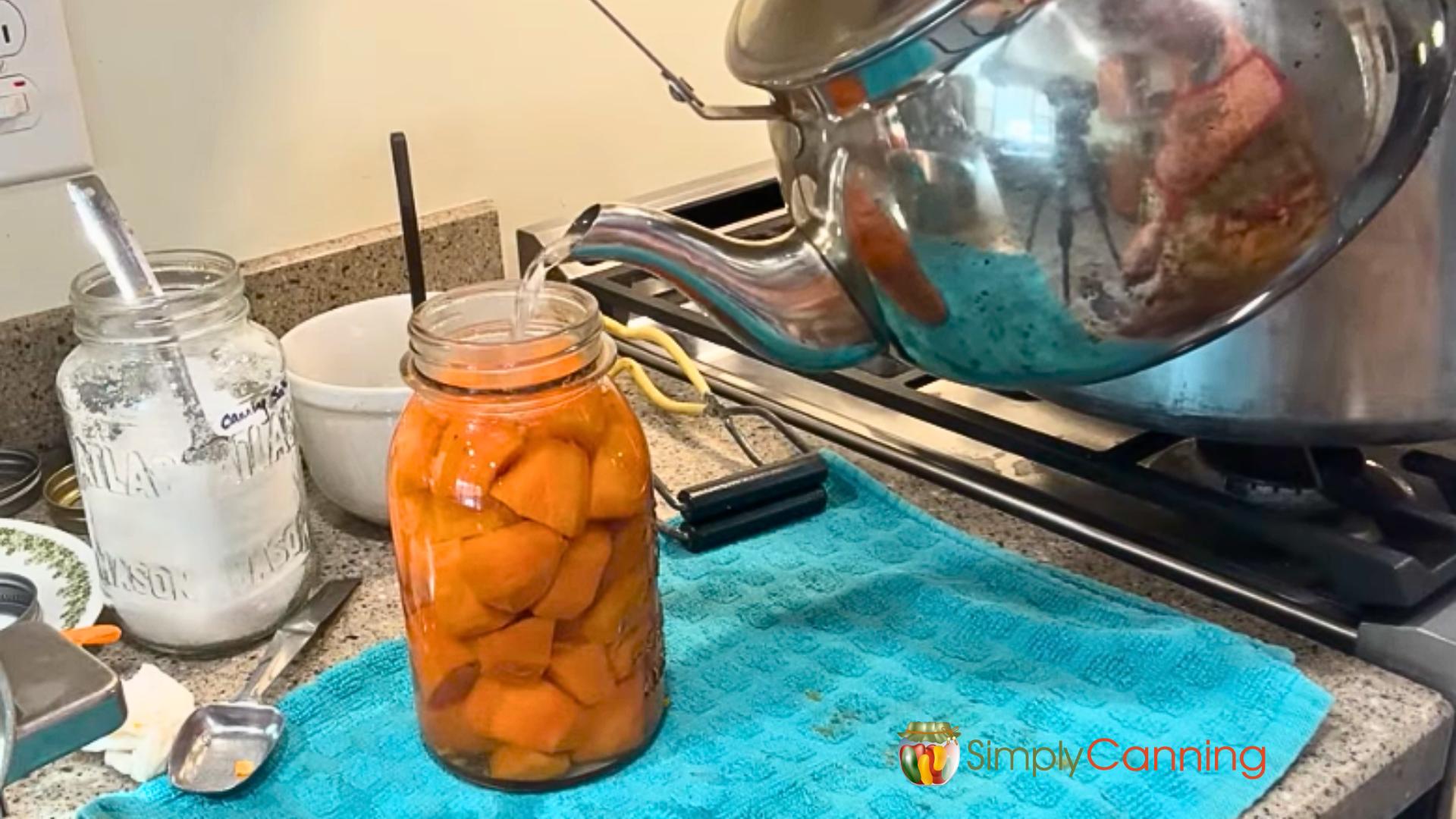
Light syrup recipe per canner load. This is to taste. Start with this and adjust as you like.
- 7 Quart canner batch: 10 1/2 cups water – 1 1/4 cup sugar
- 9 Pint canner batch: 6 1/2 cups water – 3/4 cups sugar.
You don’t want the sugar to overwhelm the finished product.. just enhance the flavors. A light syrup is all that is needed, but add more sweet and use a heavy syrup if you like. Or reduce and make an extra light syrup.
What About the Canning Salt?
Salt is not a preservative in this case. The pressure canner does all the preserving needed to avoid spoilage. So it is optional but I highly recommend it. Salt adds to the flavor so much.
Canning Sweet Potatoes
Video
Equipment
- Large pot for steaming
- Products I use below:
- Stainless Steel Rings optional – mentioned in the video
- Superb Canning Lids optional – mentioned in the video
- Potato Peeler optional – mentioned in the video
Ingredients
- Sweet Potatoes
- Water
- Canning Salt optional but highly recommended
- Sugar optional (your choice of sweetener)
Instructions
Prepare the Sweet Potatoes
- Wash and scrub sweet potatoes thoroughly to remove all dirt.
- Trim off any damaged spots.
2 Ways to Peel Sweet Potatoes
- Option 1 – Steam First (Preferred):
- Steam whole sweet potatoes for 15–20 minutes until partially cooked (soft but not mushy). Cut large sweet potatoes in half if needed to maintain close sizes.
- Allow to cool just enough to handle.
- Peel skins, remove damaged spots, and cut into chunks sized for jars.
- Option 2 – Peel First:
- Peel raw sweet potatoes, remove damaged spots, and cut into chunks.
- Steam chunks until partially soft and hot through before filling jars.
- Note! Sweet potatoes must be hot when packed into jars.
Prepare the Canner and Jars
- Add 3 quarts of water to the pressure canner. ( a splash of vinegar helps if you've got very hard water)
- Place clean jars upside down in the canner to warm.
- Heat water and jars but do not bring to a boil yet.
Filling Jars
- Add hot sweet potato chunks to jar. Leave 1 inch headspace. Note – Do NOT mash or puree. Sweet potatoes are canned in chunks.
- Add salt if desired. 1 tsp per quart- 1/2 tsp per pint.
- Fill jar with boiling water or your sweet syrup of choice. Maintain that 1 inch headspace.
- Remove air bubbles with a bubble tool. Then re-adjust headspace if needed.
- Wipe jar rims clean. Bits of salt or food particles may interfere with the seal.
- Apply lids and bands fingertip tight. Place in canner.
Process in a Pressure Canner
- See canner manual if you are not familiar with canning with a pressure canner.
- Lock canner lid and heat on high.
- Vent steam for 10 minutes.
- Add weight and bring to pressure. (check chart for proper pressure for your altitude)
- Process: Pints 65 minutes / Quarts 1 hour 30 minutes.
- Use pressure appropriate for your elevation. See notes
Cool Down
- Turn off heat and allow canner to cool naturally to room temperature. 12 hours.
- When pressure reaches zero, remove weight. Canner will still be very hot. Wait 5 minutes.
- Open lid slightly to release some steam. Wait 5 minutes.
- Remove lid. Some bubbling is normal. If it is still bubbling very hard, wait a final 5 minutes. Then take jars out of canner.
- Place jars on a towel a few inches apart. Allow to cool 12–24 hours.
Check Seals and Storage
- Check seals after cooling.
- Remove bands.
- Label jars with date.
- Store in a cool, dark place.
Notes
Vinegar can be added to canner water to reduce mineral buildup if using hard water. Altitude Adjustments for Pressure Canner Altitude – Weighted Gauge Pounds
- 0-1,000 ft – 10 pounds
- 1,001-10,000 ft – 15 pounds
- 0-2,000 ft – 11 pounds
- 2,001-4,000 ft – 12 pounds
- 4,001-6,000 ft – 13 pounds
- 6,001-8,000 ft – 14 pounds
- 8,001-10,000 ft – 15 pounds
Important steps:
- Leave a 1-inch headspace
- Vent steam for 10 minutes before adding the weight
- Start timing only once proper pressure is reached
- Use the correct pounds pressure according to your altitude
- Maintain steady pressure throughout processing
Cooling and Preventing Liquid Loss
Slow cooling helps reduce liquid loss, which is common with dense foods like sweet potatoes. But do not slow down TOO much. Some people recommend leaving jars in the canner overnight. You risk Flat Sour if you do that. You can read more about that here.
Final Steps – Check Seals and Store
- Check seals. If any have not sealed put those jars in the fridge and use them up soon.
- Remove bands. It is better to store without bands.
- Label jars with month, year, and contents.
- Store in a cool, dark pantry shelf.
Frequently Asked Questions
Yes! Sweet potatoes are low-acid and must be pressure canned to be safe.
Steaming whole sweet potatoes first, then peeling, makes it easier to remove damaged spots and is faster overall.
Yes. They should be partially cooked (soft but not mushy) by steaming or boiling before packing into jars.
Pints: 65 minutes | Quarts: 90 minutes. Pressure must be adjusted for your altitude.
Salt is optional and just for flavor. Light syrup can enhance sweetness, but plain water works fine.
Quick Summary: How to Can Sweet Potatoes
- Sweet potatoes are a low-acid food and must be pressure canned
- Sweet potatoes should be partially cooked by steaming or boiling before canning
- The best way to peel sweet potatoes for home canning is to steam them first, then peel
- Leave 1 inch headspace when packing jars
- Process sweet potatoes in a pressure canner
- Allow the canner to cool naturally to reduce liquid loss
- Properly sealed jars should be labeled and stored in a cool, dark place
Source – National Center for Home Food Preservation